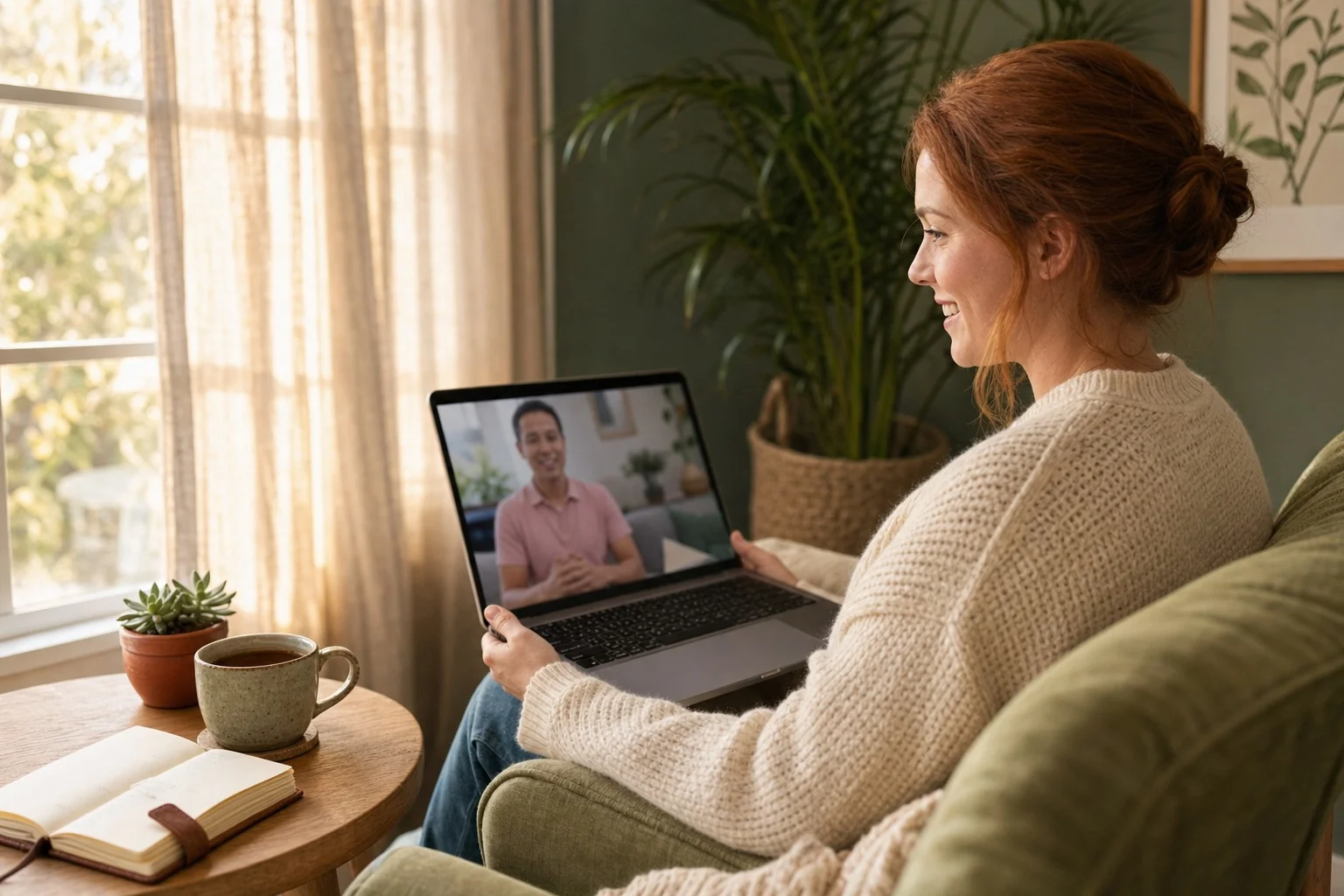
Evidence-based addiction treatment, delivered virtually.
For clients whose schedule, geography, caregiving responsibilities, or recovery stage make in-person treatment impractical — RECO Intensive's telehealth program brings the same clinical team, the same therapies, and the same standards of care to a secure virtual setting.
The same clinical work, on a different delivery model.
Telehealth is not a watered-down version of treatment. It is the same evidence-based clinical work — cognitive behavioral therapy, dialectical behavior therapy, trauma processing with EMDR-adapted protocols, motivational interviewing, family-systems sessions, psychiatric medication management — delivered through a secure, HIPAA-compliant video platform instead of in a room together.
It exists because there are real barriers to in-person care for many people: a high-stakes job that can't pause for residential treatment, a child or aging parent who needs daily care, geography that puts a Florida program three days of driving away, or a recovery stage where the right level of care is continuing therapy rather than intensive programming. For those clients, the alternative to telehealth is not "in-person treatment" — it is no treatment at all. We built this program to close that gap.
Telehealth is the right fit when geography, work, or family make traveling impossible.
Telehealth is a strong clinical match for the following situations. It is not a substitute for medically supervised detox or for residential care when those are clinically indicated.
Working professionals who can't take time away
Physicians, attorneys, executives, first responders, and people in safety-sensitive roles whose careers make 60-90 days of in-person treatment impractical — but who still need real clinical care. Scheduling can accommodate evening and early-morning sessions.
Caregivers with non-transferable responsibilities
Parents of young children, adults caring for aging parents, single parents, or anyone whose daily caregiving role cannot be paused. Telehealth meets the client where they are, around the schedule that already exists.
Out-of-state clients who can't relocate
For Florida residents and clients in states where we are licensed to deliver telehealth, the clinical team can engage without the travel logistics of an out-of-state residential stay. Licensing varies by state — admissions will confirm whether telehealth is available where you live.
Aftercare and continuing-care clients
Clients who completed an intensive in-person program at RECO or elsewhere and need structured continuing therapy. Maintaining the therapeutic relationship that drove early-recovery progress is one of the strongest predictors of long-term outcomes.
Family members of clients in treatment
Family-systems sessions delivered virtually for spouses, parents, and adult children who live in different states from the client — so the family work doesn't depend on everyone being in the same room.
What telehealth at RECO actually covers.
A clinically integrated suite — not a single therapist working alone.
Individual therapy
Weekly 50-minute sessions with a licensed therapist (LMHC, LCSW, LMFT, or PhD). Frequency adjusts to clinical need — early-recovery clients typically meet twice weekly; stable clients meet weekly or biweekly.
Psychiatric care
Initial psychiatric evaluation and ongoing medication management with a licensed psychiatric provider. MAT (Suboxone, naltrexone) prescribed where clinically appropriate, coordinated with local pharmacy fulfillment.
Group therapy
Structured virtual group sessions — process groups, skills groups (DBT), psychoeducation. Cohorts capped to maintain clinical depth; not anonymous-large-room formats.
Family-systems work
Family sessions with the client's primary therapist, scheduled around family members' availability. Multi-state families can participate together via a single virtual room.
Case management
Coordination with local providers (PCP, sober living, peer support), referral to local in-person resources when needed, and continuity-of-care documentation for clients moving between providers.
Crisis response protocol
A documented protocol for any acute clinical event — local emergency contacts, escalation to in-person care, family notification (with prior consent), and same-day clinical follow-up.
HIPAA-compliant. End-to-end encrypted.
Telehealth sessions use a HIPAA-compliant video platform with end-to-end encryption, signed Business Associate Agreements, and audit-logged access controls. Client records are stored in the same secure electronic health record we use for in-person care.
Substance use treatment records have an additional federal protection beyond HIPAA — 42 CFR Part 2 — that limits disclosure even to other healthcare providers without your specific written consent. Telehealth doesn't change that. The recording feature is disabled by default; sessions are not recorded unless you specifically request it for clinical reasons.
Telehealth isn't the right level of care for everything.
We will tell you when telehealth is not the right fit. Specifically:
- Medical detox from alcohol, benzodiazepines, or high-dose opioids requires in-person medical supervision. We coordinate referral to local detox programs and resume telehealth after stabilization.
- Acute psychiatric crisis — active suicidality, psychosis, or severe medical instability — requires in-person evaluation. The crisis protocol covers escalation.
- Severe addiction with high-risk home environment often benefits from residential placement to remove the client from cue-driven triggers; we will recommend that route when clinically indicated rather than pretending telehealth alone is sufficient.
The admissions assessment determines fit. If telehealth isn't the right level of care, we say so before you commit.
About virtual care.
Practical questions about telehealth at RECO Intensive — coverage, technology, fit, and getting started.
Is telehealth as effective as in-person treatment?
For many clinical presentations, peer-reviewed research shows telehealth produces outcomes comparable to in-person therapy — particularly for substance use disorder counseling, depression, anxiety, and continuing care. The 2020-2024 expansion of telehealth produced a substantial evidence base. The key qualifier: telehealth is comparable for the clinical work it's suited for. It is not equivalent for medical detox or for clients who clinically require residential placement, and we will say so when that is the case.
What insurance covers telehealth?
Most major commercial insurers — Aetna, Cigna, Blue Cross Blue Shield, United Healthcare, Optum — cover substance use telehealth at parity with in-person care under federal mental health parity law. Specific session limits and copays vary by plan. Call admissions or use the online verification form to confirm your specific plan's telehealth coverage before starting.
What states can you deliver telehealth in?
Licensing varies by state. We are licensed to deliver telehealth in Florida and several other states; the admissions team can confirm whether your state is covered when you call. For clients in states we are not licensed in, we can refer to a vetted telehealth provider who is.
What technology do I need?
A laptop, tablet, or smartphone with a working camera and microphone, plus a reliable broadband internet connection. The telehealth platform runs in the browser — no app to install. A private space where you won't be overheard for the duration of the session is the more important requirement than any specific device.
Can I do telehealth and in-person at the same time?
Yes — many of our clients combine modes. A common pattern is in-person group programming on certain days combined with telehealth individual therapy. For clients traveling in for a short residential stay then returning home for continuing care, we can structure the transition so the same primary therapist continues virtually after the in-person phase ends.
How do I get started?
Call admissions at (866) 396-2008. The first conversation includes a clinical assessment to determine whether telehealth is the right level of care, insurance verification, and (if telehealth is the right fit) scheduling the first appointment. Most clients are seen within 3-5 business days of the initial call.
Find out if telehealth is the right level of care for your situation.
A 15-20 minute call is enough to determine fit, verify insurance, and schedule a first appointment. Free, confidential, no commitment.