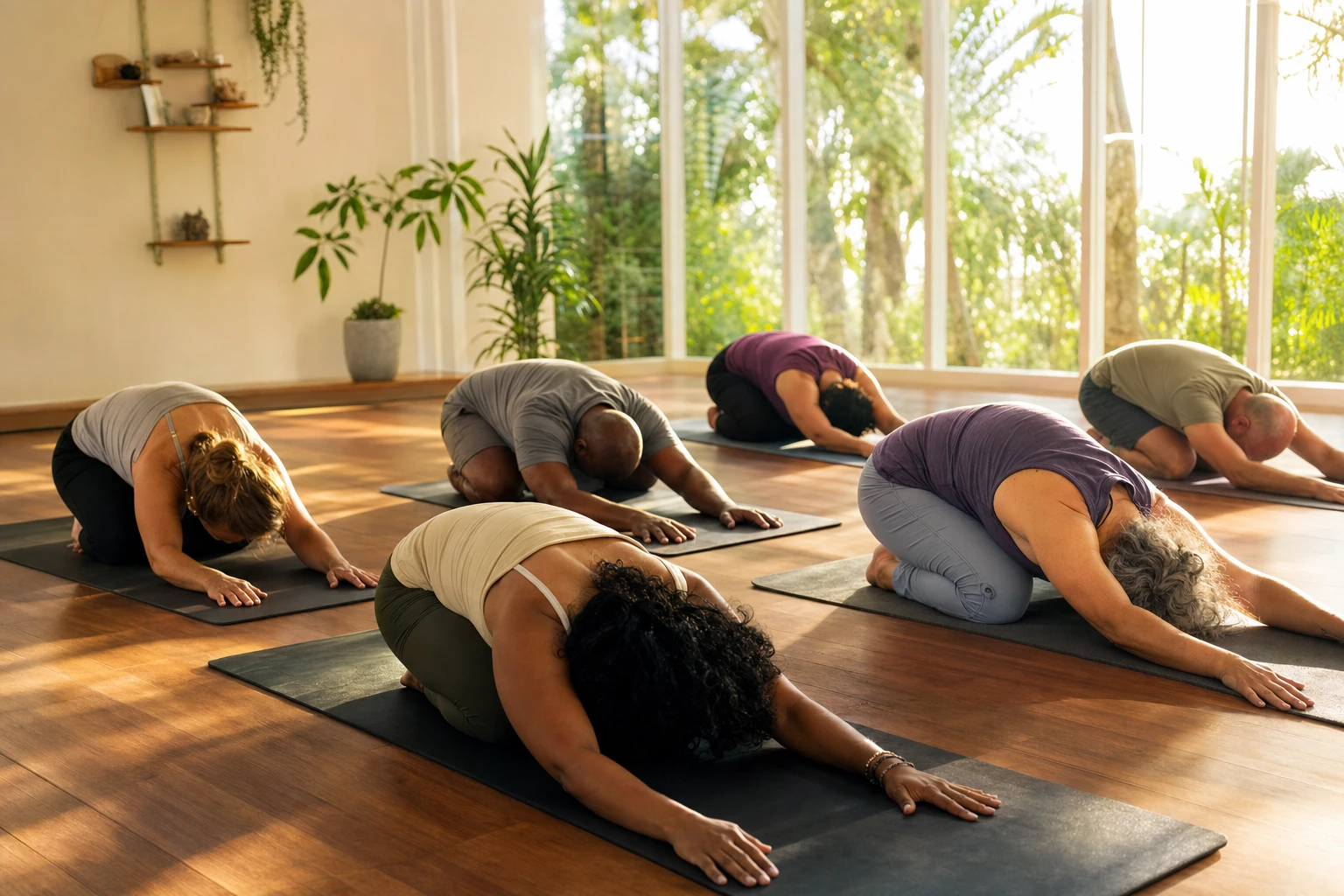
Yoga's clinical evidence in addiction recovery is substantial — improvements in heart-rate variability, cortisol, sleep, anxiety, and craving reduction across multiple studies. RECO Intensive offers yoga not as a wellness amenity but as a somatic clinical intervention.
What yoga looks like at RECO Intensive
Regular yoga classes in a sunlit studio space, taught by a trauma-informed yoga teacher. Style is primarily Yin and Vinyasa — slower-paced, restorative, somatic-focused. Not heated yoga. Not power yoga. Not strenuous athletic forms. The pacing matches the clinical purpose.
Classes are open to all levels. Modifications are normal and expected. The trauma-informed approach means no physical adjustments without consent, no triggering language, and choice-based cueing throughout.
What sessions cover
- Breath-based opening — pranayama techniques for nervous-system regulation
- Slow asana sequences emphasizing somatic awareness over physical performance
- Restorative postures for parasympathetic activation
- Yin sequences for connective-tissue work and deeper interoception
- Closing meditation/savasana for integration
What yoga does clinically
Improves heart-rate variability (a key marker of autonomic recovery — see also our Heart Regulation Practices). Reduces cortisol and sympathetic activation. Builds interoceptive awareness — the felt sense of what's happening in the body. Provides nervous-system regulation tools clients can use anywhere, anytime, with no equipment.
Who yoga serves best
Clients with severe anxiety, PTSD, or chronic hypervigilance. Clients whose previous lives included little embodied practice. Clients in trauma-focused therapy who need somatic regulation between sessions. Clients with chronic pain or sleep disturbance. Anyone whose recovery includes learning what regulated feels like in the body.
How yoga integrates with the rest of treatment
Direct integration with Mindfulness and Heart Regulation therapy tracks. Many clients begin a sustained yoga practice as part of aftercare. The somatic skills learned in class become resources that clients can access in stressful moments outside of class.
Why the RECO approach is different
Many programs offer yoga; few do it trauma-informed and clinically integrated. Our teachers are specifically trained for addiction-recovery populations, and the practice is part of the treatment plan, not a recreation slot.