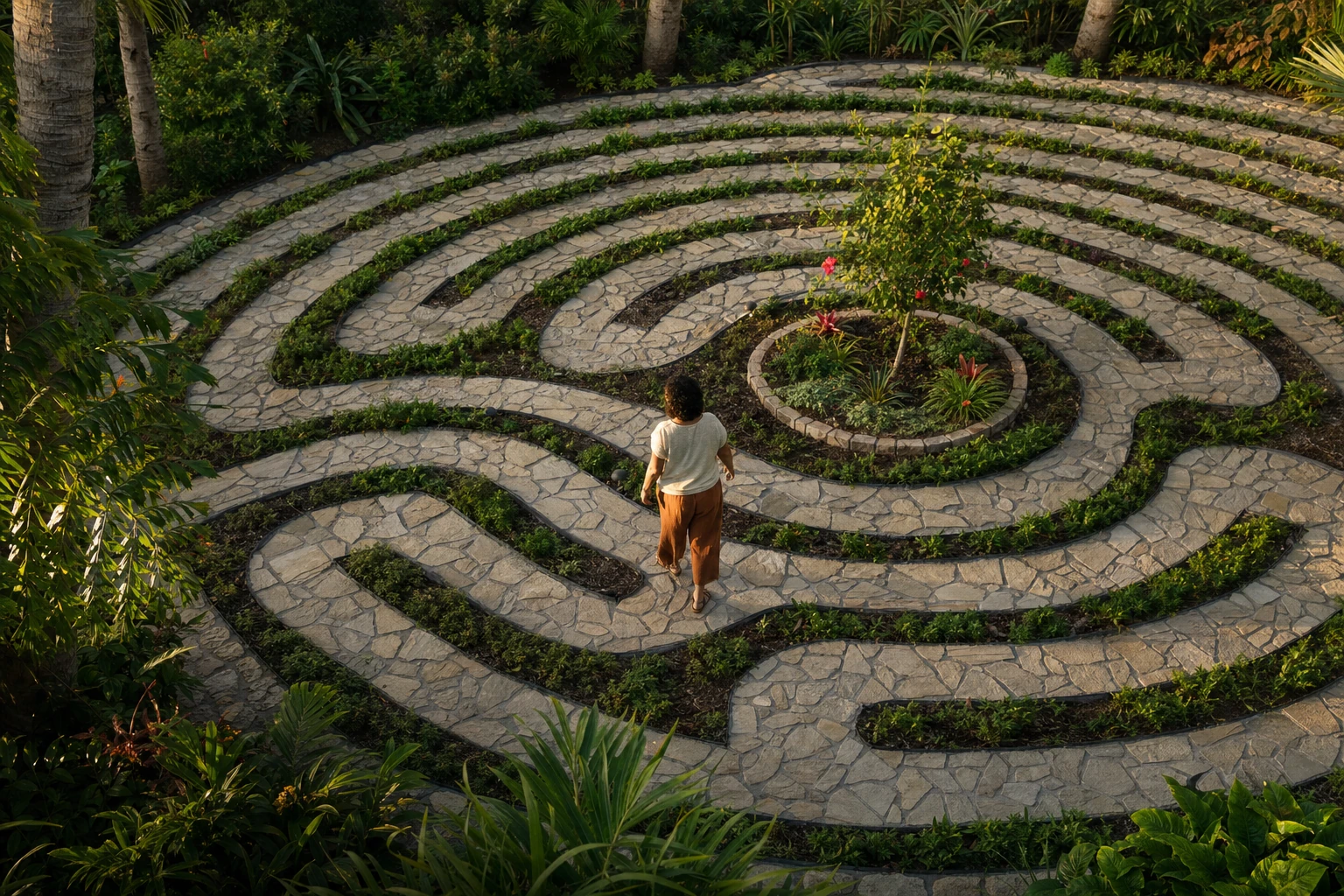
A labyrinth is not a maze — there's only one path in and one path out. The point isn't to solve it; the point is to walk it. RECO Intensive's labyrinth excursions use this ancient contemplative practice as a somatic mindfulness intervention with a remarkable record of clinical impact.
What labyrinth walks look like at RECO Intensive
South Florida has several stone labyrinths in quiet outdoor settings. A clinician leads a small group to one. After a brief instruction (the practice has a few simple rules but is otherwise individual), each client walks at their own pace — into the center, pause, back out. Total time is typically 90 minutes including drive, walking, and group reflection.
The walk itself is meditative; the impact is often surprising. Clients describe insights, emotional releases, settling sensations they didn't expect from a slow walk on a stone path.
What the practice involves
- Brief instruction on the labyrinth tradition
- Individual walking pace — no rushing, no competing
- Quiet pause at the center (a few minutes of stillness)
- Slow walk back out at the same pace
- Group reflection afterward in a quiet outdoor spot
Why labyrinths work in recovery
The labyrinth is a metaphor in motion. The path is set — like recovery itself, not a puzzle to solve but a path to walk. The center is a moment of presence. The walk out is the integration. Clients often describe the labyrinth as the first time they've experienced "being on a path" as a felt sense rather than an abstract idea.
Who benefits most
Clients drawn to spiritual or contemplative traditions. Anxious clients for whom traditional sitting meditation is too still. Trauma-history clients for whom moving meditation feels safer than still. Clients in mid-recovery doing integration work. Anyone whose recovery includes a contemplative dimension.
How labyrinth practice connects to the rest of treatment
The practice resonates with mindfulness and heart-regulation work in our therapy tracks. Some clients begin a sustained personal labyrinth practice afterward. Others integrate the metaphor into individual therapy without continuing the literal practice.
Why the RECO approach is different
Few addiction-treatment programs include contemplative-tradition practices like the labyrinth. We do because the evidence — and the client feedback — supports their therapeutic value, especially for the integrative work of mid-to-late treatment.