
Understanding Vivitrol vs Suboxone for Opioid Rehab Delray
If you are searching this late at night, the fear is probably not abstract. It may be withdrawal, relapse, or the thought of one more impossible morning. In Delray Beach, that panic often sends people looking for medication-assisted treatment before they can even sort out their thoughts. That is normal. The question is not just […]


If you are searching this late at night, the fear is probably not abstract. It may be withdrawal, relapse, or the thought of one more impossible morning. In Delray Beach, that panic often sends people looking for medication-assisted treatment before they can even sort out their thoughts. That is normal. The question is not just Vivitrol vs Suboxone for opioid rehab. It is which path feels medically safe, emotionally manageable, and realistic for your current body and life.
When opioid withdrawal is the real fear behind choosing Vivitrol or Suboxone
Why people in Delray Beach search for medication-assisted treatment before they can think clearly
People rarely compare these medications from a calm, clinical place. They usually compare them while sick, exhausted, and scared of the next wave of symptoms. That is why searches for medication-assisted treatment for opioid use disorder in South Florida often start with panic, not planning. In Delray Beach rehab settings, that panic is common and understandable. The body can feel like the loudest voice in the room.
Here is the part most people miss: you do not need to have the answer before you seek help. You need enough support to get through the next few hours safely. At RECO Intensive, the conversation about opioid rehab in Delray Beach FL usually starts with symptoms, timing, and recent use, along with guidance from the SAMHSA National Helpline when immediate support is needed. That keeps the choice grounded in reality, not guesswork.
What opioid withdrawal can feel like when fentanyl, heroin, or prescription pill use has changed the body
Withdrawal can feel physical, emotional, and strangely disorienting all at once. People often describe chills, sweating, stomach pain, anxiety, insomnia, and a deep sense that their skin does not fit right. With fentanyl treatment, heroin recovery, or prescription pill addiction, the pattern can be sharper and more destabilizing. Fentanyl can change tolerance quickly, which raises the stakes.
One client from near Atlantic Avenue described it as feeling “wired and empty” at the same time. Another said the hardest part was not pain alone, but fear of the pain returning every few hours. Those reactions are common in South Florida detox, especially after repeated use. They also explain why South Florida detox support for opioids and fentanyl matters before anyone picks a maintenance plan. Withdrawal is not a character test. It is a medical event.
Why the right medication is usually chosen after detox support and a medical assessment, not by guesswork
The safest choice usually depends on recent opioid use, overall health, and your withdrawal timeline. SAMHSA guidelines support careful assessment before starting medication-assisted treatment. That matters because both Vivitrol and Suboxone work differently in the body, and the National Institute of Mental Health offers helpful context on mental health topics that can overlap with substance use treatment. They are not interchangeable. They also are not best chosen in a vacuum.
A medical team may consider how long detox lasts, whether fentanyl is involved, and whether you have tried treatment before. They will also look for co-occurring anxiety, depression, or trauma symptoms. In many cases, a person needs to understand how long detox lasts for opioid rehab in Delray Beach before any medication begins. Timing is not a detail. It is the whole point.
The split decision between blocking cravings and easing them
How extended-release naltrexone Vivitrol works differently from buprenorphine-based Suboxone maintenance
Vivitrol and Suboxone do different jobs. Vivitrol is extended-release naltrexone. It blocks opioid receptors, so opioids have little or no effect if relapse happens. Suboxone contains buprenorphine and naloxone. It reduces withdrawal and cravings while lowering misuse risk compared with full agonist opioids. That difference shapes the whole treatment plan.
FeatureVivitrol injectionsSuboxone maintenanceMain actionBlocks opioid effectsReduces withdrawal and cravingsUse timingAfter detox and opioid-free periodCan begin sooner with medical guidanceBest fitAbstinence-focused recovery planSteadier bridge after detoxClinical concernToo-early start can trigger withdrawalRequires careful dosing and follow-upMany families hear “medication” and assume the options are identical. They are not. A person seeking fentanyl treatment recovery with medication support may need one option over the other based on recent exposure and relapse risk. The right fit depends on the body, not just personal preference.
Who tends to do better with full abstinence support and who may need a steadier bridge after detox
Some people want a medication that blocks the possibility of opioid effects. That can feel clear and reassuring to them. Others need a steadier bridge because cravings hit hard, sleep is poor, or life stress remains intense. People with repeated relapse after detox sometimes do better with buprenorphine treatment. People who have strong abstinence goals may prefer Vivitrol after a safe detox window.
The mistake we see most often is choosing ideology over stability. Someone says they want “zero medication,” even though their recent use pattern suggests high overdose risk. Another person wants Suboxone because it feels familiar, but they actually need a more structured environment first. A strong dual diagnosis treatment for co-occurring disorders plan can make the choice clearer. Addiction rarely acts alone.
Where relapse prevention for opioid addiction changes depending on recent use, tolerance, and overdose risk
Relapse prevention for opioid addiction changes when fentanyl, heroin, or pills have altered tolerance. A single return to use can become dangerous very quickly. That is why overdose risk matters as much as cravings. A person who has been abstinent for a few days may have lower tolerance than they realize. That mismatch is where emergencies happen.
This is where evidence-based treatment matters. NIDA and SAMHSA both support medication-assisted recovery as one tool inside a broader plan. That plan may include CBT, case management, and sober living resources. It may also include partial hospitalization program in Delray Beach or intensive outpatient program in Delray Beach when structure is still needed. Relapse prevention works best when it respects risk.
Why starting Vivitrol too early can trigger withdrawal and why timing matters in South Florida detox settings
Vivitrol can precipitate withdrawal if opioids are still on board. That means it can pull opioids off receptors too soon and make symptoms surge. This is why timing matters so much in South Florida detox settings. It is not a minor warning. It is a major safety issue.
A Delray Beach client once came in wanting “the blocker shot” immediately because they wanted the fastest possible solution. The team slowed the process down. They checked recent use, withdrawal signs, and overall stability before moving forward. That pause prevented a rough medical reaction. In opioid detox support, slow is often safer than fast. If you need a clearer picture of the process, our medical detox process can help explain the sequence.
What a Delray Beach rehab team should actually look at before recommending one path
Signs of addiction and co-occurring disorders that can shift the plan toward dual diagnosis treatment
A careful team does not look only at drug use. It also looks at sleep, mood, panic, trauma history, and day-to-day functioning. Signs of addiction may include using more than planned, failing to cut down, hiding use, or feeling sick when you stop. If you also have depression and addiction, anxiety treatment needs, bipolar disorder therapy, or PTSD treatment needs, the plan should change. That is the dual diagnosis model in action.
Co-occurring disorders can raise relapse risk if they stay untreated. A person may use opioids to blunt panic or numb trauma symptoms. That does not mean the drug use is “just emotional.” It means both problems need care. If that sounds familiar, depression and addiction dual diagnosis treatment may matter as much as the medication decision. Healing rarely happens in one lane.
How trauma therapy South Florida programs use CBT, DBT, and EMDR trauma therapy alongside medication
Medication can lower the noise. Therapy helps you understand why the noise got so loud. CBT helps you challenge automatic thoughts that lead to use. DBT helps with distress tolerance, emotion regulation, and impulse control. EMDR trauma therapy can help process traumatic memories without forcing you to relive them in a raw way. 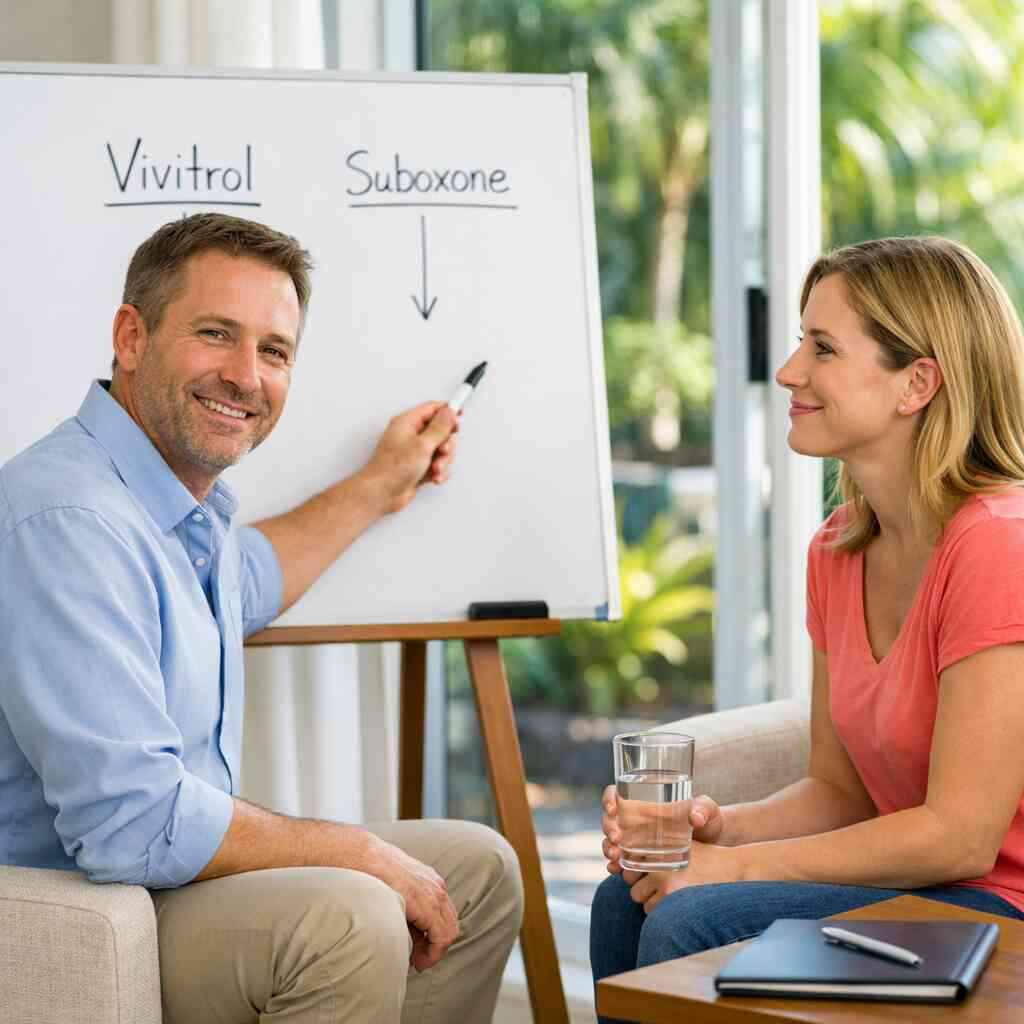
On the projects we have seen this year, the most stable recoveries pair medication with trauma work. That is especially true for people with PTSD treatment needs, anxiety, or long-term stress. One young adult from Palm Beach County had repeated relapse after every stressful family conflict. Once trauma therapy and coping skills were added, the pattern made more sense to them. For many, PTSD and trauma treatment in South Florida recovery is the missing piece. ### When PHP, IOP, residential treatment, or outpatient program Delray Beach levels fit the same recovery plan
Not everyone needs the same level of structure. A residential treatment facility gives round-the-clock support. A partial hospitalization program provides intensive daytime care with more independence at night. An intensive outpatient model gives more flexibility while still offering serious structure. An outpatient program Delray Beach can help when stability is stronger and cravings are lower.
Here is a simple way to think about it:
- Residential treatment: best for high risk, unstable routines, or severe withdrawal support
- PHP: strong daily support without overnight stay
- IOP: structured care while you return to work or family duties
- Outpatient: lighter support after progress has started
For many people, the right level changes over time. A residential treatment facility in Palm Beach County may be the safest starting point, then step down to IOP later.
How family therapy, case management, and sober living resources support long-term recovery after detox
Recovery rarely lives in medication alone. Family therapy can reduce conflict, improve communication, and set better boundaries. Case management can help with appointments, work issues, and referrals. Sober living resources add structure when home feels too shaky. Those supports matter after detox, when the body is calmer but habits still feel fragile.
One family we met near Boca Raton wanted to help but kept arguing about what “support” meant. Once family therapy started, the conversation shifted from blame to planning. That made home less chaotic and treatment more usable. If your family needs guidance, family therapy can be part of the plan. For many, this is where recovery becomes practical.
Why insurance verification, out-of-network benefits, and self-pay options can shape the treatment route at RECO Intensive location 140 NE 4th Avenue Delray Beach FL 33483
Money concerns can stall care fast. That is real. Insurance verification helps you understand what is covered before you commit to a level of care. Some people use Aetna, Cigna, or Blue Cross Blue Shield. Others need out-of-network benefits or self-pay options. Those details can shape what is possible.
RECO Intensive is located at 140 NE 4th Avenue Delray Beach FL 33483, in the heart of a coastal recovery community. That matters because convenience supports follow-through. If you want to review coverage, start with how to verify insurance for Florida rehab. You can also look at Florida addiction treatment insurance overview before making calls. A clear admissions process lowers stress.
The next move after detox that keeps recovery from stalling
How aftercare planning, alumni program support, and relapse prevention skills connect medication to real life
Detox is not recovery by itself. It only clears the path. Aftercare planning connects medication to the real pressures of work, family, and stress. It also builds relapse prevention skills that hold up when life gets loud again. That might mean triggers, sleep routines, transportation, or social pressure.
A strong continuing-care plan often includes alumni program support. It may also include regular check-ins, therapy, and practical goals. At RECO Intensive, aftercare planning for long-term sobriety helps tie the early phase to the next phase. That bridge matters more than people expect. Without it, even good detox work can stall.
When 12-step alternatives, SMART Recovery, mindfulness meditation, and group therapy activities help stabilize early recovery
Not everyone connects with the same support model. Some people like 12-step meetings. Others prefer 12-step alternatives like SMART Recovery. Many benefit from both at different times. Mindfulness meditation can help with cravings, and group therapy activities can reduce shame. The point is not ideology. The point is repetition.
These tools help because early recovery is noisy. Sleep is uneven. Emotions are sharp. Social confidence may be low. A person who attends group therapy and practices coping skills usually gets more traction than someone trying to white-knuckle alone. That is one reason sober living resources in Delray Beach and peer support can matter so much.
What to ask about Florida rehabs that take insurance, private rehab options, and DCF licensed care before you commit
Ask direct questions. Is the program DCF licensed? Is it using licensed clinicians? Does it offer evidence-based treatment? Does it support dual diagnosis? Will it explain the difference between PHP vs IOP in plain English? Good programs welcome those questions.
You should also ask about RECO Intensive accreditations and licensure and how the admissions team handles verification. If you are comparing Florida rehabs that take insurance, ask about in-network and out-of-network benefits. Private rehab can offer more flexibility, but that should be matched to your needs, not your fear. Clarity beats pressure every time.
How to decide if opioid rehab Delray should center on Vivitrol injections, Suboxone maintenance, or a step-down plan through intensive outpatient and sober living
The best choice depends on three things: current opioid use, withdrawal risk, and how stable your life feels right now. Vivitrol injections may fit if you can complete detox and want a blockade approach. Suboxone maintenance may fit if you need a steadier buffer against cravings and relapse. Sometimes the answer is a step-down plan, where detox leads into PHP, then IOP, then sober living.
Use this simple decision lens:
- Recent use still active? Suboxone may be safer to discuss first.
- Already detoxed and opioid-free? Vivitrol may be on the table.
- High stress, trauma, or unstable housing? Add structure before or alongside medication.
- Insurance or logistics unclear? Verify benefits before you decide.
If you are weighing Vivitrol vs Suboxone for opioid rehab in Delray Beach, ask for a clinical assessment before locking in a choice. You do not have to figure this out alone, and you do not have to figure it all out tonight. Start with one call, ask for insurance verification, and tell the team exactly what happened last.
Frequently Asked Questions
Question: How does RECO Intensive help people decide between Vivitrol injections and Suboxone maintenance for opioid rehab Delray?
Answer: RECO Intensive starts with a careful clinical assessment rather than a one-size-fits-all recommendation. Because Vivitrol injections and Suboxone maintenance work differently, the team looks at recent opioid use, withdrawal symptoms, overdose risk, co-occurring disorders, and whether detox has already been completed. This matters for people seeking medication-assisted treatment for opioid use disorder, especially after fentanyl treatment, heroin recovery, or prescription pill addiction. If a client is not yet opioid-free, Suboxone maintenance may be discussed as a steadier bridge. If detox is complete and the person wants an abstinence-focused option, extended-release naltrexone may be considered. RECO Intensive also integrates dual diagnosis treatment, coping skills, and aftercare planning so the medication decision fits the whole recovery plan, not just the symptoms of the day.
Question: What should I know about how long is detox and whether Vivitrol vs Suboxone for opioid rehab Delray is the right choice after South Florida detox?
Answer: The right medication often depends on how long detox is, how recent opioid use was, and whether withdrawal is still active. In many cases, Vivitrol cannot be started until a person has been opioid-free for a medically appropriate period, because starting too early can trigger withdrawal. Suboxone can sometimes be introduced sooner with medical guidance, which is why it is often considered during opioid withdrawal management or as part of MAT after detox. RECO Intensive helps clients understand the timing step by step through its medical detox process and intake process, so the plan is based on safety and stability. For people in Delray Beach rehab, this kind of structure can reduce panic and make it easier to move into long-term recovery with fewer gaps in care.
Question: How does RECO Intensive support dual diagnosis treatment alongside Florida addiction treatment for anxiety treatment, PTSD treatment, and depression and addiction?
Answer: RECO Intensive understands that opioid use often overlaps with mental health concerns such as anxiety treatment needs, PTSD treatment, depression and addiction, bipolar disorder therapy, and other co-occurring disorders. That is why the program uses dual diagnosis treatment and evidence-based treatment approaches that can include cognitive behavioral therapy, dialectical behavior therapy, EMDR trauma therapy, group therapy activities, and family therapy. Medication can help lower cravings, but therapy helps address the deeper patterns that may drive use in the first place. For many people, trauma therapy South Florida services are a key part of recovery because unresolved trauma can intensify relapse risk. By combining clinical support with holistic recovery options like mindfulness meditation, yoga therapy, and art therapy, RECO Intensive helps clients build a more complete foundation for sobriety.
Question: Does RECO Intensive offer PHP vs IOP options if I need more than outpatient program Delray Beach care after opioid rehab?
Answer: Yes. RECO Intensive can help clients move through a level of care that matches their current needs, whether that means a residential treatment facility, a partial hospitalization program, an intensive outpatient program, or a step-down outpatient program Delray Beach plan. This is especially important for people who need more support after South Florida detox or while adjusting to medication-assisted recovery. PHP vs IOP is not just a scheduling question; it is about how much structure, monitoring, and support a person needs to stay stable. RECO Intensive also helps with aftercare planning, sober living resources, case management, and life skills training so recovery does not stall once the most acute symptoms improve. For many clients, that continuity is what makes the next step feel manageable instead of overwhelming.
Question: What makes RECO Intensive a good choice for how to choose a rehab near Delray Beach for Vivitrol vs Suboxone for opioid rehab Delray?
Answer: RECO Intensive is located at 140 NE 4th Avenue Delray Beach FL 33483, placing it in a supportive South Florida recovery community that values privacy, consistency, and long-term healing. People looking for Delray Beach rehab or Florida addiction treatment often want a program that can handle both substance use and mental health needs, while also helping with insurance verification, out-of-network benefits, and self-pay options. RECO Intensive offers a progressive, compassionate approach with licensed clinicians and evidence-based treatment, and it can support clients who need private rehab, dual diagnosis support, or a structured step-down plan after detox. The team also understands that how to choose a rehab is about more than the brochure: it is about trust, clarity, and the ability to match care to the individual. For anyone comparing Vivitrol injections, Suboxone maintenance, and other recovery options, RECO Intensive can help clarify the safest and most realistic path forward.