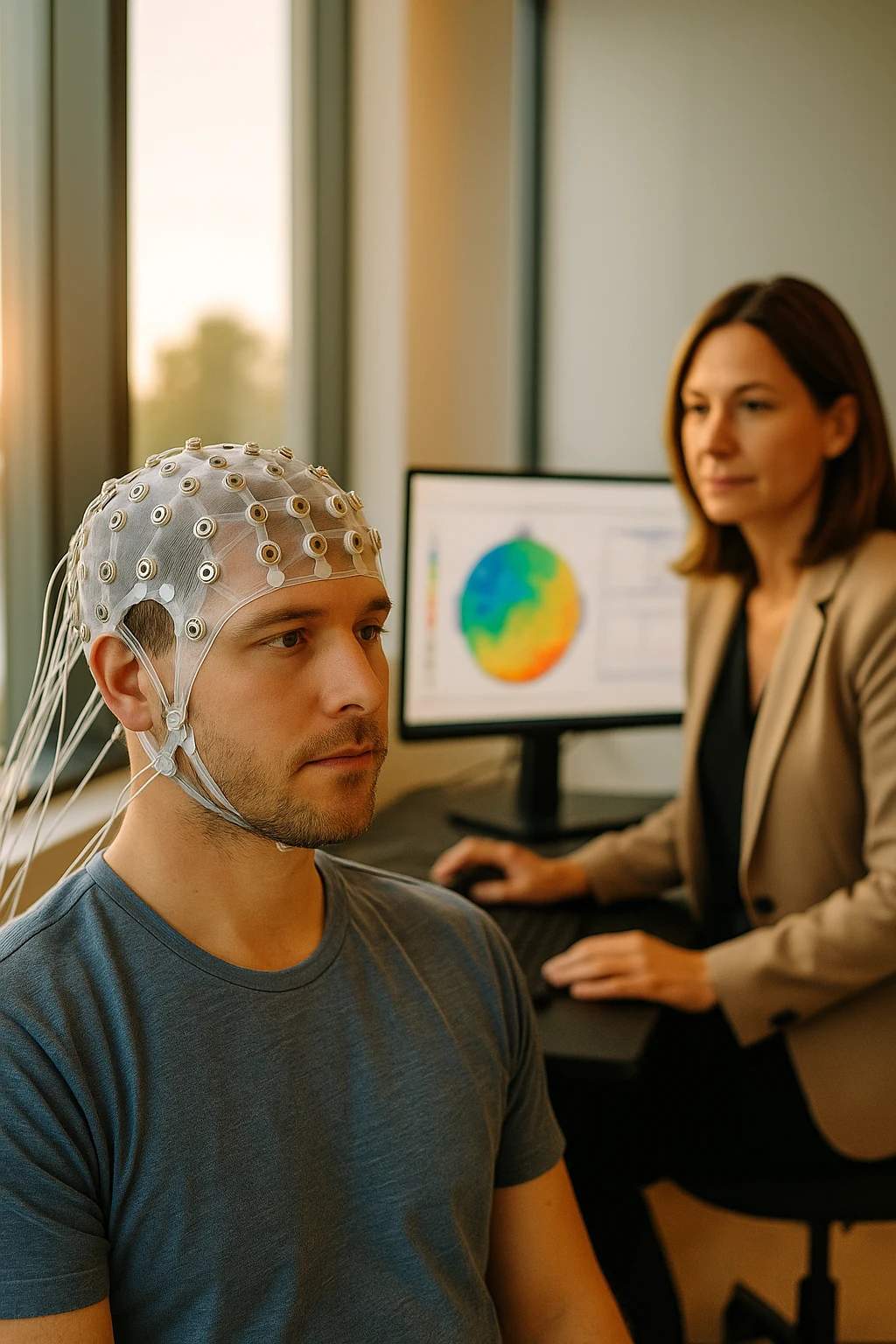
Addiction lives in the brain. So does anxiety, depression, trauma, and the co-occurring picture most clients arrive with. RECO Intensive's qEEG (quantitative electroencephalography) program produces a detailed map of each client's neural activity — revealing the dysregulation patterns underneath the clinical picture and guiding personalized treatment.
What qEEG looks like at RECO Intensive
A qEEG session involves wearing a cap with 19+ EEG sensors for about 30-45 minutes while sitting quietly (eyes open, then eyes closed) in a calm room. The session is non-invasive, painless, and produces a vast amount of brain-activity data that's then analyzed against age-and-sex-matched normative databases.
The resulting "brain map" shows where each client's activity differs from typical patterns — excess slow-wave activity in frontal lobes (often associated with attention and executive function issues), excess high-frequency activity in temporal lobes (anxiety, hyperarousal), specific connectivity patterns associated with depression, trauma, or addiction recovery.
What we learn from qEEG findings
- Patterns associated with anxiety, depression, trauma, ADHD
- Cognitive function indicators — attention, working memory, processing speed
- Autonomic-regulation indicators that complement HRV biofeedback findings
- Substance-specific neural impact (different substances produce different qEEG signatures)
- Recovery progress — qEEG can be repeated to track measurable brain changes during treatment
How qEEG informs the treatment plan
qEEG findings don't replace clinical assessment but augment it. The map clarifies the underlying neurological reality alongside the behavioral and psychological picture. Specific findings may indicate appropriate mindfulness or heart-regulation work, suggest medication choices, or identify clients who would particularly benefit from IV therapy for cognitive recovery.
Who qEEG serves best
Clients with co-occurring mental health conditions where the precise pattern matters. Clients with cognitive complaints that haven't been clearly mapped (attention, memory, executive function). Clients with treatment-resistant depression or anxiety whose underlying neural pattern hasn't been characterized. Clients curious about their brain. Anyone whose recovery would benefit from a neuroscience-informed treatment plan.
How qEEG integrates with the rest of treatment
The qEEG report is part of the clinical-team review at the weekly multi-disciplinary case meeting. Findings inform therapy track selection, medication discussions with psychiatry, IV therapy considerations, and somatic-regulation work. Where appropriate, follow-up qEEG can track measurable neural change during sustained treatment and sobriety.
Why RECO's qEEG program is different
Few addiction-treatment programs offer qEEG at all; fewer still integrate it into the clinical-team review. Ours is part of the standard offering for appropriate clients and produces measurable insight into the neural reality underneath the clinical picture. Brain-informed addiction recovery is the future; RECO is delivering it now.