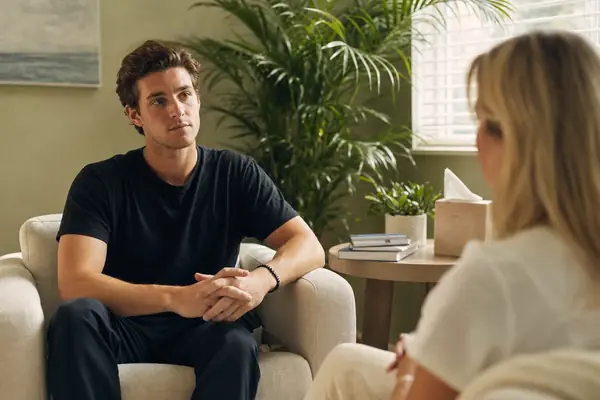
Cannabis use disorder is the most under-treated addiction in modern recovery medicine. Legalization, normalization, and cultural acceptance have made it harder for users — and their families — to recognize when use has crossed into dependence. By the time someone arrives at RECO Intensive in Delray Beach for cannabis use disorder, the impact is usually substantial: relationships, work, mental health, financial stability. The treatment is just as serious as it is for any other substance.
What cannabis use disorder actually looks like
Today's cannabis is dramatically more potent than the cannabis adults were warned about decades ago. THC concentrations in modern flower (15-30%) and concentrates (60-90%) drive a clinical picture that resembles other substance use disorders much more than the public stereotype suggests:
- Tolerance — needing more to feel anything
- Withdrawal — irritability, sleep disruption, anxiety, anhedonia for weeks after stopping
- Loss of control — using more or longer than intended
- Inability to cut down despite repeated attempts
- Continued use despite problems — relationships, work, health, finances
- Time displacement — using occupies more of life than intended
- Cannabinoid Hyperemesis Syndrome (CHS) — cyclical severe vomiting in heavy users
How RECO treats cannabis use disorder
Honest assessment first
Many cannabis users have been told for years that their use isn't a "real" problem. Our intake assessment is structured to take cannabis use disorder seriously — looking at frequency, potency, financial impact, mental-health interaction, withdrawal severity, and quality-of-life impact.
Withdrawal management
Cannabis withdrawal is real and underestimated: sleep disruption (often weeks), irritability, anxiety, decreased appetite, mood depression. Our medical team supports the physical withdrawal phase, and the therapy team supports the emotional weight of stopping a substance that's often been the client's primary coping tool for years.
Therapy-focused recovery
Cannabis use disorder doesn't typically have MAT options the way opioid or alcohol use disorder does. The work is therapeutic: CBT for the cognitive patterns that maintain use, DBT for the emotion-regulation gap that cannabis was filling, individual therapy for the psychological underneath, and family-systems work for the relational fallout.
Co-occurring condition focus
Cannabis use disorder co-occurs heavily with anxiety, depression, ADHD, and (more rarely) psychotic-spectrum conditions. Treating the co-occurring picture is often what allows the cannabis recovery to hold. Heavy cannabis use in adolescence and young adulthood has measurable mental-health risks our clinical team is trained to address.
Who this track serves
Clients whose cannabis use has progressed from recreational to compulsive. Daily heavy users — including dabbers and concentrate users — whose tolerance has driven escalation. Clients whose family has flagged the use as a problem long before the client agreed. Adolescents and young adults whose cannabis use is tangled with anxiety, depression, or academic decline. Anyone who has tried to stop on their own and couldn't.
Why RECO's approach is different
Many programs minimize cannabis use disorder or treat it as a co-occurring issue rather than a primary one. We treat it as a primary substance use disorder with its own clinical depth — and clients describe being taken seriously here as one of the first times their cannabis use was treated as the real condition it became.