The Difference Between Suboxone and Vivitrol for Opioid Rehab
When Suboxone Feels Like a Lifeline and Vivitrol Feels Like a Promise, What Actually Changes in Opioid Rehab You may be reading this with a knot in your stomach. That is normal. The choice between Suboxone and Vivitrol can feel urgent because opioid use does not leave much room for guesswork. In Delray Beach rehab […]


When Suboxone Feels Like a Lifeline and Vivitrol Feels Like a Promise, What Actually Changes in Opioid Rehab
You may be reading this with a knot in your stomach. That is normal. The choice between Suboxone and Vivitrol can feel urgent because opioid use does not leave much room for guesswork. In Delray Beach rehab settings, families often ask the same question: which one actually helps you stay safe and steady?
Why the choice between a daily medication and a monthly injection can shape early recovery in very different ways
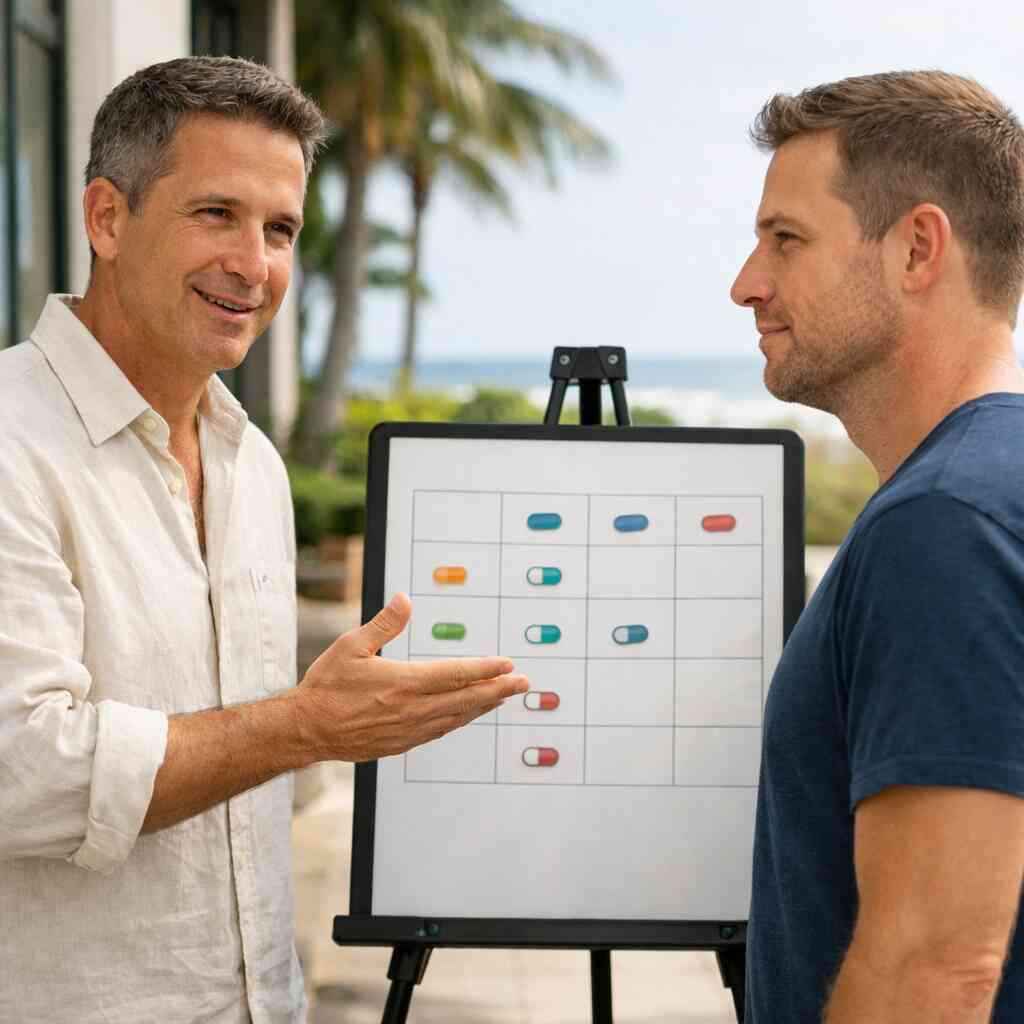
Suboxone for opioid addiction and Vivitrol for opioid recovery serve different purposes. Suboxone contains buprenorphine and naloxone, so it can reduce withdrawal symptoms and quiet cravings. Vivitrol is a monthly naltrexone injection, so it blocks opioid receptors after detox is complete. That difference matters more than most people realize.
A daily medication can fit early recovery when symptoms still feel sharp. A monthly injection can fit later recovery when someone wants receptor blockade and fewer day-to-day decisions. Here is the part most families miss: neither option is “the answer” on its own. The better choice depends on timing, stability, relapse history, and the level of support around the person.
One client in the Lake Worth area came in after trying to quit “cold turkey” three times. He was exhausted, ashamed, and convinced he had failed. Once the team explained that medication can reduce the panic of withdrawal, his face changed. The relief was not magic. It was structure.
How opioid detox and withdrawal can determine whether Suboxone maintenance or detox before Vivitrol makes more sense
Opioid detox and withdrawal support in South Florida often becomes the first decision point. If you are dealing with sweating, nausea, insomnia, body aches, and intense anxiety, the body may not be ready for Vivitrol. Naltrexone can trigger sudden withdrawal if opioids are still in the system. That is why detox before Vivitrol planning matters so much.
Suboxone can be started during supervised withdrawal in many cases, depending on clinical assessment. Vivitrol usually comes later, after full detox. For some people, that delay feels frustrating. Still, the delay protects you from a painful setback. In opioid rehab Delray families often want the fastest route, but the safest route usually wins.
What families in Delray Beach often miss when they compare craving relief, relapse prevention, and medication adherence
Families near Atlantic Avenue often focus on one question: “Which medication blocks cravings better?” That is only part of the picture. Suboxone can help with withdrawal relief and daily stability. Vivitrol can help by removing the option to “test” opioids while the medication is active. Both can support relapse prevention strategies, but they do it differently.
Medication adherence matters too. Suboxone requires consistency. Vivitrol requires keeping injection appointments. If life is chaotic, the best option may be the one the person can realistically follow. The mistake we see most often is picking a medication based on hope alone instead of daily reality.
Why the right answer can shift based on fentanyl use, heroin recovery, prescription pill addiction, or chronic relapse patterns
Fentanyl treatment options in Delray Beach often require extra caution. Fentanyl can stay in the body in complex ways, and withdrawal can feel unpredictable. Heroin recovery support in Delray Beach may also call for fast symptom control because the crash can be intense. Prescription pill addiction treatment in Delray Beach can look different again, especially when the use has been long-term and medically complicated.
Chronic relapse patterns change the equation. If someone has cycled through abstinence, relapse, and renewed detox, a longer-acting option may deserve more attention. If someone cannot tolerate withdrawal well, Suboxone may make stabilization easier. The correct choice is not about willpower. It is about matching the medication to the risk pattern in front of you.
The clinical logic behind the two paths and where each one fits in treatment
How buprenorphine and naloxone work to reduce withdrawal symptoms and quiet opioid craving management
Buprenorphine is a partial opioid agonist. That means it activates opioid receptors, but less strongly than heroin, fentanyl, or oxycodone. Naloxone is added to discourage misuse. Together, they can reduce withdrawal and support opioid craving management without creating the same high people fear. That is why many clinicians consider it a core part of medication-assisted treatment for opioid use disorder.
The strongest value of Suboxone is often practical. It helps people think, sleep, eat, and show up. It can lower the chaos that makes recovery feel impossible. On the cases we have supported this year, stabilization often came before insight. Once the body calmed down, therapy started to work better.
What naltrexone injection does by blocking opioid receptors and why full detox comes first
Vivitrol uses naltrexone, which blocks opioid receptors. If opioids are taken while the medication is active, the effect is blunted. That blockade can support accountability, especially after detox. Still, blocking opioid receptors only helps after the body is clear of opioids.
That is why full detox comes first. If not, withdrawal can hit fast and hard. For people leaving a residential treatment facility or completing South Florida detox, that timing can make Vivitrol a strong later-stage option. It is often best when the person has already passed the hardest withdrawal window and wants added protection.
When medication-assisted treatment for opioid use disorder pairs best with dual diagnosis treatment and mental health IOP
Opioid use rarely exists by itself. Many clients also live with anxiety, depression, trauma, or mood swings. That is why dual diagnosis treatment matters. The co-occurring disorder model, supported by NIDA and SAMHSA, recognizes that substance use and mental health must be treated together. When both are active, medication choice can shift.
A person with panic attacks may need a slower, more supported plan. Someone with untreated depression may need mental health IOP alongside MAT. A person with co-occurring bipolar symptoms may need close psychiatric review before the medication plan is finalized. In that setting, a simple “Suboxone or Vivitrol” question becomes much more clinical.
How evidence-based treatment plans use CBT, DBT, and EMDR trauma therapy alongside medication rather than replacing it
Medication is not the whole plan. It works best with therapy. Cognitive behavioral therapy for relapse prevention helps people spot thoughts that lead to use. Dialectical behavior therapy for coping skills teaches emotion control and distress tolerance. EMDR trauma therapy for co-occurring disorders can help process traumatic memories that fuel opioid use.
A recent analysis in JAMA Network Open found that structured treatment engagement improves when care is coordinated and sustained. That fits what many clinicians see every day. Medication creates breathing room. Therapy helps you use that breathing room well. Together, they are stronger than either one alone.
The decision pivot that matters most before admission at a Delray Beach rehab
How to tell whether a person may need South Florida detox, a residential treatment facility, PHP, or intensive outpatient care
The level of care matters as much as the medication. If withdrawal is active and safety feels shaky, South Florida detox may be needed first. If relapse risk is high, cravings are severe, or the home setting is unstable, a residential treatment facility for opioid recovery may be more appropriate. If the person needs strong structure but can sleep at home, PHP vs IOP for opioid rehab in Florida becomes the real comparison.
PHP offers more hours and more contact. IOP gives more flexibility for work, school, or caregiving. An intensive outpatient program in Delray Beach can fit people who are medically stable and need ongoing support. The goal is not to pick the most intense option. The goal is to pick the right amount of structure.
Why trauma therapy South Florida, PTSD treatment, depression and addiction, anxiety treatment in rehab, or bipolar disorder therapy can change the medication plan
Trauma changes how people respond to treatment. Trauma therapy South Florida for recovery may reveal triggers that look like cravings but are really panic, grief, or shame. PTSD treatment and substance use often need coordinated care, because a trigger can lead straight to relapse. Depression and addiction treatment may also need medication review, sleep support, and closer monitoring.
If someone is living with anxiety treatment in rehab needs or bipolar disorder therapy, the team may choose a slower pace. That can affect whether Suboxone or Vivitrol is the better fit. The medication plan should support emotional stability, not disrupt it. That is especially true in dual diagnosis opioid rehab with mental health care.
What insurance verification, out-of-network benefits, Aetna, Cigna, and Blue Cross Blue Shield can mean for private rehab access
Insurance questions can feel cold when you are scared. Still, they matter. Insurance verification for rehab in Florida tells you what care may be covered and what may require extra review. Plans from Aetna, Cigna, and Blue Cross Blue Shield can vary widely, especially around out-of-network benefits.
If you are considering private rehab in Delray Beach with licensed clinicians, verify coverage before admission if possible. That helps avoid delays when the need is urgent. RECO Intensive also works with people using self-pay options when insurance does not fit the clinical need. Clear financial planning reduces stress, and stress reduction matters in early recovery.
How RECO Intensive location, coastal healing environment, and Delray Beach recovery community can support long-term recovery planning
The setting can support the work. RECO Intensive sits at 140 NE 4th Avenue Delray Beach FL 33483, near the energy of town and the calm of the coast. A coastal healing environment can matter more than people expect. So can the steady rhythm of a Delray Beach recovery community with access to groups, support meetings, and sober routines. Delray Beach has a strong treatment landscape, from Palm Beach County treatment centers to Boca Raton outpatient and West Palm Beach mental health resources. That nearby network can help with step-down care and real-life follow-through. For families comparing how to choose a rehab, location is not just geography. It is part of continuity. 
What happens after the medication choice is made and how to keep recovery moving forward
How relapse prevention strategies, coping skills for recovery, and aftercare planning reduce the risk of return to use
A medication choice does not end the work. It opens the door. Aftercare planning for opioid rehab in Delray Beach helps keep the door open after discharge. That plan may include appointments, therapy, support groups, and medication follow-up. It should also include practical triggers, like paydays, certain routes, or contact with old using circles.
Coping skills for recovery are not abstract. They are things like calling support, using urge surfing, leaving a risky setting, eating on time, and getting sleep. Holistic recovery can also help, especially when paired with evidence-based care. Mindfulness, movement, and routine matter because the nervous system is learning a new normal.
Why family therapy, group therapy activities, and family weekend can strengthen support during opioid rehab Delray
Opioid recovery affects the whole family. That is why family therapy in addiction recovery can be so important. It gives loved ones a place to ask hard questions without turning every conversation into a crisis. It also helps replace blame with clear plans and boundaries. For many families, that is a relief.
Group therapy activities in recovery add another layer. People hear their own fears in someone else’s story. They practice honesty, feedback, and accountability. At RECO Intensive, those purposeful groups fit the larger treatment model. Family weekend can also help relatives understand the pace of healing, which is often slower than they hoped but steadier than they feared.
How sober living resources, 12-step alternatives, SMART Recovery, and alumni program support life after treatment
Recovery after treatment needs structure. Sober living resources in Delray Beach can provide that bridge between treatment and full independence. For some people, 12-step alternatives feel more natural than traditional meetings. Others like SMART Recovery for opioid recovery support because it emphasizes practical tools and self-management.
An alumni program can keep support going after discharge. That matters when early confidence starts to fade. If you want long-term recovery planning, ask how the program handles continuing contact, check-ins, and community support. RECO Intensive alumni support is strongest when it fits real life, not just treatment life.
When to use RECO Intensive admissions support, case management, and life skills training to build a stable next plan
The intake process should feel clear, not confusing. RECO Intensive admissions process support can help coordinate records, clinical history, and insurance questions. Case management and life skills training can cover housing, transportation, appointments, and work planning. Those details sound small until you are the one trying to stay sober while juggling everything else.
If you are searching for Florida addiction treatment or a drug rehab near me, start with one practical call. Ask about medication options, therapy, and level of care. Then ask how the program will support discharge planning. A strong plan is not built in a rush. It is built with steady hands and honest answers.
Frequently Asked Questions
Question: How does RECO Intensive help people in Delray Beach decide between Suboxone for opioid addiction and Vivitrol for opioid recovery?
Answer: At RECO Intensive, the choice between Suboxone for opioid addiction and Vivitrol for opioid recovery is handled through a careful clinical assessment, not a one-size-fits-all approach. Our team looks at where a person is in recovery, whether they are in opioid detox and withdrawal, their relapse history, and whether they may need South Florida detox before starting a medication-assisted treatment for opioid use disorder plan.
Suboxone maintenance may be considered when someone needs reducing withdrawal symptoms and more immediate support with opioid craving management. Vivitrol injections are usually discussed only after detox before Vivitrol is complete, since naltrexone injection blocks opioid receptors and can trigger withdrawal if opioids are still present. We help clients and families understand when to use Suboxone, when to use Vivitrol, and how comparing MAT options fits into long-term recovery planning.
Our Delray Beach rehab setting also supports dual diagnosis treatment, so if anxiety, depression, PTSD, or bipolar disorder are part of the picture, the medication plan can be aligned with mental health IOP or other levels of care. The goal is to match treatment to the person’s current needs with licensed clinicians and evidence-based treatment, while keeping the process compassionate and clear.
Question: What does The Difference Between Suboxone and Vivitrol for Opioid Rehab mean for someone who may need detox, residential treatment, or PHP vs IOP?
Answer: The blog title The Difference Between Suboxone and Vivitrol for Opioid Rehab points to a very important treatment question: what level of care comes first, and what medication fits that stage? At RECO Intensive, we help people determine whether they need South Florida detox, a residential treatment facility, a partial hospitalization program, or an intensive outpatient program based on their symptoms, safety, and home support.
If withdrawal is active, starting Suboxone maintenance may be discussed because it can reduce withdrawal symptoms and help stabilize the person during early treatment. If someone has already completed detox and needs a monthly option that blocks opioid receptors, Vivitrol injections may be appropriate to discuss. That timing issue is why detox before Vivitrol is such an important clinical step.
Our team also helps families understand what is PHP vs IOP so they can choose the right structure. PHP may offer more support after detox or residential treatment, while IOP may fit people who are stable enough to live at home and still need strong outpatient program Delray Beach support. The right plan depends on the whole clinical picture, not just the medication choice.
Question: Does RECO Intensive offer support for dual diagnosis, trauma therapy South Florida, and opioid rehab Delray alongside medication-assisted recovery?
Answer: Yes. RECO Intensive is built to support people who need opioid rehab Delray and also live with co-occurring disorders such as depression and addiction, anxiety treatment in rehab needs, PTSD treatment and substance use, or bipolar disorder therapy. Medication-assisted recovery can be much more effective when it is paired with dual diagnosis opioid rehab and individualized behavioral health care.
Our approach may include cognitive behavioral therapy for relapse prevention, dialectical behavior therapy for coping skills, and EMDR trauma therapy when trauma is part of the recovery story. These services are designed to work alongside medication-assisted treatment, not replace it. That combination can help people build coping skills for recovery while also learning relapse prevention strategies that fit real life.
For many clients, this also means access to group therapy activities, family therapy in addiction recovery, family weekend, mindfulness meditation, and other holistic recovery tools. Because recovery is rarely just about stopping substance use, we focus on the emotional, mental, and practical pieces that support long-term recovery planning.
Question: How does RECO Intensive support insurance verification for rehab in Florida, including Aetna, Cigna, Blue Cross Blue Shield, and out-of-network benefits?
Answer: We know that insurance verification for rehab in Florida can feel overwhelming, especially when someone needs help quickly. RECO Intensive helps people review coverage for Florida addiction treatment, including plans through Aetna, Cigna, and Blue Cross Blue Shield, as well as any out-of-network benefits that may apply. If insurance does not fit the clinical need, we can also discuss self-pay options.
Our admissions team works to make the intake process as straightforward as possible so families can focus on getting help instead of getting stuck in paperwork. We can explain what may be covered for detox, residential treatment facility services, partial hospitalization program care, intensive outpatient treatment, and ongoing aftercare support.
Because every policy is different, we encourage people to verify benefits early if possible. That step can make it easier to move into treatment quickly, whether someone is looking for a drug rehab near me, an outpatient program Delray Beach, or a private rehab in Delray Beach with licensed clinicians.
Question: What happens after medication choice at RECO Intensive, and how do aftercare planning, sober living resources, and the RECO Intensive alumni program help with relapse prevention?
Answer: After a medication choice is made, the work shifts toward stability and long-term recovery planning. RECO Intensive supports aftercare planning for opioid rehab in Delray Beach with a focus on relapse prevention strategies, coping skills for recovery, and practical next steps for daily life. This can include case management and life skills training, nutritional counseling, and vocational support depending on the person’s needs.
We also help clients explore sober living resources, 12-step alternatives, and SMART Recovery for opioid recovery so they can stay connected to support after formal treatment ends. For many people, continued structure matters just as much as the original treatment decision. That is why ongoing support is often built into the discharge plan.
The RECO Intensive alumni program can provide another layer of connection after treatment. We believe recovery should not end at discharge; it should transition into real life with support, accountability, and community. That is especially important in a place like Delray Beach, where the recovery community can be a powerful part of staying engaged.
Question: Why do families choose RECO Intensive for Florida addiction treatment and South Florida recovery support?
Answer: Families often choose RECO Intensive because they want a program that understands both the medical and personal sides of addiction. Located at 140 NE 4th Avenue Delray Beach FL 33483, our setting offers access to the Delray Beach recovery community, beachside recovery energy, and a broad network of South Florida recovery resources. That can matter when someone is looking for stability, connection, and continuity after detox or residential care.
We support a wide range of needs, including fentanyl treatment options, heroin recovery support, prescription pill addiction treatment, and other forms of opioid dependence treatment. We also serve people who may need young adult rehab, LGBTQ+ affirmative treatment, veterans addiction help, gender-specific treatment, women’s rehab, or men’s recovery support.
Our goal is to provide compassionate, evidence-based treatment that helps people feel seen rather than judged. From signs of opioid addiction to aftercare support, from insurance verification to sober things to do Delray, we aim to make the path forward clearer. For families comparing how to choose a rehab, that combination of clinical support and community connection can make a meaningful difference.
“I cannot say enough wonderful things about RECO and the incredible staff who cared for my son during his time in treatment. As a parent, sending your child to treatment by himself 12 hours away from home, is one of the hardest and most frightening things you can ever go through. From the beginning, RECO gave us a sense of comfort, hope, and trust that meant more to our family than I can put into words.
What stood out most to me was how supportive and genuinely caring the staff are. David Levin is an excellent representative of the top-notch facility they run there. I was honored to establish a connection with counselors Ms. V and Jay. The RECO team treated my son, as well as myself as an individual, not an insurance opportunity.
The people at RECO made my son feel supported, accepted, and cared about. It feels like a family. It was clear that the staff genuinely wanted to see him succeed, and that they were invested in his future—not just his time in the program. The Wednesday night Reco family zoom calls are excellent. My son has “graduated” from Reco, but I still attend the calls weekly as an alumni parent. I recently visited the Reco facility in August 2026. Yes, it is a beautiful place, but more importantly, it houses faculty that is inviting and positive to all who enter.
We will always be grateful to the entire RECO team for the compassion, patience, education, and support they gave our son and our family.
If you are a parent looking for a treatment center where your loved one will be treated with dignity, compassion, and genuine care, I would highly recommend RECO. They became much more than a treatment team to our family—they became people we will always be grateful for.”- b R., a 5 star review from RECO Intensive on Google Business Reviews


