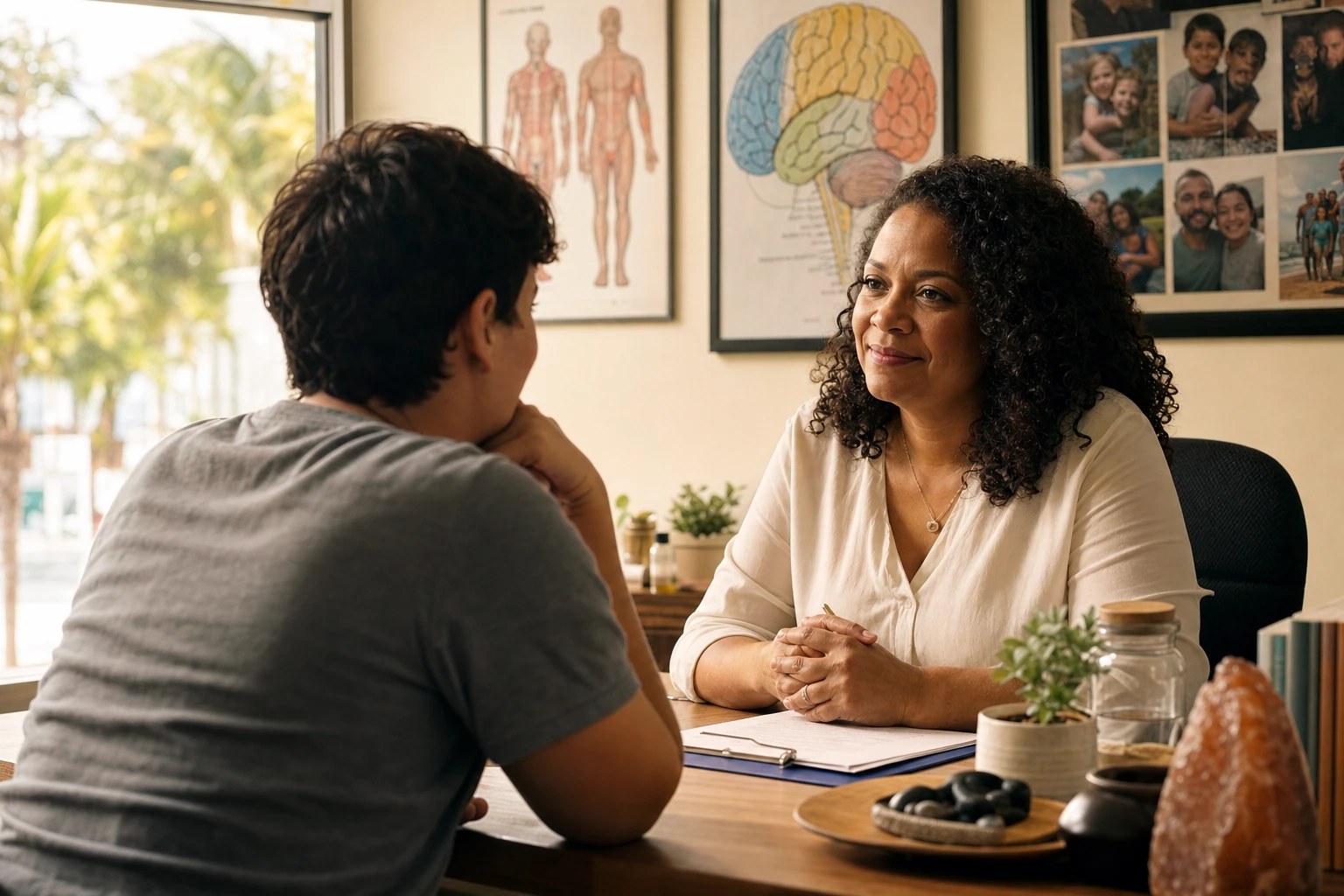
Addiction is never just one thing. It is a biological condition (changes in brain reward circuitry, sleep, neurochemistry), a psychological condition (trauma, attachment, identity, meaning), and a social condition (family system, peer network, work, housing, community). Treating only one dimension leaves recovery fragile. RECO Intensive's bio-psycho-social model attends to all three.
What bio-psycho-social care looks like at RECO Intensive
Every treatment plan is built across three axes. The biological work includes medical screening, medication management, IV therapy when indicated, nutrition, sleep, and exercise — addressing what addiction has done to the body. The psychological work includes individual psychotherapy, group therapy, trauma processing, mindfulness, and identity work. The social work includes family therapy, peer recovery community, alumni integration, work and school re-entry support, and housing decisions.
The model is not abstract — it shows up in your weekly schedule. You see a physician AND a therapist AND your case manager. You attend group therapy AND family therapy AND alumni groups. The three dimensions are treated as inseparable.
The three axes at RECO
- Biological: medical screening, medication, IV therapy, nutrition, sleep, exercise, neuroscience-informed treatments like qEEG
- Psychological: individual therapy, group process, trauma-focused therapies, mindfulness, cognitive-behavioral and dialectical skills
- Social: family therapy, peer support, alumni community, work re-entry, housing planning, community integration
Who the model serves best
Every client. The bio-psycho-social model is the standard of care in modern addiction medicine — and it matters most for clients whose previous treatment was one-dimensional (only therapy, only medication, only 12-step) and didn't hold.
How the three axes integrate
Findings in one dimension inform the others. A medical finding (e.g. low B12 affecting mood) changes the psychological treatment focus. A family-systems insight in therapy changes the social plan. A peer support relationship shift changes the clinical conversation. The weekly multi-disciplinary team meeting is where these dimensions sync.
Why the RECO approach is different
Many programs talk about bio-psycho-social treatment and deliver predominantly one dimension. We staff and structure to deliver all three — and the integration across them is what creates the depth of recovery our alumni community attests to.