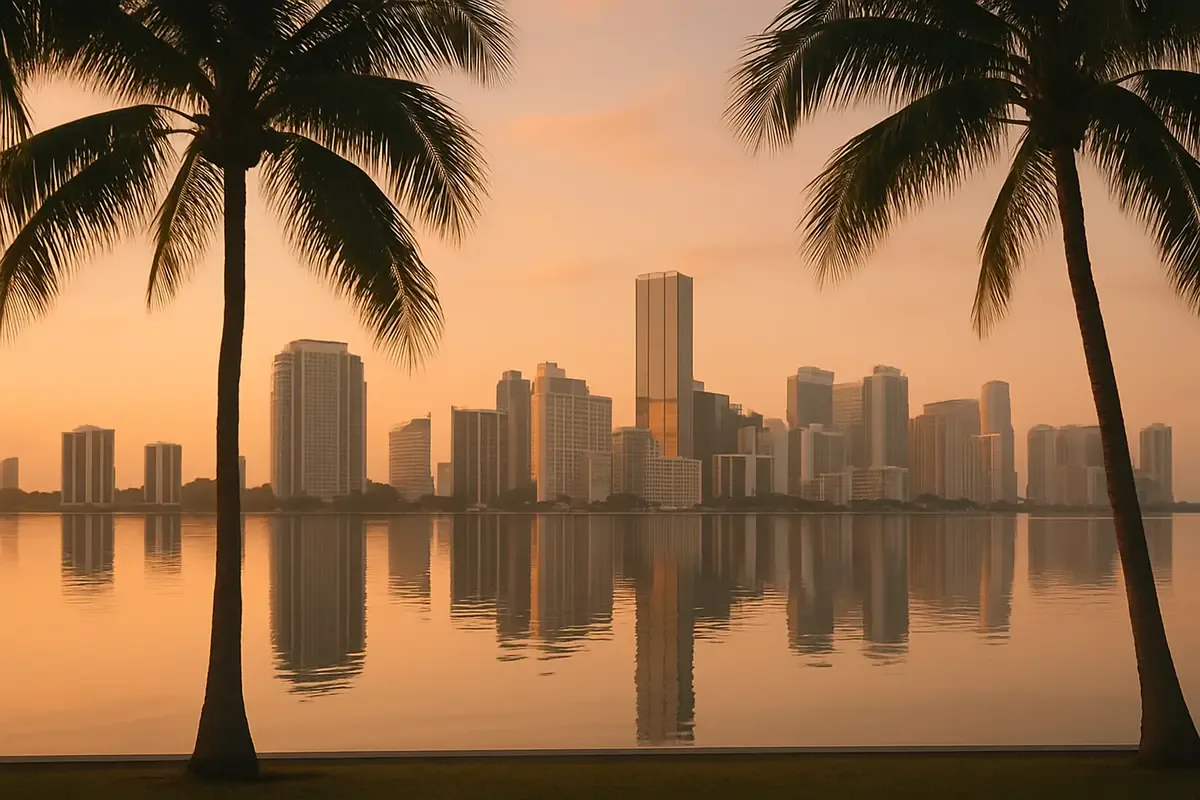
Drug rehab, an hour from Miami.
A specialist outpatient program for clients in Miami. PHP, IOP, in-house psychiatry, sober-living network, family programming. Same admissions team, 24/7.
Start the conversation Or call directly — (866) 396-2008Local options exist. This is the clinical specialist.
For many Miami clients, the distance is the feature. The same neighborhoods that trigger active use are also the neighborhoods where it's hardest to start sobriety — too many bars, too many old friends, too many associations. Delray Beach is far enough to create real separation (an hour from Brickell, an hour from Wynwood) while close enough that family visits and weekend integrations stay practical. The drive itself becomes a transition ritual.
If you are reading this from a condo on Brickell Avenue, a bungalow off Sunset Drive in Coral Gables, or a quiet block in Pinecrest, the question is probably not whether you need drug rehab — it is whether leaving Miami for an hour up I-95 is worth the disruption to your job, your family, and your routines. The honest clinical answer is that for many people calling from 33131 or 33156, the distance to Delray Beach is doing therapeutic work that a program down the street from your usual bar in Brickell or your dealer’s block in Little Havana simply cannot do. RECO Intensive sits about 50 miles north of downtown Miami, roughly 65 minutes in normal traffic, and the gap is wide enough that on-site sober living becomes the default rather than a daily commute back through Aventura. What follows is meant to answer the specific questions Miami clients actually ask before they commit — about the drive itself, about how work and parenting fit, about what aftercare looks like once you are back south of the county line.
Why geographic distance is sometimes the clinical point
For many clients, the neighborhood is part of the problem. Brickell’s bar scene, Wynwood’s events calendar, South Beach’s nightlife, the social networks that formed around cocaine in Coral Gables or opioids in Little Havana — these are not neutral environments for someone in early recovery. Proximity to the places, people, and routines associated with active use is one of the most consistent predictors of early relapse. Environmental cue reactivity is not a metaphor; it is a documented neurobiological phenomenon in which environmental stimuli associated with prior drug use reactivate craving pathways that are otherwise dormant.
The one-hour drive from Miami to RECO Intensive in Delray Beach is not a logistical inconvenience to be minimized. For many Miami clients, it is the primary therapeutic mechanism of the location decision. Delray Beach is far enough from Miami to represent genuine environmental separation. It is close enough that families can visit, weekend integrations can be planned, and re-entry into the Miami environment can happen in a supervised, graduated way during the later stages of treatment.
Trigger geography and the treatment environment
Delray Beach has an established recovery community infrastructure — peer support groups, alumni networks, sober social activity — that Miami-Dade County does not replicate at the same density. The recovery community in Delray Beach is one of the largest in the southeastern United States, which means that clients from Miami who relocate temporarily for treatment are entering a social environment where recovery is normative rather than exceptional. This is not incidental to treatment effectiveness; peer environment is one of the most powerful predictors of post-treatment sobriety.
At RECO Intensive, the client population is drawn from across South Florida and from other states. A Miami client in PHP is unlikely to encounter peers directly connected to their using social network. Group therapy draws on diverse life experiences, and the peer relationships that form during treatment are not contaminated by shared histories in the same using environments.
What PHP looks like from Miami
For Miami clients attending PHP at RECO, the standard arrangement is to stay in RECO’s sober-living network in Delray Beach during the PHP phase rather than commuting. The one-hour each-way commute would make daily PHP attendance impractical and fatiguing. Sober living in Delray provides structured overnight housing coordinated with the clinical program, peer community in the evenings, and the full environmental separation that makes treatment in Delray clinically distinct from treatment in Miami.
After completing PHP and stepping down to IOP, some clients continue to stay in Delray and commute to RECO for IOP days. Others begin to reintegrate into Miami earlier in the IOP phase, making the one-hour drive on program days and spending other days reconnecting with family and beginning to rebuild their home environment. This graduated reintegration is planned collaboratively with the primary therapist and is paced according to the client’s relapse-prevention plan and the stability of their Miami environment.
Weekend integration during treatment
Weekend visits home, or family visits to Delray Beach, are typically incorporated into the treatment plan during the PHP phase. The timing and structure of these visits — whether the client returns to Miami for a weekend or stays in Delray — are discussed with the primary therapist and based on clinical readiness. Early in PHP, environmental separation is usually maintained. As clients demonstrate sustained sobriety and functional relapse-prevention skills, graduated re-exposure to the Miami environment is planned and processed in therapy, not handled ad hoc.
The full continuum for Miami clients
RECO offers Miami clients the full treatment continuum: coordinated medical detox through partner facilities, residential treatment when indicated, PHP, IOP, sober living, and aftercare. Substance-specific tracks for opioids, cocaine and crack, alcohol, and benzodiazepines are available. For more on specific substance treatment approaches, visit cocaine treatment, alcohol treatment, and opioid treatment. To begin the intake process, call (866) 396-2008.
Serving residents of: Brickell, Coconut Grove, Coral Gables, Miami Beach, Wynwood.
If it's any of these, we can help.
From Miami callers, most asked.
Is it worth traveling from Miami to Delray Beach for drug rehab?
Do I have to commute an hour each way every day for PHP?
Can my family visit me during treatment if I am staying in Delray?
What Miami-area substances does RECO specialize in treating?
Does RECO accept insurance from Miami-based employers or Florida plans?
How does RECO help Miami clients build a sober support network outside Miami?
What does the actual drive from Miami to RECO in Delray Beach look like?
Can I keep working remotely or co-parenting from Miami while in drug rehab at RECO?
Other miami-area communities we serve.

Confidential. No commitment.
Tell us a little and a real human from admissions will call you back. We verify insurance benefits within minutes and tell you honestly whether RECO is the right fit — including if we should refer you elsewhere.