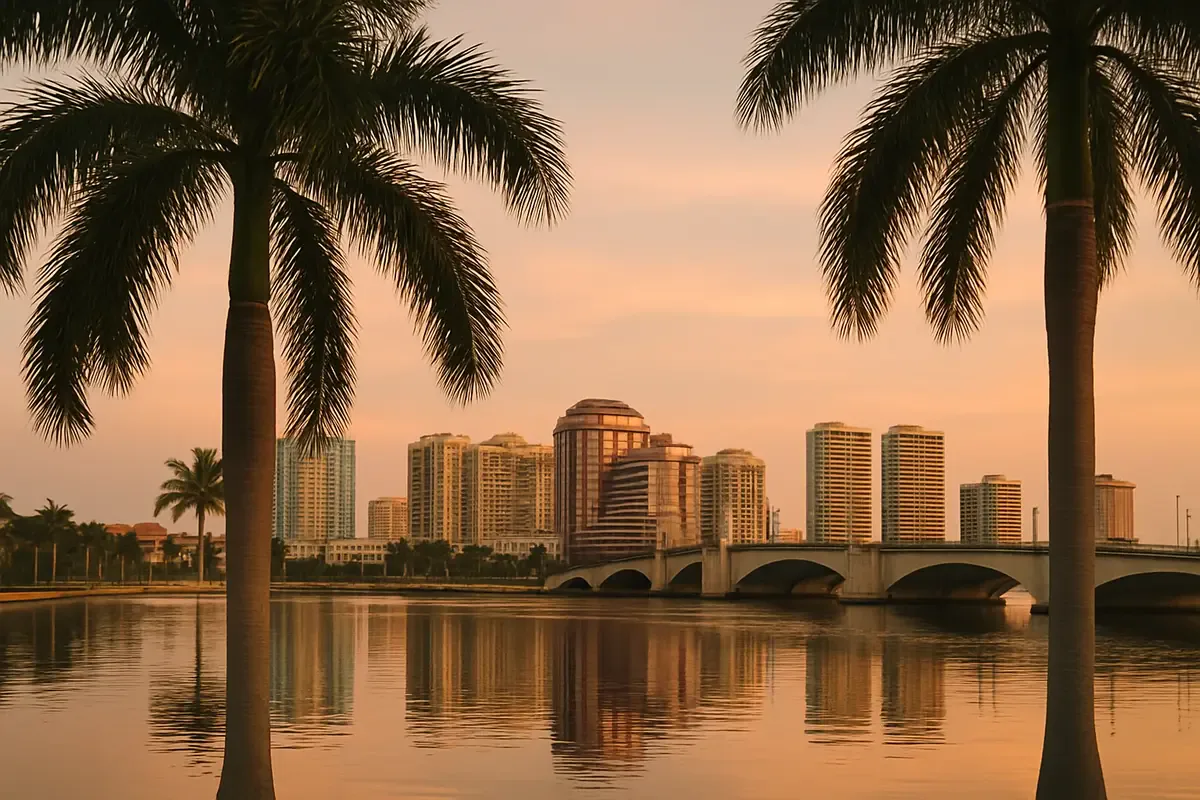
Outpatient addiction treatment, 28 minutes from West Palm Beach.
A specialist outpatient program for clients in West Palm Beach. PHP, IOP, in-house psychiatry, sober-living network, family programming. Same admissions team, 24/7.
Start the conversation Or call directly — (866) 396-2008Local options exist. This is the clinical specialist.
For West Palm Beach residents, RECO's Delray campus is the closest specialist-level PHP/IOP program with an in-house sober-living network — about 28 minutes down I-95 from El Cid, Flamingo Park, or SoSo. Clients keep the same primary therapist from PHP through IOP and aftercare, and placement decisions follow ASAM criteria rather than bed availability. That continuity, combined with manageable commute distance, is why families south of Okeechobee Boulevard tend to choose Delray over options further north.
West Palm Beach sits roughly 18 miles north of RECO Intensive’s Delray Beach campus — about 28 minutes down I-95 or Federal Highway outside of rush hour. For families living south of Okeechobee Boulevard, in El Cid, Flamingo Park, SoSo, or the blocks around Downtown WPB, the Delray campus is the closest specialist-level Partial Hospitalization (PHP) and Intensive Outpatient (IOP) program with an integrated sober-living network. That proximity matters more than it sounds: when a client is attending PHP five days a week, the difference between a 28-minute drive and a 60-minute drive often determines whether they actually finish the program.
This page explains how outpatient addiction treatment is structured at RECO, who it’s appropriate for clinically, and what the day-to-day looks like for someone commuting from West Palm Beach. If you want to skip ahead and verify benefits, our insurance verification page handles most major carriers in Florida.
What outpatient addiction treatment actually means
“Outpatient” is a broad category that spans a wide clinical range. On one end is standard outpatient — an hour of individual therapy each week, maybe a single group. On the other end is Partial Hospitalization, which runs 30 or more clinical hours weekly and looks much closer to residential care than to a typical therapy schedule. Between those two sits Intensive Outpatient, generally around 15 hours per week across three to five days.
For most people with a moderate-to-severe substance use disorder, standard outpatient is not enough clinical density to interrupt the disease process. PHP or IOP is usually the appropriate starting level — the question is which one, and for how long. At RECO, the PHP program and the IOP program are staffed by the same clinicians and use the same evidence-based modalities, so a client can step down from PHP to IOP without losing their primary therapist or rebuilding rapport with a new group. That continuity is one of the structural reasons completion rates hold up when clients transition between levels of care.
Who outpatient is the right fit for
Level-of-care decisions at RECO follow the American Society of Addiction Medicine (ASAM) placement criteria. The criteria assess six dimensions: acute intoxication and withdrawal risk, biomedical conditions and complications, emotional/behavioral/cognitive conditions, readiness to change, relapse and continued-use potential, and the recovery environment.
Outpatient treatment — even at the PHP level — is clinically appropriate when withdrawal risk can be managed without 24-hour medical observation, when co-occurring medical and psychiatric conditions are stable enough for community-based care, and when the home or sober-living environment supports recovery rather than undermining it. A client who needs medically managed detox, who has unstable suicidality, or whose living environment is actively triggering would typically start in residential care first and step down to PHP afterward. We’re explicit about that boundary; outpatient is the right answer for many people, but not every person, and an honest placement assessment is the first conversation.
For West Palm Beach residents already engaged with a psychiatrist, primary care doctor, or therapist, we coordinate directly with those providers rather than asking the client to start over.
What a PHP day looks like
PHP at RECO runs Monday through Friday, typically from mid-morning through mid-afternoon. The day is built as a coherent clinical block — process group, psychoeducation group, an individual session two or three times a week, psychiatric medication management as needed, and experiential modalities like art therapy, equine work, or beach-based mindfulness sessions woven through the week.
The therapeutic modalities themselves are the workhorses: Cognitive Behavioral Therapy (CBT) for the thought patterns driving use, Dialectical Behavior Therapy (DBT) skills for distress tolerance and emotion regulation, Motivational Interviewing (MI) for ambivalence, and Trauma-Focused CBT or EMDR when trauma is a meaningful driver — which, in our experience, it usually is. For clients with alcohol or opioid use disorder, our psychiatrist will discuss medication-assisted treatment options including naltrexone (oral or Vivitrol), acamprosate for alcohol, and buprenorphine for opioids. MAT is offered, not required; the decision is clinical and individualized.
IOP follows the same structure compressed into three to five shorter days — typically 9 to 12 hours of group and individual work weekly, scheduled so clients can return to work, school, or parenting responsibilities. The clinical content does not get diluted; the contact hours do.
Sober living as part of the treatment plan
Many West Palm Beach clients come to us with stable housing and a supportive partner or family — those clients commute from El Cid, Northwood Hills, or SoSo, attend PHP, and return home each evening. Others arrive in a living situation that is, clinically speaking, the problem: a roommate who uses, a partner who drinks heavily, or a household where the substance is woven into daily life.
For that second group, RECO operates its own network of sober-living residences in Delray Beach, walking or short-driving distance from the clinical campus. The houses are coordinated directly with the treatment team — the case manager who places a client in a residence is the same person tracking their PHP attendance and their progress on their treatment plan. Sober living isn’t a separate vendor relationship; it’s part of the same clinical structure. For West Palm Beach clients whose home environment isn’t ready to support PHP, this is often the path that makes outpatient treatment actually viable.
How long treatment lasts, and what comes after
A typical clinical arc at RECO is roughly four to six weeks at PHP, eight to twelve weeks at IOP, followed by step-down to standard outpatient and our aftercare and alumni programming. Those numbers are clinical averages, not promises — some clients need longer at PHP, some can move to IOP earlier. The treatment plan is reviewed weekly with the primary therapist and adjusted based on observable progress: attendance, group participation, drug-screen results, sleep, mood, relationships at home.
If the presenting substance is alcohol, our alcohol-specific treatment page walks through the medication and therapy combinations we use most often. For opioid use disorder — which has shifted heavily toward fentanyl in Palm Beach County over the last several years — the opioid treatment page covers MAT options and the harm-reduction posture we take during stabilization.
Getting started from West Palm Beach
The first step is a phone conversation with our admissions team at (866) 396-2008. That call covers the ASAM-relevant questions — substance, frequency, withdrawal history, prior treatment, medical and psychiatric history, current living situation — and ends with an honest recommendation about level of care. RECO is in-network with most major commercial carriers serving Palm Beach County, including Aetna, Cigna, Blue Cross Blue Shield, and many regional plans; benefits are verified before admission, and out-of-pocket numbers are quoted upfront rather than after the fact.
For West Palm Beach families who want to tour the Delray campus before committing, we schedule in-person visits most weekdays. The 28-minute drive down I-95 — or the more scenic route on Federal Highway through Lake Worth Beach and Boynton Beach — is short enough that an afternoon visit is realistic even for a working family member.
Serving residents of: El Cid, Flamingo Park, Northwood Hills, SoSo, Downtown WPB.
If it's any of these, we can help.
From West Palm Beach callers, most asked.
How long is the drive from West Palm Beach to RECO's Delray campus?
Is RECO in-network with my insurance?
What's the difference between PHP and IOP, and how do I know which one I need?
Can I keep working or stay involved with my family during outpatient treatment?
Do I need to live in sober living, or can I commute from my home in West Palm Beach?
Does RECO offer medication-assisted treatment (MAT) for alcohol or opioid use disorder?
Other west palm beach-area communities we serve.


Confidential. No commitment.
Tell us a little and a real human from admissions will call you back. We verify insurance benefits within minutes and tell you honestly whether RECO is the right fit — including if we should refer you elsewhere.