
Residential addiction treatment for Lantana families.
A specialist outpatient program for clients in Lantana. PHP, IOP, in-house psychiatry, sober-living network, family programming. Same admissions team, 24/7.
Start the conversation Or call directly — (866) 396-2008Local options exist. This is the clinical specialist.
For families in Lantana, Hypoluxo Island, Manalapan, and Ocean Ridge, RECO is the closest clinically-led residential addiction program with an attached PHP and IOP continuum — about 18 minutes south via Federal Highway. The same primary therapist, psychiatrist, and case manager carry a client through every step down, so progress isn't lost in a handoff. Residences are real houses in Delray, not warehoused beds.
If you live on Hypoluxo Island, in Manalapan, or anywhere along the small barrier-island stretch of Lantana, RECO Intensive sits about 18 minutes south down Federal Highway — a touch less if you take A1A past Ocean Ridge. For families in this corner of Palm Beach County, that drive matters: it puts a residential addiction treatment program with 24-hour clinical structure inside a reasonable radius without pulling someone you love hours away from home. RECO operates six residences in Delray Beach paired with a clinically-led day program, and the same treatment team carries a client from residential through PHP, IOP, and aftercare rather than handing them off at every transition.
Residential is the most intensive non-hospital level of care. It is the right answer when withdrawal risk has passed but the foundational skills of early recovery — sleep, structure, accountability, relapse-prevention strategies — have not yet been built. The sections below describe how we decide who needs it, what 30 to 60 days inside the program actually looks like, and how the step-down to partial hospitalization and intensive outpatient is structured so progress isn’t lost between providers.
When residential is the clinical indication
Not everyone who calls needs residential treatment. The decision is made using the ASAM Criteria, which look at six clinical dimensions: acute intoxication and withdrawal potential, biomedical conditions, emotional and behavioral concerns, readiness to change, relapse and continued-use potential, and the recovery environment. When several of those dimensions point in the same direction — for instance, repeated relapse after outpatient attempts, a home environment where substances are present, or co-occurring depression or trauma that has gone untreated — residential becomes the clinically appropriate starting point.
We see this pattern often with people who tried to manage things on their own from a quiet condo in Manalapan or Old Town Lantana and found that the structure of daily life alone wasn’t enough to interrupt the cycle. Residential isn’t a moral verdict; it is a clinical recommendation based on what the criteria actually show. The intake team walks families through the assessment so the recommendation is explained, not just delivered.
What 30 to 60 days of residential actually covers
A typical residential stay at RECO runs four to eight weeks, with most clients in the 30-to-60-day window. The first week prioritizes stabilization — re-establishing sleep, restoring nutrition, and completing a full biopsychosocial assessment. Psychiatry is involved early when there are co-occurring conditions or when medication-assisted treatment is on the table. For alcohol use disorder, that may mean naltrexone or acamprosate; for opioid use disorder, buprenorphine or extended-release naltrexone (Vivitrol). Decisions about MAT are made collaboratively, with clear explanations of what each medication does and doesn’t do.
From there, the clinical week is built around evidence-based modalities: cognitive behavioral therapy and dialectical behavior therapy for thought patterns and emotion regulation, motivational interviewing to deepen commitment to change, and trauma-focused approaches — including EMDR and Trauma-Focused CBT — when trauma is part of the clinical picture. Group therapy runs daily. Individual sessions with a primary therapist happen weekly, more often when needed. Family work begins as soon as it is appropriate, because the system a client returns to matters as much as the work done inside the program. Underneath all of this is the unglamorous work of rebuilding rhythm: a consistent wake time, three meals, exercise, and the small daily decisions that addiction had quietly taken over.
The step-down to PHP and IOP
Residential is the start of the continuum, not the whole of it. Most clients step down to PHP for roughly four to six weeks — full clinical days, evenings free in structured housing — and then to IOP for another eight to twelve weeks at reduced clinical hours, often while returning to work or school. After IOP, aftercare and alumni programming keep someone connected to the recovery community for as long as they want that connection.
The reason we describe the whole arc up front is that the transitions are where treatment most often fails when programs are siloed. At RECO, the primary therapist, psychiatrist, and case manager who managed residential continue with the client through PHP and into IOP. There is no re-telling of the trauma history to a new provider, no re-arguing of the medication plan with a new prescriber. Continuity is the clinical model, not a marketing line.
Real residences, not warehoused beds
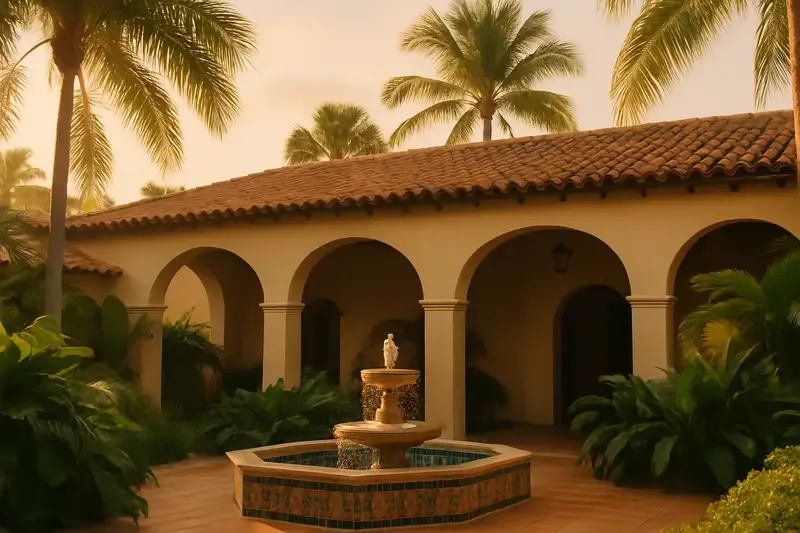
The residential side of the program is six properties in Delray Beach — actual houses, not a facility wing. Each one is held to the standard we would want for our own family member: clean, calm, and small enough that house managers know who is doing well and who is struggling that day. House managers are trained in recovery support and communicate daily with the clinical team. Curfews, accountability checks, drug screens, and house meetings are part of the structure; so are evenings where residents cook dinner together and weekend recovery activities that introduce them to a sober community they will need long after discharge.
This matters because the environment is part of the treatment. A residential program that warehouses clients in a sterile bed unit is not the same intervention as one that uses the residence itself to teach the daily skills of recovery. For someone coming from a quiet street on Hypoluxo Island or Ocean Ridge, the goal is not to replicate that solitude — it is to give them, briefly, a structured community in which sober living becomes the default again before they return home.
Getting started from Lantana — insurance, logistics, and first steps
RECO is in-network with most major commercial insurers, including Aetna, Cigna, Blue Cross Blue Shield, and several others. The insurance verification team will run benefits before any clinical commitment is made and will explain in plain language what residential coverage looks like under a specific plan — including deductible, copay or coinsurance, and any prior-authorization steps. Cost is rarely as opaque as families fear once benefits are actually run.
For Lantana families, the practical logistics are simple. Admissions can usually arrange a same-day or next-day intake. Transportation from the Hypoluxo Island, Manalapan, or Old Town Lantana area is straightforward — the drive is well under twenty minutes — and family members can be involved in the intake by phone or in person without needing to clear an entire day. If a client is currently using and there is meaningful withdrawal risk (alcohol, benzodiazepines, or opioids), medical detox is arranged first with a partner facility, then they enter residential when medically cleared. Specific drug-class considerations are covered in our alcohol and opioid treatment pages. For families weighing residential against a less-intensive starting point, the intake team will say so honestly — the goal is the right level of care, not the most expensive one.
Serving residents of: Hypoluxo Island, Manalapan, Ocean Ridge, Old Town Lantana.
If it's any of these, we can help.
From Lantana callers, most asked.
How far is RECO Intensive from Lantana, and how do families handle the drive?
What insurance does RECO accept for residential treatment?
How is the decision made between residential, PHP, and IOP?
Is RECO the closest residential addiction program to Hypoluxo Island and the Lantana barrier islands?
How long is a typical residential stay, and what happens after?
What does a typical day in residential treatment look like?
Other lantana-area communities we serve.


Confidential. No commitment.
Tell us a little and a real human from admissions will call you back. We verify insurance benefits within minutes and tell you honestly whether RECO is the right fit — including if we should refer you elsewhere.