
Understanding RECO Intensive’s 2025 Mental Health Vanguards
Dawn of the Vanguard Era: A Prologue to Transformative Mental Health Horizons Shifting paradigms in the Delray Beach rehab center culture The local recovery landscape is evolving rapidly, and a Delray Beach rehab center now feels more like a vibrant community hub than a sterile clinic. Five years ago, clients spoke about completing programs; today […]

Dawn of the Vanguard Era: A Prologue to Transformative Mental Health Horizons
Shifting paradigms in the Delray Beach rehab center culture
The local recovery landscape is evolving rapidly, and a Delray Beach rehab center now feels more like a vibrant community hub than a sterile clinic. Five years ago, clients spoke about completing programs; today they speak about building identities. That nuance signals a crucial shift from symptom management to holistic life redesign. Institutions such as the RECO Intensive center overview in Delray Beach exemplify this cultural renaissance through art therapy nights, alumni mentorship, and neighborhood volunteerism. Consequently, people searching “rehab center near me” recognize Delray Beach not only for sunshine but also for pioneering mental health havens.
Residents also notice that the language is changing within every rehab center in Delray Beach. Staff members replace detached clinical phrases with collaborative expressions like “recovery partnership” and “wellness blueprint.” Families no longer feel sidelined; instead, they participate in weekly solution-focused dialogues that honor cultural roots. As a result, trust deepens, stigma shrinks, and community engagement multiplies. This paradigm shift empowers clients to envision sustainable futures while reinforcing South Florida’s reputation as a holistic recovery center capital.
From traditional treatment centers to holistic recovery ecosystems
Historically, treatment centers viewed addiction through a narrow lens of detoxification and abstinence. Today, the conversation pivots toward ecosystem thinking, where advanced treatment services intersect with nutrition, neurofeedback, and eco-therapy. The holistic model cultivates resilience by fusing clinical precision with experiential learning, allowing recovery programs to extend beyond four walls. More importantly, clients develop agency, practicing mindfulness and breathwork under open skies rather than fluorescent lights. Such immersive design redefines next-gen detox centers as springboards into balanced, purpose-driven living.
Equally transformative is the integration of community-based resources within these ecosystems. Yoga studios, local farms, and art collectives collaborate with Florida rehab providers to create seamless wellness corridors. Therefore, individuals receive consistent support whether they attend group sessions, volunteer at coastal cleanups, or join sober surfing clubs. This continuity dissolves barriers between therapeutic and everyday spaces, maintaining momentum once formal programming ends. Furthermore, data-driven monitoring tools ensure each intervention remains adaptive and client-centered.
Why 2025 matters in Florida’s rehab innovations trajectory
Experts forecast 2025 as a watershed year for Florida rehab innovations because several disruptors converge simultaneously. Breakthroughs in AI-assisted clinical decisions will empower counselors to deliver personalized addiction help within seconds. Concurrently, genomic-guided protocols promise humane, side-effect-reduced detox experiences, elevating treatment centers of the future. These technologies align perfectly with the state’s commitment to neuroscience-based relapse prevention and trauma-informed therapy 2025 frameworks. In turn, outcomes will sharpen, and relapse rates should fall dramatically.
Moreover, policy shifts and post-pandemic funding streams accelerate the deployment of 2025 mental health vanguards across South Florida. Legislators now champion integrated care, blending mental health and substance use budgets for maximal impact. Consequently, providers can upscale dual-diagnosis solutions without bureaucratic lag. As competition intensifies, organizations embrace quality metrics and transparent reporting, giving families confidence in evidence-backed care. Therefore, Florida stands poised to lead national dialogue on scalable, tech-enabled, community-centric rehabilitation.
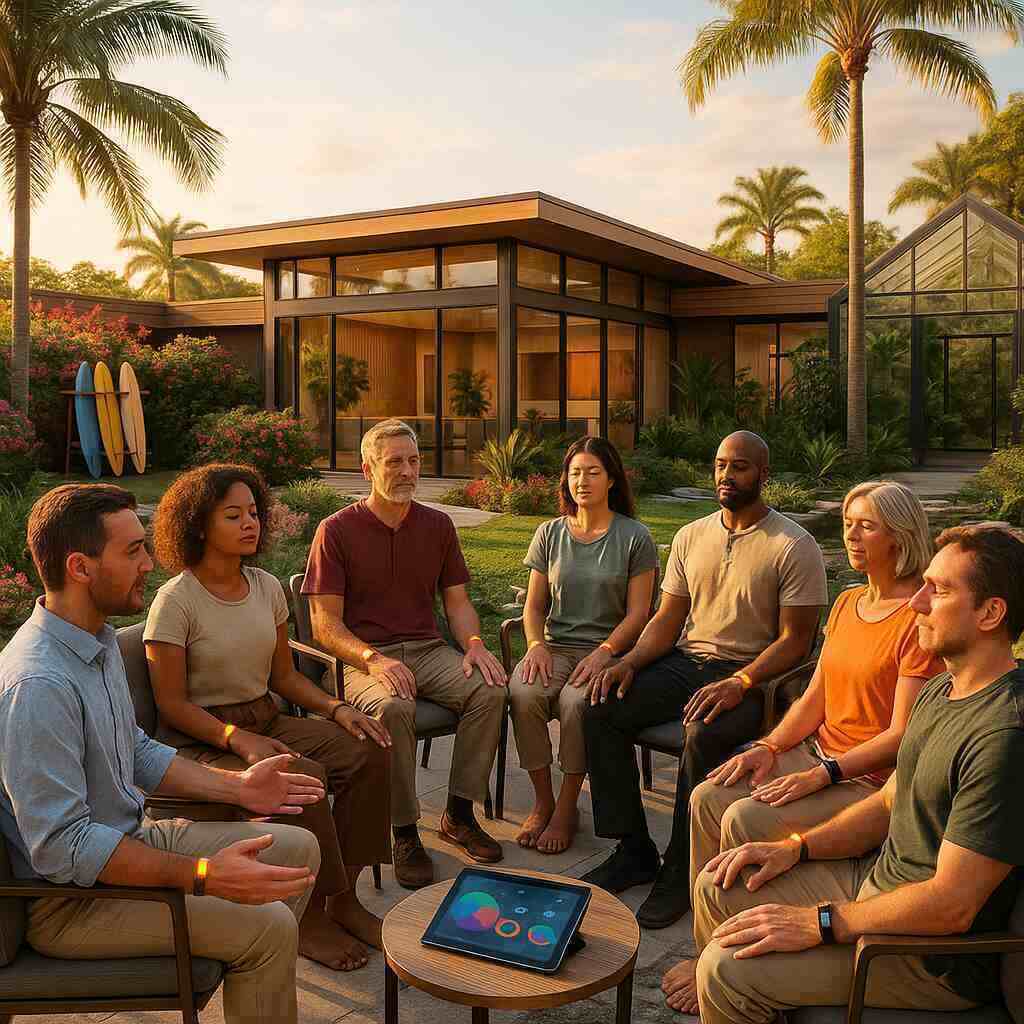
Pillars of the 2025 Mental Health Vanguards at RECO Intensive
AI assisted clinical decisions powering personalized addiction help
Artificial intelligence will soon greet every client the moment they walk into our Delray Beach rehab center. Sophisticated algorithms synthesize assessments, past records, and lived experiences to recommend micro-tailored recovery programs. Counselors then translate those insights into compassionate, human conversations that honor each person’s story. This synergy of machine precision and clinician empathy accelerates access to addiction help, reducing uncertainty during vulnerable intake hours. More importantly, it sets a proactive mental health tone rather than a reactive crisis response.
Real-time analytics continuously refine treatment services while sessions unfold. When a participant’s stress markers spike, instant notifications guide therapists toward coping techniques or schedule adjustments. Such nimble course-correction amplifies the effectiveness of our treatment centers without sacrificing warmth. Families track progress through secure dashboards, transforming opaque rehab journeys into transparent, reassuring partnerships. Because data drives each choice, relapse risks decrease and confidence in recovery center accountability soars.
Genomic guided medication management for precise detox centers
By 2025, cheek-swab genomic profiling will replace guesswork in detox centers nationwide. RECO Intensive already pilots protocols that align medication regimens with each client’s metabolic blueprint. Tailored dosing curbs side effects, shortens withdrawal timelines, and preserves dignity during the toughest days of Florida rehab. Clients often remark that science feels like advocacy when discomfort fades faster than feared. Precision medicine thus becomes a cornerstone of humane, next-gen detox experiences.
Pharmacogenetic insight also informs long-term mental health stabilization plans. Certain gene variants predict how brains metabolize antidepressants or anti-craving agents. Armed with that knowledge, physicians individualize prescriptions, sidestepping the trial-and-error frustration many face in a typical rehab center near me search. The result is sustained engagement because people feel improvements quickly and trust deepens. Genomic stewardship, therefore, elevates both safety and morale across our recovery programs.
Neuroscience based relapse prevention entwined with mindfulness driven sobriety
Cutting-edge brain-imaging research highlights neural circuits hijacked by addiction, and RECO Intensive translates those findings into daily practice. Clients learn how cues ignite the amygdala and how prefrontal training rebuilds executive control. This evidence anchors coping skills beyond slogans, giving residents tangible reasons to believe in change. Pairing science with mindfulness driven sobriety cultivates self-awareness that technology alone cannot provide. Together, they forge resilient neural pathways that outlast discharge dates.
Meditation labs, biofeedback chairs, and breath-work on sunlit patios reinforce those neural rewires. Participants monitor heart-rate variability to witness calm forming in real time. As mastery grows, cravings shrink, validating the neuroscience-based relapse prevention model. Graduates report that focusing on brain fitness feels empowering rather than punitive. Therefore, the rehab center in Delray Beach becomes a dojo of mental agility, not merely a place to avoid substances.
Dual diagnosis integrated care and trauma informed therapy 2025
Nearly sixty percent of individuals entering treatment centers battle concurrent mood disorders. RECO Intensive’s dual diagnosis integrated care eliminates silos by uniting psychiatric, medical, and therapeutic teams around one treatment plan. Weekly case conferences ensure depression medication adjustments align with group curriculum themes. Clients no longer bounce between providers or receive conflicting advice. This unified lens accelerates stabilization and fosters holistic recovery.
Trauma histories frequently underlie substance misuse, so trauma informed therapy 2025 principles permeate every interaction. Staff employ grounding techniques, choice-giving language, and culturally sensitive metaphors to prevent re-traumatization. Safety and empowerment replace shame and secrecy, dismantling barriers faster than traditional methods. Consequently, trust blossoms, participation rises, and measurable outcomes improve across Florida rehab benchmarks. Integrated care thus becomes the gold standard rather than a luxury add-on.
Experiential group therapy models and eco-therapeutic healing excursions
Traditional talk therapy remains vital, yet movement-based and creative modalities unlock breakthroughs that words cannot reach. Adventure outings, drum circles, and equine sessions inject novelty that re-awakens neuroplasticity. Clients practice leadership on paddleboards or build empathy while grooming rescue horses. These experiences create visceral memories that anchor sober identities more firmly than lecture slides ever could. Joy, play, and purpose return, counteracting the numbness addiction imposed.
Community also flourishes within structured peer circles. RECO’s facilitators fuse psychodrama, narrative therapy, and solution-focused frameworks to spark collective insight. Participants challenge, comfort, and celebrate one another in ways clinicians alone cannot replicate. Our group therapy innovations at RECO near Delray Beach showcase how shared storytelling transforms isolation into belonging. As a result, the rehab center near you evolves into a vibrant micro-society modeling life beyond substances.
Digital telehealth support is expanding the rehab center near you
Geography once dictated whether someone could access high-quality addiction help; telehealth now erases that barrier. Secure video sessions extend RECO Intensive’s expertise into living rooms across the nation. Evening appointments accommodate work schedules, while weekend check-ins prevent weekend vulnerabilities from escalating. Clients who once Googled “rehab center near me” discover a virtual corridor linking them to our Delray Beach clinicians.
Wearable integrations deepen this remote reach. Biometric feedback loops alert care teams when sleep dips or stress spikes, enabling timely outreach. Digital CBT modules reinforce coping skills between sessions, turning smartphones into pocket therapists. Telehealth thus complements on-site immersions, sustaining momentum long after clients leave our Florida rehab campus. The continuum of care becomes seamless, personalized, and responsive.
Data driven outcome tracking sustaining community centric mental health
Stakeholders demand proof that recovery programs deliver lasting change, and RECO Intensive exceeds that mandate through meticulous analytics. We monitor abstinence rates, employment status, and quality-of-life indices at six, twelve, and twenty-four months post-graduation. Dashboards translate raw numbers into actionable insights, guiding program tweaks before problems balloon. Families appreciate transparent reports that validate their investment of hope and resources.
Community partners benefit as well. Local employers, housing agencies, and volunteer organizations receive aggregate data revealing trends and needs. This feedback loop strengthens public trust in our recovery center and informs broader policy decisions for mental health funding. When data confirms success, momentum attracts additional grants, enabling wider access to services. Evidence, therefore, fuels an expanding circle of wellness across South Florida.
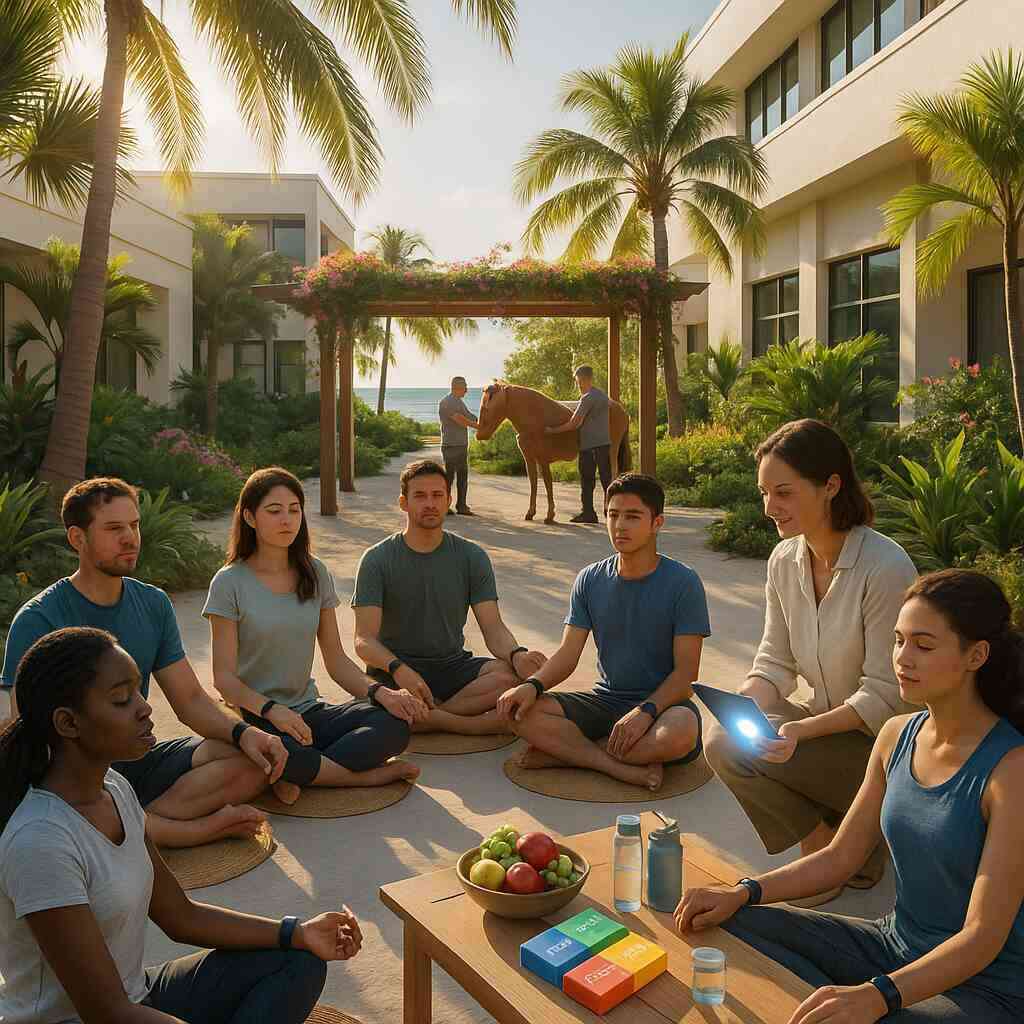
Toward Sustainable Wellness Pathways: The RECO Renaissance
Post pandemic resilience training for adolescents and veterans’ reintegration
The pandemic disrupted routines, education, and social cohesion, particularly harming adolescent mental wellness across South Florida. Consequently, RECO Intensive designed post-pandemic resilience training that rebuilds confidence through storytelling, movement, and peer mentorship. Adolescents gather at our Delray Beach rehab center to practice emotion regulation exercises alongside surf therapy instructors. These sessions weave evidence-based cognitive restructuring with playful challenges, turning vulnerability into growth rather than lingering trauma. Parents receive workshops that translate neuroscience insights into everyday language, empowering households to reinforce sustainable wellness pathways daily. Because progress is tracked openly, families celebrate milestones together, strengthening community-centric mental health networks beyond clinic walls.
Veterans faced similar isolation, compounded by combat memories and abrupt service transitions that the pandemic intensified. Our veterans’ reintegration therapies integrate art journaling, adaptive sports, and mindful breathwork within a Florida rehab landscape. Moreover, AI-assisted clinical decisions match each veteran with mentors who share branch history and recovery interests. Digital telehealth support maintains contact during employment searches, ensuring newfound resilience withstands civilian stressors. Group reunions at the recovery center highlight leadership achievements, inspiring adolescents to witness disciplined resilience in action. Through merged generations, empathy flourishes, stigma shrinks, and Delray Beach emerges as a model for post-pandemic solidarity.
Culturally competent care frameworks within a spiritual rehabilitation paradigm
Cultural nuance shapes how people perceive addiction help, spiritual practices, and emotional expression. Therefore, RECO Intensive embeds culturally competent care frameworks into every treatment service offered at our rehab center in Delray Beach. Intake teams map linguistic preferences, culinary traditions, and faith rituals to craft personalized healing ceremonies. Traditional drumming, bilingual meditations, and heritage foods honor identities while nurturing holistic recovery center camaraderie. This respectful weaving of culture and spirituality accelerates trust, which remains the bedrock of effective mental health intervention. Families, recognizing their customs reflected thoughtfully, participate more actively and sustain changes after discharge.
Still, cultural humility alone is insufficient without trauma-informed therapy 2025 principles that prioritize safety and choice. Counselors use grounding exercises before recounting painful memories, preventing overwhelm and reinforcing agency. Moreover, community elders and spiritual leaders join circle dialogues, ensuring guidance aligns with ancestral teachings. These collaborations transform treatment centers into sanctuaries where science and spirituality reinforce, rather than contradict, healing journeys. Consequently, relapse rates decline because recovery feels culturally consonant, not externally imposed. The paradigm exemplifies how a spiritual rehabilitation paradigm can coexist with evidence-based modalities like dual-diagnosis integrated care.
Legacy building through advanced treatment services and recovery programs
Maintaining momentum requires legacy building, not temporary symptom relief. Hence, RECO Intensive channels advanced treatment services into mentorship pipelines, scholarship funds, and alumni leadership councils. Graduates train in neuroscience-based relapse prevention, then return to facilitate experiential group therapy models for newcomers. Their continued presence transforms the recovery programs into evolving ecosystems where wisdom circulates freely. Additionally, genomic-guided medication management knowledge passes between cohorts, demystifying pharmacology and empowering informed health advocacy. Over time, each alumnus becomes a living testament to the fact that long-term sobriety supports vibrant, purpose-driven lives.
Financial stewardship fortifies this legacy model. Philanthropic partners, impressed by measurable outcomes, fund eco-therapeutic healing scholarships for individuals lacking insurance. Corporate sponsors underwrite detox centers’ internships that teach employable skills alongside clinical stabilization. Furthermore, data on job placements feed back into institutional dashboards, refining curriculum for future cohorts. As success compounds, RECO Intensive’s reputation influences future rehab trends in Florida through RECO research collaborations. Thus, legacy building becomes both mission and metric, ensuring innovations endure beyond any single fiscal cycle.
Call to action: Finding a rehab center near me to join the next gen journey
You may be scrolling, wondering whether a transformative rehab center near me truly exists. The answer stands proudly at 140 NE 4th Avenue, where our rehab center near you pioneers next-gen methodologies. Whether you seek detox centers, dual-diagnosis integrated care, or mindfulness-driven sobriety coaching, our doors remain open. Importantly, initial phone consultations clarify insurance logistics and highlight appropriate treatment centers options within minutes. Soon after, a compassionate admissions specialist designs an individualized roadmap encompassing Florida rehab immersion and telehealth continuity. By acting now, you claim proactive mental health momentum rather than crisis-driven reactions.
To begin, simply check availability for next gen rehab near you and schedule a confidential assessment. Our streamlined admissions process guides you from curiosity to campus arrival without overwhelming paperwork or technical jargon. Additionally, virtual tours showcase living quarters, therapeutic gardens, and experiential classrooms, reducing pre-entry anxiety significantly. Every moment you hesitate, addiction narratives gain strength; therefore, choose agency and join the RECO Renaissance today. Your future self will thank you for embracing sustainable wellness pathways that illuminate decades of purposeful freedom. Together, we will transform challenge into triumph, writing a legacy of hope for families nationwide.
Frequently Asked Questions
Question: How will AI-assisted clinical decisions at your Delray Beach rehab center tailor personalized addiction help for my unique situation?
Answer: The moment you arrive at RECO Intensive’s rehab center in Delray Beach, our secure AI platform synthesizes your assessments, medical history, and stated goals to build a micro-tailored roadmap. Clinicians then review those insights in real time, blending machine precision with human empathy. This approach means faster medication adjustments, session scheduling based on your stress markers, and proactive mental health interventions before problems escalate. In short, AI turns guesswork into data-driven confidence, allowing you to focus on healing while our team fine-tunes the treatment services behind the scenes.
Question: In “Understanding RECO Intensive’s 2025 Mental Health Vanguards,” you highlight genomic-guided medication management. How does this innovation make next-gen detox centers safer and more comfortable?
Answer: Genomic-guided medication management begins with a simple cheek swab that reveals how your body metabolizes specific detox and mental health medicines. Using that data, our Florida rehab physicians select the optimal drug type and dosage from day one, dramatically reducing side effects such as nausea, insomnia, or mood swings. Clients typically finish detox faster and with far less discomfort, which preserves motivation to continue into our cutting-edge recovery programs. Because decisions are rooted in your DNA, you can trust that the process is both scientifically sound and uniquely yours.
Question: How does RECO Intensive weave trauma-informed therapy 2025 into dual-diagnosis integrated care for people dealing with both substance use and mental health disorders?
Answer: Nearly 60 percent of our residents arrive with co-occurring conditions like anxiety, PTSD, or depression. At our holistic recovery center, psychiatrists, medical doctors, and therapists collaborate on one unified plan that respects trauma triggers and mental health nuances. Grounding techniques, choice-giving language, and culturally competent care frameworks ensure every session feels safe and empowering. Weekly case conferences keep medication changes, group topics, and experiential therapy activities in sync, accelerating stabilization and reducing relapse risk.
Question: What role does digital telehealth support play once I leave the rehab center near you and return home?
Answer: Recovery doesn’t end at discharge; it evolves. Our digital telehealth support offers secure video counseling, weekend check-ins, and wearable integrations that alert us to sleep or stress fluctuations. Whether you live five miles or five states away, you can open your phone and connect instantly to the same team that guided you in Delray Beach. This seamless continuum bridges the gap between intensive on-site work and real-world challenges, ensuring mindfulness-driven sobriety techniques stay fresh and effective.
Question: How do data-driven outcome tracking and community-centric mental health initiatives create sustainable wellness pathways for RECO Intensive graduates?
Answer: We monitor key metrics-abstinence rates, employment status, quality-of-life scores-at 6, 12, and 24 months post-graduation. Those insights fuel continuous program upgrades and help direct scholarships toward services that show the greatest impact. Simultaneously, we share aggregate data with local employers, housing agencies, and volunteer groups, fostering a supportive ecosystem around each graduate. By combining transparent results with community engagement, RECO Intensive transforms recovery from a short-term goal into a lifelong, purpose-driven journey.


