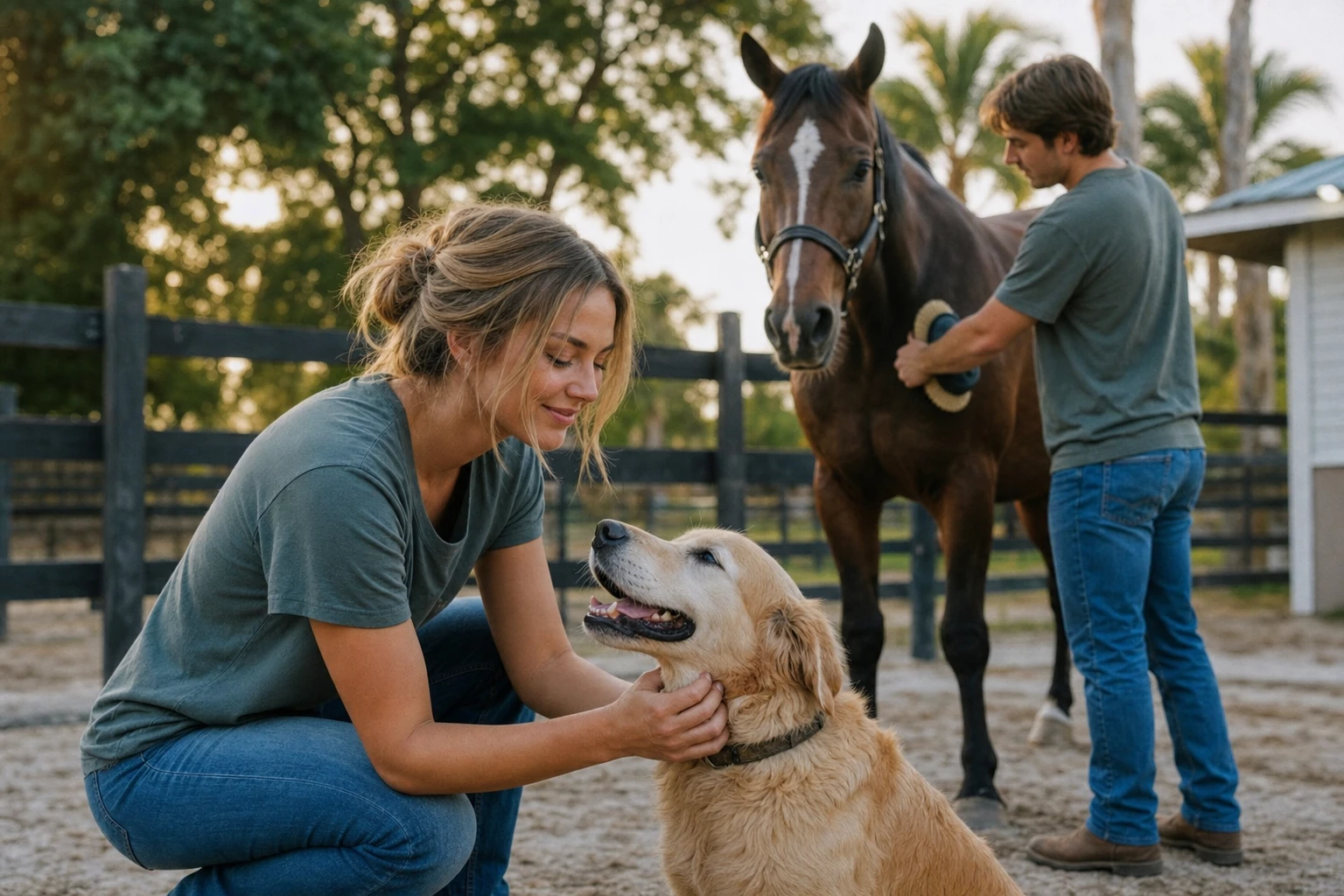
There's a reason animal-assisted therapy has such strong evidence behind it: the nervous-system regulation animals offer is real, and the experience of being responsible for another being's wellbeing is uniquely therapeutic. RECO Intensive's animal-rescue excursions bring clients into ongoing volunteer relationships with local Florida rescues.
What animal-rescue excursions look like at RECO Intensive
Bi-weekly group volunteer shifts at vetted local rescues — dog rescues, equine therapy ranches, exotic-animal sanctuaries depending on schedule. Clients clean kennels, walk dogs, brush horses, feed and water animals, sit with shy animals who need slow trust-building. A clinician attends. Processing happens informally throughout and formally in a group circle afterward.
What the excursion includes
- 2-3 hour volunteer shifts at partner rescues
- Real animal-caretaking work, not observation
- Clinician present for somatic coaching and processing
- Post-shift group reflection
- Optional ongoing relationships with specific rescues post-discharge
What therapeutically happens
Animals don't judge. They don't care about your story. They respond to your presence — the more regulated you are, the more they engage. For clients with severe shame, attachment injuries, or social anxiety, this is sometimes the first relationship where the dynamic feels uncomplicated. The somatic feedback (being able to comfort a frightened dog only when calm yourself) is powerful.
Who benefits most
Clients with significant shame or attachment injuries. Clients with PTSD or social anxiety who find human contact effortful. Clients whose addiction was driven by isolation or relationship rupture. Young adult clients building caretaking capacity. Anyone whose recovery includes rediscovering the capacity for tender attention to another being.
How animal-rescue work ties to the rest of treatment
Observations feed individual therapy and the equine-facilitated psychotherapy track (see Equine Therapy). Many clients continue volunteer relationships post-discharge as part of their ongoing recovery.
Why the RECO approach is different
Few addiction-treatment programs build sustained relationships with local animal-rescue organizations. We do because the therapeutic value is substantial — and because the work feels meaningful to clients in ways that "wellness activities" often don't.