
Reco Intensive Reveals Top 10 Florida Rehab Myths Unraveled
Shattering Sunshine Stereotypes Why Florida rehab misconceptions persist Warm breezes and palm trees dominate popular images of Florida recovery. Television specials focus on celebrity relapses instead of therapeutic breakthroughs. Clickbait headlines amplify sensational failures while ignoring accredited successes. As a result, Florida rehab misconceptions unravel only when people look beyond tourism slogans. This section starts […]

Shattering Sunshine Stereotypes
Why Florida rehab misconceptions persist
Warm breezes and palm trees dominate popular images of Florida recovery. Television specials focus on celebrity relapses instead of therapeutic breakthroughs. Clickbait headlines amplify sensational failures while ignoring accredited successes. As a result, Florida rehab misconceptions unravel only when people look beyond tourism slogans. This section starts that deeper exploration.
Tourists flock to Delray Beach on the Atlantic shoreline for art festivals and nightlife. That vacation energy often colors assumptions about every rehab center in Delray Beach. People picture party houses, not clinical campuses run by licensed professionals. Geography becomes guilt by association, and nuance disappears. We challenge that narrative with data, credentials, and lived experience. .
How a Delray Beach rehab center rewrites the narrative
True recovery stories rarely unfold on reality television; they unfold inside structured therapy rooms. A delray beach rehab center like RECO Intensive blends ocean serenity with strict evidence-based protocols. Clients meet physicians before they ever see a surfboard. Daily schedules balance cognitive work, peer support, and trauma processing. This disciplined rhythm dismantles the myth of a perpetual vacation.
Community partnerships also redefine credibility. Local hospitals, courts, and employers recognize the outcomes highlighted in debunking rehab myths: what sets RECO’s Delray program apart. Outside validation shows that long-term sobriety is measurable, not magical. Certifications and Joint Commission standards back each clinical decision. Together, these elements recast South Florida recovery as sophisticated health care, not coastal escapism. .
Setting the stage for evidence based truth
Sober outcomes improve when treatment rests on research, not rumor. The Florida rehab center facts at RECO Intensive summarize decades of peer-reviewed findings. Cognitive behavioral therapy, medication management, and experiential groups share a common denominator: replicable results. By foregrounding statistics, clinicians give hope stellar footing. Hope without data feels good; hope with data changes lives. .
Moving forward, each myth will meet hard evidence sourced from national institutes and field experts. Readers will see how detox centers integrate with outpatient tracks, how insurance actually functions, and why relapse data inform strategy. This transparency empowers families to compare treatment services intelligently. When sunlight meets scholarly rigor, misinformation evaporates. Our myth-busting journey now gains unstoppable momentum.
1) One Week Detox Equals Lifetime Recovery
Detox centers versus full spectrum treatment services
Searching for a “rehab center near me” often reveals glossy ads promising miraculous weekend detoxes. The offer seduces people desperate for quick relief from withdrawal. However, abrupt detox addresses only the chemical crisis, not the psychological drivers of addiction. Without deeper therapy, cravings reemerge the moment stress or celebration appears. A reputable delray beach rehab center understands that detox is merely the opening chapter of comprehensive care.
Full spectrum treatment services continue long after the body purges toxins. Clients transition from medical stabilization to clinical counseling, peer groups, and family education. Resources such as Florida detox truths vs fiction compared highlight essential distinctions. These comparisons show why treatment centers integrate medical, psychological, and social elements inside the same continuum. When every layer aligns, individuals graduate with skills, not just a cleansed bloodstream.
The science of extended care and relapse prevention planning
Neuroscience reveals that brain circuits impaired by substance use heal gradually, not overnight. Dopamine pathways require months of stability for impulse control to normalize. Therefore, evidence-based treatment centers in Florida map care to these biological timelines. Clients progress through phases, each building cognitive resilience and emotional regulation. Skipping steps invites relapse because neurochemistry still operates in survival mode.
Relapse prevention planning begins on day one, not discharge day. Therapists collaborate with clients to identify triggers, high-risk locations, and digital temptations. They then design personalized coping strategies, including mindfulness drills and emergency contact trees. This proactive blueprint transforms frightening unknowns into rehearsed scenarios that encourage quick, healthy choices. Extended care respects the science by maintaining support until new habits feel automatic.
Long term sobriety strategies that outlast vacation mind-sets
South Florida’s beaches can distract newcomers who equate recovery with endless relaxation. Effective recovery programs reframe the coastline as a classroom, not a party destination. Therapeutic excursions introduce clients to kayaking, volunteering, and creative arts under structured supervision. These deliberate activities teach joy without intoxication, a skill crucial after discharge. Repetition cements neural pathways that link pleasure to health rather than substances.
Alumni networks further safeguard progress after formal programming ends. Weekly check-ins, mentorship opportunities, and sober events create a living safety net. A rehab center in Delray Beach coordinates this community so no graduate feels isolated. Graduates also access mental health counseling, career coaching, and housing referrals through the recovery center. By blending accountability with purpose, long-term strategies outlast any fleeting vacation mindset.
2) Any Florida Beach House Qualifies as a Rehab Center
Verifying treatment center credentials and accreditations
Glossy brochures can disguise rental homes as legitimate treatment centers, yet paperwork never lies. Clients should always request state licenses, Joint Commission seals, and insurance contracts. RECO Intensive publishes its certifications openly, and readers can confirm each document through the guide on accredited rehab credentials in Florida at RECO. Authentic accreditation proves that medical directors, nurses, and therapists meet rigorous clinical benchmarks. Without those credentials, a so-called Florida rehab might lack even basic detox oversight.
Families also benefit from cross-checking professional associations and malpractice coverage. A reputable Delray Beach rehab center belongs to national addiction medicine societies and holds transparent quality scores. When reviews, inspection reports, and county records all align, trust solidifies. Conversely, evasive answers signal danger. Choosing verified expertise removes guesswork, letting people focus on healing rather than bureaucratic surprises.
Luxury rehab center amenities versus clinical excellence
Oceanfront yoga decks, gourmet chefs, and infinity pools attract attention, but outcomes hinge on science, not scenery. Quality treatment services integrate psychiatric evaluations, medication management, and trauma therapies every single day. That clinical backbone becomes personalized through personalized treatment planning on the Treasure Coast approaches, which adapt protocols to each person’s history. Amenities should complement, never replace, evidence-based counseling or relapse prevention curricula. Clients deserve results, not photo opportunities.
True luxury in recovery means compassionate staff ratios, advanced diagnostic tools, and rapid response teams. Those features safeguard mental health during emotionally intense breakthroughs. Comfortable bedding certainly helps rest, yet secure electronic health records protect privacy, and daily clinical rounds refine individualized plans. The smartest “luxury” is therefore meticulous care that stands up to peer review. Anything less risks becoming an expensive vacation with no lasting change.
Safety standards from RECO Towers to RECO Ranch
Safety protocols start at the front gate. Visitors touring the program can virtually walk through high-tech nursing stations via the link to Tour RECO Towers clinical facility in Delray Beach. Cameras, keycard access, and twenty-four-hour staff coverage create layers of protection. On-site laboratories allow immediate toxicology screens, preventing contraband before it threatens group integrity. Emergency drills run like clockwork, so residents know exactly where to go and whom to call.
That same vigilance extends to experiential outings and residential sites like RECO Ranch. Helmets, lifeguards, and certified instructors supervise every therapeutic excursion. Clinical teams coordinate with field guides, ensuring continuity between adventure therapy and counseling notes. Group settings maintain a one-to-eight clinician ratio, mirroring standards outlined in evidence-based group therapy in Delray Beach. By weaving safety into every environment, the recovery center protects bodies and minds, allowing transformational work to unfold confidently.
3) Only Celebrities Afford Delray Beach Rehab
Insurance coverage decoded for rehab center near you
Sticker shock scares many families away from even contacting a Delray Beach rehab center. They picture platinum-tier suites reserved for movie stars, not everyday parents hustling two jobs. In reality, federal parity laws force most health plans to cover addiction care like other medical needs. That mandate brings residential, partial hospitalization, and outpatient options within reach of ordinary budgets. The myth survives only because few people know their policy’s exact substance use benefits.
Start by running a confidential check through RECO’s portal for insurance verification for addiction care in Florida. Within hours, staff clarify deductible amounts, in-network advantages, and any prior authorization steps. Clients then review side-by-side cost projections for detox, therapy, and continuing care. Armed with facts, families negotiate payment plans instead of abandoning treatment prematurely. Knowledge, not celebrity income, becomes the real entry ticket.
Sliding scales, scholarships, and community support in Delray Beach recovery
Even with insurance, copays can pinch households already bruised by addiction expenses. RECO Intensive counters that obstacle with a sliding scale honoring honest financial disclosures. Counselors calculate reduced rates based on income, dependents, and monthly obligations. Some applicants qualify for short-term scholarships funded by alumni donations and local foundations. These resources transform what felt impossible into a structured, affordable path toward stability.
Community partners rally through initiatives like redefining addiction treatment across Palm Beach County, offering grants, transit vouchers, and employer outreach. Faith organizations frequently sponsor partial tuition for congregants seeking a rehab center in Delray Beach. Courts may divert nonviolent offenders into treatment, covering initial weeks of programming. These collective efforts prove that healing is a public good, not a luxury commodity. By blending private and public funds, Delray Beach recovery becomes financially inclusive.
Personalized treatment services without Hollywood price tags
Tailored care sounds expensive until you realize customization often saves money by avoiding unnecessary services. A personalized assessment steers clients toward right-sized levels of care rather than bloated residential stays. For example, someone with strong family support might thrive in intensive outpatient, trimming housing fees. Meanwhile, another individual gains value from trauma therapy that prevents costly relapse cycles. Efficiency emerges when clinicians match interventions to real needs instead of blanket formulas.
Those savings start the moment you follow the straightforward Delray Beach rehab admission steps outlined on RECO’s site. A case manager coordinates evaluations, verifies benefits, and schedules entry, all before a bill arrives. Transparent quotes list therapy hours, medication fees, and optional amenities line by line. Families compare this clarity to opaque invoices from out-of-state programs that hide charges until discharge. When costs stay visible and justified, Hollywood budgets become unnecessary.
 4) Evidence Based Care Is Optional Sunshine Perk
 4) Evidence Based Care Is Optional Sunshine Perk
Cognitive behavioral therapy, MAT, and group therapy benefits
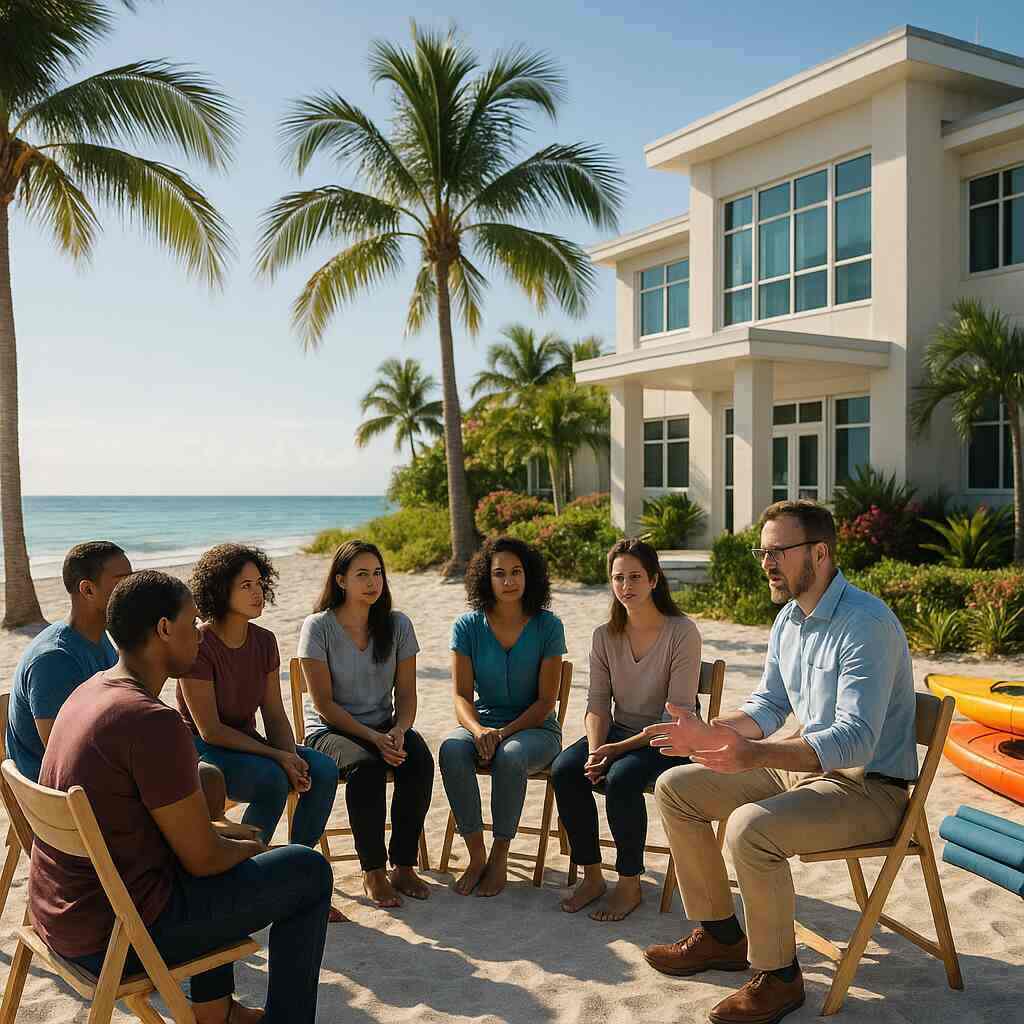
Many visitors assume Florida rehab success flows mainly from sunny skies and ocean breezes. Lasting change, however, depends on structured science delivered daily, not seasonal weather. Within a reputable rehab center in Delray Beach, clinicians anchor recovery on cognitive behavioral therapy, medication-assisted treatment, and supportive groups. This trio attacks cravings chemically, mentally, and socially, giving each client a multifaceted advantage. Regular measurement tools quantify mental health progress, so staff refine plans before minor stumbles become destructive spirals.
Group dialogue often unlocks insights unreachable in solitary reflection. Peer mirrors reveal denial patterns and celebrate incremental victories with contagious enthusiasm. Readers can explore tangible outcomes through the group therapy success stories in Delray Beach highlighted by RECO alumni. Data show participants who attend consistent groups double their likelihood of sustaining twelve-month sobriety. Combined with CBT worksheets and MAT dosing, these sessions become engines that keep motivation humming long after discharge. Together, they create a social backbone for RECO’s recovery programs.
Why anecdotal cures fall short of accredited protocols
Stories of overnight sobriety often circulate at beachside coffee shops. Someone swears a juice cleanse or meditation app erased ten years of opioid misuse. While personal anecdotes can inspire hope, they rarely survive scientific scrutiny. Random success lacks control groups, objective metrics, and peer review, making replication nearly impossible. Accredited treatment centers, in contrast, publish protocols, train staff, and audit outcomes against national standards.
Without verified oversight, detox centers may miscalculate taper schedules, triggering seizures instead of relief. Unlicensed coaches might suggest quitting medication prematurely, ignoring brain chemistry still screaming for dopamine balance. Such shortcuts appear cheaper but often lead to emergency admissions and mounting costs. Evidence, not hearsay, protects both health and finances for families seeking addiction help quickly. Therefore, verifying accreditation becomes the first defense against charismatic yet risky miracle claims. Choosing an accredited rehab center near you guards against expensive guesswork.
RECO Intensive as an evidence based treatment center in Florida
RECO Intensive dismantles the notion that evidence-based care is optional by publishing its clinical framework openly. Every new client completes a biopsychosocial assessment scored with validated scales. Results inform individualized roadmaps blending CBT, MAT eligibility, trauma therapy, and experiential learning. Licensed psychiatrists, addictionologists, and master-level therapists meet weekly to review outcome dashboards. Continuous quality improvement keeps treatment services aligned with evolving research rather than static assumptions.
The recovery center also partners with universities to pilot innovative craving-reduction protocols under ethical supervision. Collected data feed anonymous registries that benchmark success against hundreds of other treatment centers nationwide. Graduates then transition to sober living environments where mobile apps track attendance, mood, and relapse-trigger exposure. If indicators slip, alumni coordinators intervene within hours, proving evidence-based vigilance does not end at discharge. This continuum transforms South Florida’s reputation from vacation hotspot into a powerhouse for long-term sobriety statistics. Accessible addiction help therefore remains grounded in reproducible evidence.
5) Holistic Recovery Means Yoga Only
Integrating therapeutic excursions with clinical counseling
Seasoned clinicians at our Delray Beach rehab center understand that movement changes mindsets. Surf lessons, art walks, and beach cleanups become practical labs for coping skills. During every outing, therapists translate sensory experiences into cognitive breakthroughs. Clients discover that curiosity can replace cravings when stress strikes later. This synergy between adventure and analysis dismantles the myth that holistic recovery stops at downward-dog poses. Engage in therapeutic excursions for holistic recovery near the beach to watch evidence drive each paddle stroke toward purpose.
Back on campus, counselors debrief every excursion inside structured group sessions. Participants unpack emotions, identify relapse triggers, and rehearse healthier reactions. Because outdoor insights stay fresh, discussions feel vivid rather than theoretical. Such integration turns Florida rehab scenery into an interactive classroom instead of a tourist distraction. Families observing this process realize that clinical depth and coastal joy can coexist seamlessly.
Nutrition, neurofeedback, and family involvement in recovery
Holistic care widens its lens well beyond yoga mats by prioritizing nutritional balance. Registered dietitians teach clients how stabilized blood sugar moderates mood swings that often precede relapse. Smoothie demonstrations, grocery tours, and cooking workshops convert abstract advice into daily rituals. These practical lessons empower graduates to fuel future resilience instead of fueling cravings. Eating patterns, therefore, become frontline defenses supported by science, not fad trends.
Neurofeedback sessions add another evidence-based dimension to our recovery programs. Real-time brainwave monitoring shows clients how meditation, paced breathing, or grounding exercises shift neural activity. Visibility fosters motivation; seeing calm frequencies rise encourages continued practice. Family members witness these changes during visiting days and feel hopeful rather than helpless. Their involvement, guided by licensed therapists, transforms home dynamics into supportive ecosystems that reinforce treatment gains.
Whole-person mental health support in rehab
Effective treatment centers reject the notion that addiction and mental health exist in separate silos. At our rehab center in Delray Beach, psychiatrists, trauma specialists, and peer coaches collaborate daily. This interdisciplinary web ensures that anxiety, depression, or PTSD receive equal attention alongside substance misuse. When co-occurring conditions stabilize, cravings lose their emotional fuel, making sobriety stick.
Community momentum sustains this whole-person model after discharge. Alumni transition into sober living environments overseen by the same recovery center clinicians. Regular check-ins, vocational workshops, and mindfulness groups offer continuous addiction help without disrupting new careers. Searching “rehab center near me” often yields fragmented options, yet coordinated care proves more economical and effective. By treating the individual, not just the symptoms, Florida rehab becomes a launchpad for lifelong growth.
6) Medication Assisted Detox Swaps One Drug For Another
Suboxone, Vivitrol, and individualized taper plans
Many people still believe medication-assisted detox simply trades one substance for another, yet clinical science disproves that myth daily. At our Delray Beach rehab center, physicians calibrate Suboxone or Vivitrol dosages according to metabolism, withdrawal severity, and personal goals. This precise calibration follows established Medication-assisted treatment methods, ensuring medications stabilize brain chemistry rather than create fresh dependence. Each taper plan includes scheduled reductions, medical monitoring, and contingency protocols to address unexpected cravings. Therefore, Florida rehab clients experience measured relief without losing autonomy or facing endless maintenance.
Individualized tapers also honor lifestyle realities. A young professional may choose shorter timelines, while someone with decades of opioid misuse benefits from extended stabilization. Staff review progress markers weekly, adjusting micro-doses to prevent breakthrough symptoms. Because plans remain flexible, clients feel empowered instead of controlled. That empowerment lays the groundwork for long-term sobriety strategies that last beyond detox centers.
Balancing MAT with psychotherapy and peer accountability
Medication eases physical discomfort, yet mind and spirit demand equal attention. Clinicians weave cognitive therapies, motivational interviewing, and structured groups into every schedule, guaranteeing balanced recovery programs. Graduates who advance into sober living support after treatment at RECO Institute practice coping skills in real-world environments while retaining medical oversight. Peer accountability reinforces medication compliance and flags emotional triggers early. Together, these elements transform MAT from chemical aid into comprehensive resilience training.
Therapists also assign daily reflection worksheets and mindfulness drills that strengthen neural pathways disrupted by addiction. Group peers role-play high-risk scenarios so responses become automatic rather than impulsive. Weekly progress summaries track sleep, nutrition, and emotional regulation alongside dosage data, creating holistic dashboards. When setbacks appear, case managers adjust therapy intensity rather than increasing medication reflexively. This balanced model replaces fear with informed decision-making.
Co-occurring disorders treatment without stigma
Addiction seldom travels alone; anxiety, depression, or trauma often ride shotgun. Our recovery center integrates psychiatric care and addiction help through dedicated tracks emphasizing mental health and addiction integration in South Florida. Psychiatrists coordinate antidepressants or mood stabilizers with MAT protocols, preventing harmful interactions and reducing relapse risk. Simultaneously, trauma specialists lead EMDR sessions that untangle root pain fueling substance use. Because mental health support operates openly, clients shed shame and embrace treatment services fully.
Families join this integrative approach through psychoeducation workshops and virtual check-ins. They learn warning signs, medication purposes, and communication techniques that replace judgment with partnership. When relatives participate actively, discharge plans include shared calendars, coping agreements, and emergency contact trees. Stigma crumbles as loved ones witness measurable improvements in mood and stability. Ultimately, co-occurring disorders become manageable challenges rather than hidden secrets, reinforcing sustainable recovery.
7) Insurance Never Covers Quality Treatment
Verify your insurance before you despair
Many families freeze when premiums and deductibles seem mysterious, yet those numbers rarely eliminate access to a Delray Beach rehab center. Rather than guessing, call the admissions team and request a confidential benefits verification; they translate policy jargon into clear figures within hours. This quick step reveals whether residential, partial hospitalization, or intensive outpatient levels already sit inside your plan. Armed with real data, you can weigh copays against the long-term cost of untreated addiction. Therefore, the phrase “insurance never covers quality treatment” collapses under simple investigation.
Federal parity laws also protect mental health and substance use benefits, forcing insurers to match medical coverage levels. Because of this requirement, detox centers, therapy sessions, and medication support often qualify just like surgery or cardiology. Some plans even include travel stipends, making a rehab center in Delray Beach viable for clients nationwide. If preauthorization feels daunting, case managers handle paperwork while you focus on recovery programs. Knowing these safeguards exist turns panic into practical planning.
Out-of-network versus in-network realities
Policy directories may not list every treatment center, yet exclusion does not equal rejection. Out-of-network benefits frequently reimburse a significant percentage once you meet a separate deductible. Skilled billing teams submit accurate clinical notes, appealing denials and maximizing reimbursements quickly. Consequently, the final balance often surprises people-in a good way-when insurance returns a sizable check. Clients discover that reputable treatment services are closer to budget range than initial website rates suggest.
Conversely, in-network status accelerates approvals and locks predictable copays, which simplifies budgeting for longer stays. RECO Intensive maintains relationships with major carriers, so clients tap negotiated rates on day one. When specialized therapies fall outside a network, single-case agreements bridge gaps to keep care consistent. Transparency continues through monthly statements that list every service line by line. As a result, no hidden fees sabotage progress or strain trust.
Financial myths that block access to addiction help
A persistent myth claims loved ones must drain retirement accounts before anyone offers assistance. In reality, sliding scales, alumni-funded scholarships, and community grants reduce upfront obligations dramatically. Families can also tap health savings accounts, which cover copays for counseling, medication, and group therapy at a recovery center. Additionally, programs now encourage employers to leverage disability protections, preserving income while treatment unfolds. Dispelling these myths frees households from paralyzing fear and sparks forward movement.
Emotional myths weaken support even more than financial confusion. Some relatives hesitate, thinking therapy only begins after sobriety, yet family therapy involvement during recovery in Palm Beach County shows engagement lowers relapse risk from day one. When parents and partners understand coverage details, they stop worrying about cost and start practicing communication skills. Together, informed families strengthen safety nets that money alone cannot provide. Ultimately, clarity defeats hesitation, and proactive action replaces passive waiting.
8) Outpatient Programs Are Just Check Ins
Day-night schedules that rival inpatient rehab realities
Outpatient recovery programs at our Delray Beach rehab center run sunrise to evening, not five-minute clipboard visits. Clients arrive for medical check-ins, therapeutic groups, and individualized counseling before returning to safe housing. These day-night schedules replicate inpatient structure by filling every hour with intentional treatment services. Peer mentors, licensed clinicians, and wellness coaches rotate responsibilities so momentum never stalls. Because every component follows evidence-based protocols, participants build skills as rapidly as residents inside full-time facilities.
Structured blocks also weave cognitive exercises, meditation breaks, and meal planning into the daily rhythm. Each module reinforces brain circuits healing from dependency while respecting work and family obligations. Certified therapists use validated Cognitive behavioral therapy practices to challenge distorted thinking in real time. Progress markers, from sobriety milestones to sleep quality, are logged and reviewed every evening. This steady cadence debunks the idea that outpatient care is casual or unfocused.
Intensive outpatient and partial hospitalization explained
Many people search “rehab center near me” and discover acronyms like IOP or PHP without context. Intensive outpatient programs (IOP) deliver nine or more therapy hours weekly, often spread across three comprehensive sessions. Partial hospitalization programs (PHP) extend engagement to twenty or more hours, essentially mirroring residential intensity minus overnight stays. Both options integrate medical oversight, trauma treatment, and family education so no clinical need goes ignored. By offering these tiers, our recovery center meets clients where they stand on the readiness spectrum.
Transition between PHP and IOP remains fluid, responding to progress rather than arbitrary timelines. A participant who masters coping strategies may downshift, freeing bandwidth for career or school. Conversely, unexpected cravings trigger an immediate return to higher structure without bureaucratic delays. This responsive design demonstrates that outpatient pathways are neither rigid nor underpowered. Instead, they form a dynamic bridge toward sustainable independence.
Flexibility without sacrificing accountability
Outpatient recovery programs thrive on balance, pairing personal freedom with measurable responsibility. Smartphone check-ins, random drug screens, and evening support circles ensure accountability even when clients sleep off-site. Licensed case managers coordinate schedules, preventing therapy clashes with work deadlines or parenting duties. Committing to this calibrated routine teaches time management, a skill crucial for long-term sobriety.
Flexibility extends to holistic modalities that enrich conventional therapy. Clients can choose art workshops, nutrition labs, or beach meditation through our menu of holistic addiction recovery choices on the Atlantic coast. Each elective is documented in treatment plans, preserving clinical rigor amid creative exploration. Alumni often report that mastering choice and accountability simultaneously prepared them better than any single modality. Outpatient care, therefore, proves adaptable yet uncompromising in its pursuit of lasting wellness.
9) Mental Health And Addiction Are Separate Journeys
 9) Mental Health And Addiction Are Separate Journeys
Trauma informed care and dual diagnosis integration
Trauma rarely stands alone; it often hides beneath alcohol or opioid use. RECO Intensive’s clinicians begin every assessment by screening for childhood adversity, combat stress, and recent loss. Once triggers surface, certified trauma therapists craft individualized plans combining EMDR, narrative therapy, and anxiety-reducing breath work. Medical staff then coordinate antidepressants or mood stabilizers to prevent biochemical spikes during exposure sessions. This unified roadmap reassures clients that treatment services respect both their history and their hope.
Education remains powerful, so therapists guide clients through a concise Substance use disorder overview during early sessions. Understanding neural pathways and stress hormones removes shame by framing symptoms as treatable conditions, not moral failures. Clients also learn how trauma memories can wire the brain for hyper-vigilance, making cravings feel like survival signals. With science in hand, they commit more fully to therapy and medication adherence. Integrated knowledge builds confidence and dismantles outdated myths simultaneously.
Group programs in Delray Beach that fuse mind and body work
Group programs at our rehab center in Delray Beach do more than circle-up conversations. Licensed facilitators combine cognitive drills with movement practices such as grounding stretches or tai chi flows. This mind-body fusion teaches participants to recognize emotional cues early, then discharge tension through safe physical outlets. Because peers practice together, new skills become communal habits rather than private experiments. Shared progress fuels motivation, keeping everyone accountable between sessions.
Creative expression deepens the experience. Clients journal, paint murals, and compose music reflecting their recovery journeys while counselors translate imagery into therapeutic insights. Those activities stimulate the prefrontal cortex, strengthening decision-making circuits damaged by addiction. Meanwhile, laughter and applause raise serotonin naturally, proving joy still exists without substances. By the end of each cycle, group members describe feeling “whole,” not fragmented between mind and body.
Breaking silos to build sustainable recovery programs
Effective Florida rehab requires fluid communication across every care tier. RECO Intensive hosts weekly interdisciplinary reviews where physicians, therapists, and case managers discuss each client’s evolving needs. If anxiety increases, counseling frequency rises before cravings escalate; if sleep improves, medication tapers proceed confidently. This agile system prevents small issues from becoming detours back to detox centers, protecting long-term momentum.
Community integration seals the gains. Alumni volunteer alongside newcomers during beach clean-ups and career workshops, modeling resilience in real time. Local employers, faith leaders, and mental health advocates attend quarterly forums to synchronize resources for graduates. Because silos fall, a recovery center can extend support far beyond campus walls, creating a seamless net of addiction help across South Florida. As connections multiply, myths fade, and sustainable recovery turns from concept into community reality.
10) Relapse Proves Rehab Failed
Viewing relapse as data not disaster
Relapse carries shame only when society treats it as moral failure instead of neurological feedback. However, evidence-based treatment centers in Florida interpret any slip as valuable information about stress thresholds, social pressure, or medication gaps. Clinicians at a reputable rehab center in Delray Beach immediately analyze timing, location, and emotional triggers to refine relapse prevention planning. This disciplined review transforms discouraging moments into practical adjustments that strengthen long-term sobriety strategies. Consequently, clients realize a setback can illuminate blind spots rather than erase prior progress.
Moreover, viewing relapse through a scientific lens dismantles lingering delray beach rehab center myths that depict recovery as a single heroic leap. Addiction help truth vs fiction shows that brain circuits heal gradually; therefore, iterative assessment remains essential. When patients and families adopt this growth mindset, fear subsides and curiosity rises. They ask constructive questions about sleep, nutrition, and peer support instead of assigning blame. That curiosity fuels renewed commitment to personalized treatment services tailored to evolving needs.
Recovery center alumni networks and aftercare
Graduation from inpatient rehab realities marks a milestone, not a finish line. Quality recovery programs success stories often highlight robust alumni departments offering weekly check-ins, mentorship pairings, and virtual workshops. These ongoing touchpoints provide rapid accountability and immediate resources when stressors spike, reducing isolation that often precedes relapse. Furthermore, group therapy benefits extend beyond the campus; alumni circles create dependable social calendars filled with volunteer projects and sober celebrations.
Family involvement in recovery deepens aftercare effectiveness. Loved ones participate in workshops that teach communication tactics, boundary setting, and co-occurring disorders treatment basics. Together, households build unified strategies for managing holidays, job transitions, or grief without substances. Because the recovery center accreditation demands measurable outcomes, staff continually track alumni engagement rates and relapse patterns. Data then refine future programming, ensuring continuous improvement rather than complacency.
Iterative healing and community resilience
Healing unfolds in cycles, echoing physical therapy where muscle strength builds through repetitive, targeted exercise. Similarly, holistic recovery programs in South Florida combine mindfulness drills, nutrition coaching, and outpatient rehab advantages to reinforce each cognitive gain. When setbacks arise, clinicians adjust intensity or introduce new modalities like neurofeedback, keeping momentum steady. This adaptive model mirrors agile problem-solving used in many successful industries, proving that flexibility promotes durability.
Community support in Delray Beach recovery magnifies personal resilience. Neighbors, employers, and civic groups collaborate on sober events, job placements, and stigma-busting campaigns. These partnerships normalize ongoing maintenance, just as society accepts regular dental cleanings. Clients therefore view periodic therapy refreshers as responsible self-care, not evidence of failure. Ultimately, myth vs fact Florida rehab discourse shifts: relapse becomes a navigational beacon guiding course corrections, while sustained engagement anchors lifelong wellness.
From Myth Busting to Momentum Building
Choosing the right recovery path with confidence
The myths are gone, leaving room for informed choices. Start by outlining personal goals, preferred settings, and mental health needs. Compare each delray beach rehab center against evidence-based benchmarks rather than glossy photos. When a website lists credentials, alumni outcomes, and family programming, confidence grows quickly. Use the free self-assessment on RECO’s treatment program guide to match individual challenges with the right level of care.
Finances also influence the decision, yet clarity beats guesswork. Verify benefits, ask about sliding scales, and request written estimates line by line. This simple diligence transforms a “rehab center near me” search into a strategic shortlist. Read the transparent answers in RECO’s detailed admissions FAQ to understand timelines, insurance steps, and travel logistics before committing. Informed consumers make faster, safer moves toward recovery.
How RECO Intensive turns clarity into action
Insight alone cannot heal; structured action must follow. RECO’s clinical team translates assessment data into personalized treatment services within hours of admission. Licensed therapists, medical doctors, and wellness coaches collaborate through a secure digital dashboard that updates in real time. Because every discipline shares notes, clients experience seamless mental health support in rehab rather than fragmented episodes. Explore the integrated model in the center’s clinical approach overview and see how science guides each step.
Momentum continues after formal programming. Alumni coordinators schedule weekly check-ins, facilitate mentorship pairings, and host sober events along South Florida’s coast. These offerings extend outpatient rehab advantages far beyond discharge. Graduates also access career coaching and housing referrals through the robust alumni community portal, ensuring accountability never fades.
Next steps toward a healthier you or loved one
Today’s decision shapes tomorrow’s opportunities. Reach out to RECO’s compassionate admissions specialists for a confidential conversation about goals, concerns, and insurance questions. A single phone call or secure message through the contact page can schedule same-day assessments and travel planning. Waiting rarely improves addiction or anxiety, but timely action consistently saves relationships, finances, and health.
Finally, remember that courage grows with every informed step. Whether choosing detox centers, outpatient tracks, or holistic recovery programs in South Florida, rely on verified facts over lingering folklore. RECO Intensive stands ready to transform clarity into sustainable progress-one personalized plan, one supportive community, and one resilient client at a time.
Frequently Asked Questions
Question: What sets RECO Intensive apart from other evidence-based treatment centers in Florida?
Answer: RECO Intensive combines Joint Commission-accredited clinical protocols with individualized care that mirrors the latest neuroscience on addiction. Our Delray Beach rehab center provides a full continuum of treatment services-from medically supervised detox centers to trauma-informed outpatient tracks-so every client’s program evolves with their progress. Licensed physicians, master-level therapists, and peer mentors review outcome data weekly to ensure each intervention moves the needle toward long-term sobriety strategies. Because we publish our credentials, maintain low staff-to-client ratios, and partner with local hospitals and universities, families know they are choosing a recovery center whose results are transparent, measurable, and trusted across South Florida.
Question: In the blog RECO Intensive reveals top 10 Florida rehab myths unraveled, how do you dismantle the belief that a one-week detox equals lifetime recovery?
Answer: The article highlights that detox is only the first phase of comprehensive addiction help. At our rehab center in Delray Beach, clients transition from medical stabilization into cognitive behavioral therapy, medication-assisted treatment when appropriate, and relapse prevention planning that begins on day one, not at discharge. Extended care phases align with the brain’s natural healing timeline, allowing dopamine pathways to recalibrate while clients master coping skills in real-world settings. Alumni networks, family involvement in recovery, and data-driven follow-ups turn what could have been a week-long cleanse into a sustainable, evidence-backed recovery program.
Question: Does insurance actually cover quality care at a rehab center near me like RECO Intensive?
Answer: Yes. Federal parity laws require most health plans to fund substance-use treatment at levels comparable to other medical services. Our admissions team offers complimentary insurance verification within hours, clarifying in-network versus out-of-network benefits, deductibles, and copays. Many clients discover that residential, partial hospitalization, or intensive outpatient options are largely reimbursed. For remaining balances, we provide sliding-scale fees, payment plans, and scholarship opportunities funded by community support in Delray Beach recovery circles. Transparency around costs removes financial myths and lets families focus on healing.
Question: How do RECO Intensive’s holistic recovery programs in South Florida go beyond a yoga-only model?
Answer: While yoga is offered, holistic care at RECO Intensive also includes nutrition counseling with registered dietitians, neurofeedback sessions that visually map calming brainwaves, therapeutic excursions such as supervised kayaking or beach clean-ups, and family therapy that strengthens home environments. Each element is woven into an individualized treatment plan reviewed by medical and mental health professionals, ensuring holistic modalities complement-not replace-evidence-based therapies like CBT and MAT. This whole-person approach fosters mental health support in rehab that endures long after graduation.
Question: What outpatient rehab advantages can I expect if I enroll at RECO Intensive while still balancing work or school?
Answer: Our intensive outpatient (IOP) and partial hospitalization (PHP) schedules deliver 9-25 hours of structured programming each week, including group therapy benefits, individual counseling, medication management, and skill-building workshops. Random drug screening, smartphone check-ins, and evening support groups preserve accountability, while flexible time slots accommodate employment, education, and family duties. Clients also access sober living options, career coaching, and alumni mentorship-features that replicate inpatient rehab realities without requiring an overnight stay. For anyone Googling a rehab center near you and needing adaptable but rigorous care, RECO Intensive’s outpatient tracks provide a research-driven bridge to lasting independence.


