Miami Police Offer Treatment Instead of Jail Time for Opioid Addicts
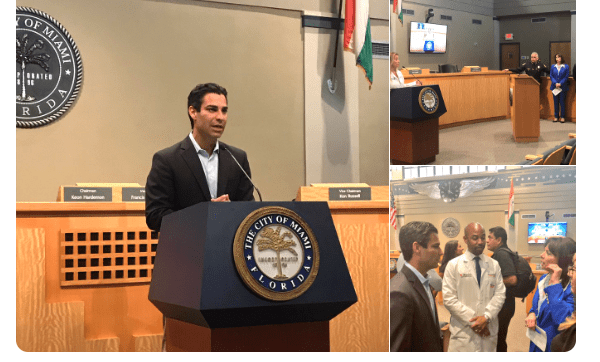
With the battle against the opioid epidemic well underway, Miami officials hope to use law enforcement to help addicts find medical care instead of putting them in jail. The Miami PD plans to offer people with an opioid addiction the opportunity to go to rehab instead of simply arresting them. A move we have seen […]
With the battle against the opioid epidemic well underway, Miami officials hope to use law enforcement to help addicts find medical care instead of putting them in jail. The Miami PD plans to offer people with an opioid addiction the opportunity to go to rehab instead of simply arresting them. A move we have seen many other state police departments make to try and combat the crisis.Announced last Monday, the program will use two federal grants totaling about 1.6 million dollars. The police department will be working with Jackson Behavioral Health Hospital, the South Florida Behavioral Network, the University of Miami Health System and many other agencies to develop a pre-arrest diversion program where people who are found with small amounts of painkillers can enter a one year outpatient treatment program, which includes anti-addiction medication such as Vivitrol (and Suboxone, however no information has explicitly stated that), social services, mental health counseling and general medical care.The hope is to start offering treatment by May 2019. Right now police and hospital officials are spending the next six months hiring personnel, setting up the program and training officers. Dr. Patricia Ares-Romero, chief medical officers of the Behavioral Health Hospital, said this program could end up treating around 100 people over the three-year life of the grant. Much of the treatment will be outpatient, but the program will also have the ability to offer inpatient care if necessary. She also said Miami is already looking for funding to extend the program beyond the three years of the grant due to the magnitude of the opioid epidemic.Medical professionals applauded the move at Miami City Hall on Monday. Dr. Hansel Tookes, head of a University of Miami needle exchange program said that this is a necessary move to help those suffering from addiction who cannot easily get treatment. It will give those addicted the ability to seek treatment at the point that they encounter law enforcement and instead of using jail time, using medical services.