
How to Choose a Florida Addiction Treatment Center in 2026
You may be staring at a list of Florida rehabs and wondering one blunt question: which one is safe, honest, and built for real recovery? That pressure is real. Families often feel it at night, after a hard conversation, or after watching withdrawal symptoms get worse. The right choice is not the cheapest quote. It […]


You may be staring at a list of Florida rehabs and wondering one blunt question: which one is safe, honest, and built for real recovery? That pressure is real. Families often feel it at night, after a hard conversation, or after watching withdrawal symptoms get worse. The right choice is not the cheapest quote. It is the program that matches the person’s needs, risk level, and support system.
What families miss when they compare Florida rehabs by price alone
Why the cheapest program can become the most expensive mistake
Price matters, but it cannot be the only filter. A low monthly rate can hide weak medical oversight, thin staffing, or poor discharge planning. That can turn into repeated relapse, emergency care, or another round of treatment. In addiction care, the true cost often shows up later.
Here is the part most families miss: the “deal” is rarely a deal if the level of care is wrong. A person with cocaine detox Florida needs, fentanyl treatment concerns, or benzodiazepine withdrawal symptoms may need medical monitoring right away. If a program cannot respond quickly, the risk rises. One family from South Florida told our team they nearly chose a cheaper option, then learned it had no plan for opioid rehab Delray admissions. That changed everything.
What signs of addiction and withdrawal should push you toward medical detox right away
Some symptoms mean you should not wait. Shaking, confusion, vomiting, chest pain, seizures, hallucinations, or very high anxiety can point to dangerous withdrawal. Alcoholism treatment center needs can escalate fast. So can prescription pill addiction, heroin recovery, or severe benzodiazepine withdrawal.
If you see these signs, ask about our medical detox process right away. Medical detox matters most when a person has used alcohol, opioids, or multiple substances together. You may also need urgent support if someone is sleeping all day, cannot keep fluids down, or has stopped making sense. In those moments, the question is not comfort. It is safety.
How to tell whether a Delray Beach rehab is built for alcohol, opioids, benzodiazepines, or polysubstance use
A strong Delray Beach rehab should say exactly what it treats and how. Alcohol, opioids, and benzodiazepines each bring different withdrawal patterns. Polysubstance use adds another layer. A program should explain how it handles cocaine detox Florida concerns, fentanyl treatment, heroin recovery, and prescription pill addiction without vague language.
Ask whether the center uses medical monitoring, psychiatric screening, and individualized tapering plans when needed. Ask how it handles transfer from detox into continued care. Ask whether it can coordinate with the Delray Beach rehab admissions process so the handoff is smooth. If the answers feel generic, keep looking. In recovery, vague is not reassuring.
The credentials and care model that separate a safe program from a risky one
Why licensed clinicians and Joint Commission accreditation matter more than polished marketing
Marketing can look polished. Real care looks organized, documented, and clinically supervised. When you compare Florida addiction treatment options, ask who is actually leading treatment each day. You want licensed clinicians, clear supervision, and a facility that follows recognized standards.
Joint Commission accreditation and licensed clinicians matter because they signal outside review and clinical accountability. They do not guarantee perfection. They do show that a program has met serious standards. For families searching “drug rehab near me,” that matters more than glossy photos or clever slogans. The safest centers make their credentials easy to verify.
What dual diagnosis treatment should actually include for depression, anxiety, PTSD, and bipolar disorder
Many people seeking addiction care also live with depression and addiction, anxiety treatment needs, bipolar disorder therapy needs, or PTSD treatment. That is called dual diagnosis treatment, or co-occurring disorders care. NIDA and SAMHSA both stress that mental health and substance use should be treated together. Treating only one often leaves the other driving relapse.
A real dual diagnosis plan should include psychiatric assessment, medication review, and therapy that matches the diagnosis. It should also ask about trauma history, sleep, panic, mood swings, and self-harm risk. If a center says it treats depression or PTSD but never explains how, that is a warning sign. For people seeking mental health IOP or trauma therapy South Florida options, clarity matters. You deserve more than a label.
How evidence-based care changes the picture for CBT, DBT, EMDR, medication-assisted treatment, and co-occurring disorders
Evidence-based treatment means the center uses methods with research support. That usually includes cognitive behavioral therapy, dialectical behavior therapy, EMDR trauma therapy, and medication-assisted treatment when appropriate. It also includes practical work on coping skills, relapse prevention, and co-occurring disorders. These are not buzzwords. They are tools.
For opioid use disorder, FDA-approved options such as Suboxone maintenance and Vivitrol injections may help some people, depending on the clinical picture. For trauma, EMDR trauma therapy can help process distress without forcing people to relive every detail at once. For emotion regulation, DBT often helps people who swing between shame, panic, and impulsive use. The strongest programs explain why each method fits a specific need. That is the standard to look for.
The treatment map you should see before you commit
When residential treatment makes sense versus partial hospitalization program and intensive outpatient
A good program should help you match the level of care to the current risk. A residential treatment facility makes sense when someone needs structure, distance from triggers, or close supervision. A partial hospitalization program can fit people who need intensive daytime care but do not need overnight housing. Intensive outpatient may fit someone who is more stable and can manage home life safely.
Here is a simple comparison:
Level of careBest forTypical structureResidential treatmentHigh risk, unstable home setting, strong relapse risk24-hour support, daily programmingPartial hospitalization programNeeds intensive care, but safe to sleep at home or nearbyFull-day treatment, evenings offIntensive outpatientMore stability, step-down care, work or family dutiesSeveral sessions per weekIf you are asking “what is PHP vs IOP,” this is the plain answer: PHP is more intensive, and IOP offers more flexibility. A center should explain why it recommends one over the other. If you are comparing inpatient rehab Palm Beach County options, ask how step-down care works. The best plans do not stop at admission. They map the whole path.
What a strong outpatient program Delray Beach plan should include, from group therapy activities to case management
A solid outpatient program Delray Beach plan should be structured, not loose. Look for group therapy activities that build honest connection, not just time-fillers. Look for family therapy, case management, life skills training, nutritional counseling, and clear goals for each week. A mental health IOP should also track mood, sleep, cravings, and safety.
Good outpatient care often includes both clinical and practical support. That may mean help with appointments, work planning, sober living resources, and transportation questions. Some people also want 12-step alternatives or SMART Recovery options alongside traditional meetings. If a center only talks about “support” but not the actual schedule, ask for details. A strong plan sounds concrete.
One client in the Lake Worth area once told staff the group calendar mattered more than any brochure. “I needed structure before I needed inspiration,” he said, describing a day that included process group, lunch, coping-skills work, and a family call. That is what real outpatient design looks like. It gives the brain something stable to hold onto.
How aftercare planning, sober living resources, and alumni support protect long-term recovery after discharge
Treatment does not end at discharge. The most careful programs build aftercare planning early. That should include sober living resources, relapse prevention tools for long-term recovery, and a realistic schedule for follow-up therapy. It should also include support for work, school, and family routines.
Ask whether the center has an alumni program and whether RECO Intensive alumni stay connected after discharge. Ask how it handles step-down care, peer support, and re-entry after a setback. One Google reviewer wrote, “Reco was life changing! Treatment seemed so daunting and difficult from the outside. Reco totally changed my perspective. Every single staff member at Reco was impactful and had something of value to offer me in my journey to recovery.
The one on one counseling and the group sessions were second to none. Every sessions was informative and truly helped shape my recovery.
Reco made treatment comfortable and seem far less stressful than what I had imagined. You can rest assured that if you choose to go to Reco for treatment you will be taken care of. It changed my life for the better. Thank you, Reco!”- Easton S., a 5 star review from our business on Google Business Reviews. That kind of continuity matters because long-term recovery is built, not assumed. A good program plans for the hard weeks too.
The decision frame that helps you choose the right Florida addiction treatment center now
How to compare insurance verification, out-of-network benefits, and self-pay options without getting overwhelmed
Insurance questions can make families freeze. Start by asking whether the center helps with insurance verification for Delray Beach rehab before admission. Ask if it works with Aetna, Cigna, and Blue Cross Blue Shield. Ask what out-of-network benefits may apply and whether self-pay options exist. A strong admissions team should explain the process in plain language. It should not pressure you into a decision before you understand coverage. Use insurance verification for Delray Beach rehab as a practical step, not a sales pitch. If the center cannot explain your options clearly, that is a sign to slow down. Money stress is real, but confusion should not drive the choice. 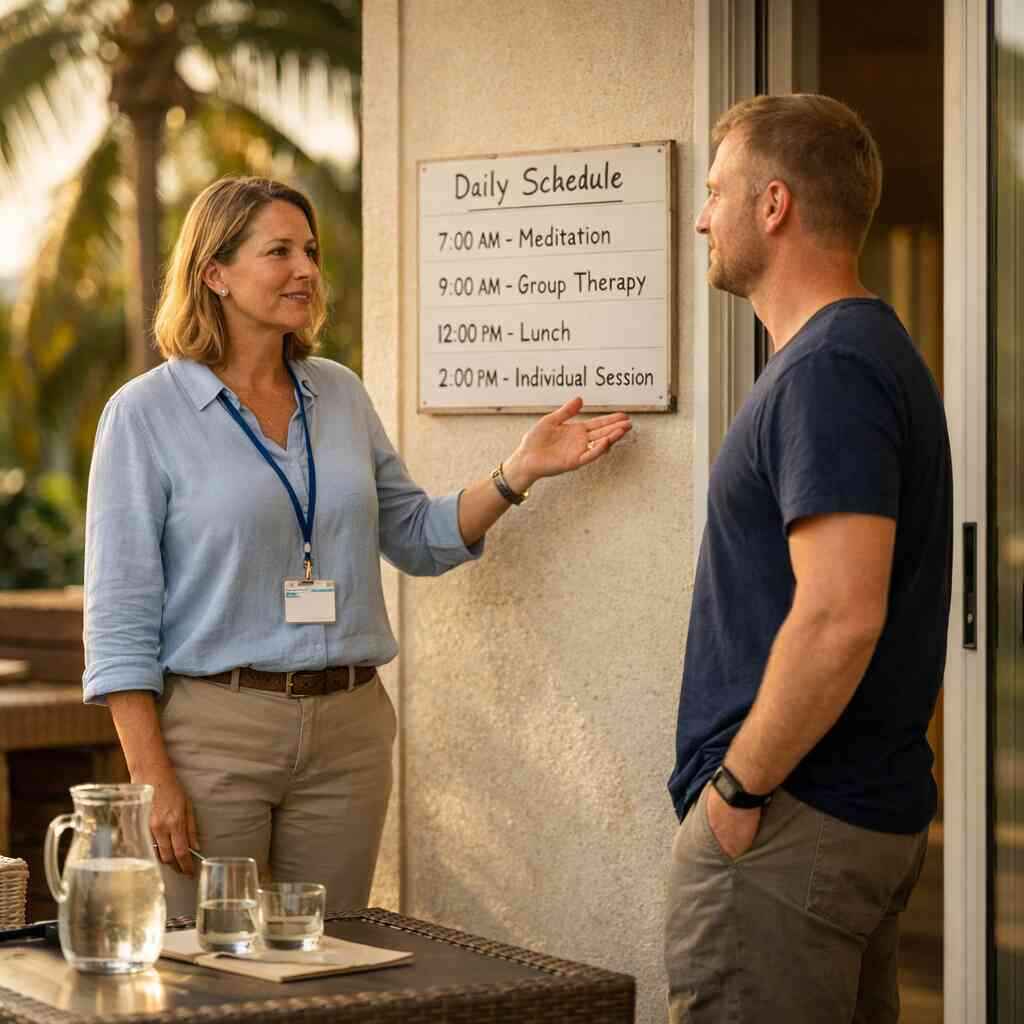
What local details matter in South Florida detox and inpatient rehab Palm Beach County, including beachside recovery and travel access
Location changes recovery more than people think. South Florida detox settings can feel calmer when they are near the coast, away from the chaos of daily triggers. A coastal healing environment can help people settle, especially during early stabilization. Delray Beach recovery community also gives people access to meetings, support, and sober things to do Delray.
Travel access matters too. Families coming from Boca Raton outpatient searches, West Palm Beach mental health needs, Broward County rehab options, or Miami addiction help often need clear directions and timing. If you are comparing Florida addiction treatment in Delray Beach, look at the RECO Intensive location: 140 NE 4th Avenue, Delray Beach, FL 33483. That address places treatment near Atlantic Avenue, local transit, and the practical rhythm of Palm Beach County treatment centers. Convenience matters when a family is already under strain.
Why the next call should be a clinical intake conversation, not a sales pitch, including questions about family therapy, veterans support, LGBTQ+ affirmative care, and the RECO Intensive location at 140 NE 4th Avenue Delray Beach FL 33483
The best next call should feel like an intake conversation. It should not feel like a closing script. Ask who will assess the person, what questions they will ask, and how they handle risk. Then ask about family therapy, veterans addiction help in Florida, and LGBTQ+ affirmative treatment in recovery.
Also ask about young adult rehab, professional’s program options, women’s rehab, men’s recovery, and gender-specific treatment. Ask how they support trauma therapy South Florida needs, PTSD and trauma treatment in South Florida recovery, and aftercare support. If the center can explain why family therapy helps people with addiction heal, it shows depth. If it can also explain what happens during admission at the RECO Intensive location in Delray Beach, you are probably speaking with a real clinical team, not a script reader.
Frequently Asked Questions
How long does detox last at a Delray Beach rehab?
Detox length depends on the substance, use pattern, and medical history. Alcohol and benzodiazepine withdrawal can last longer and may need closer monitoring. Opioid detox can be shorter, but cravings may remain strong. A clinic should give you a personalized estimate after assessment, not a guess.
Does RECO Intensive take my insurance?
The only accurate way to know is through insurance verification. RECO Intensive can help you review benefits for plans like Aetna, Cigna, and Blue Cross Blue Shield, along with out-of-network options. Coverage changes often, so it is best to verify before admission. That keeps the process clear and reduces surprise billing.
What’s the difference between PHP and IOP?
PHP, or partial hospitalization program, is more intensive and usually takes up most of the day. IOP, or intensive outpatient, offers fewer hours and more flexibility for work, school, or home needs. The right choice depends on safety, stability, and relapse risk. A clinical intake should explain why one fits better.
Can I bring my phone to treatment?
Policies vary by program and by level of care. Many centers limit phone access early so people can focus on stabilization. Some allow scheduled use later, especially in outpatient care. Ask about the specific rule before admission so you can prepare.
Is family involved in the program?
Often, yes. Family therapy can help repair trust, improve communication, and reduce the patterns that keep addiction going. Some programs also offer family weekend or structured education. If family contact is important, ask how often it happens and who leads it.
What if I need help for depression but not addiction?
That still matters. Depression, anxiety, PTSD, and bipolar disorder can need structured treatment even without active substance use. A mental health IOP may help if symptoms disrupt daily life. If substance use is also present, a dual diagnosis approach usually works better.
Where should I start if I need help today?
Start with one clinical call. Ask about symptoms, detox risk, insurance, and the right level of care. Then compare the answers against your needs, not the marketing. If you want a structured, compassionate conversation, reach out to RECO Intensive and ask for intake support today.


