
5 Family Therapy Tips for Supporting Recovery in Fall 2026
If your home feels tense lately, that matters. A loved one may look steady in treatment, yet the first cold snap, family dinner, or weekend argument can shake everything loose. That fear can feel lonely, especially when you are trying to do the right thing and still ending up in chaos. Family therapy for recovery […]


If your home feels tense lately, that matters. A loved one may look steady in treatment, yet the first cold snap, family dinner, or weekend argument can shake everything loose. That fear can feel lonely, especially when you are trying to do the right thing and still ending up in chaos. Family therapy for recovery gives that fear a shape, and then a plan.
At RECO Intensive in Delray Beach, families often ask the same hard question: How do we help without making things worse? That question is honest, and it is common. In South Florida addiction treatment, support works best when it is structured, specific, and calm. If you are reading this because the signs are starting to worry you, take a breath. There are real ways to help.
*”I cannot say enough wonderful things about RECO and the incredible staff who cared for my son during his time in treatment. As a parent, sending your child to treatment by himself 12 hours away from home, is one of the hardest and most frightening things you can ever go through. From the beginning, RECO gave us a sense of comfort, hope, and trust that meant more to our family than I can put into words.
What stood out most to me was how supportive and genuinely caring the staff are. David Levin is an excellent representative of the top-notch facility they run there. I was honored to establish a connection with counselors Ms. V and Jay. The RECO team treated my son, as well as myself as an individual, not an insurance opportunity.
The people at RECO made my son feel supported, accepted, and cared about. It feels like a family. It was clear that the staff genuinely wanted to see him succeed, and that they were invested in his future—not just his time in the program. The Wednesday night Reco family zoom calls are excellent. My son has “graduated” from Reco, but I still attend the calls weekly as an alumni parent. I recently visited the Reco facility in August 2026. Yes, it is a beautiful place, but more importantly, it houses faculty that is inviting and positive to all who enter.
We will always be grateful to the entire RECO team for the compassion, patience, education, and support they gave our son and our family.
If you are a parent looking for a treatment center where your loved one will be treated with dignity, compassion, and genuine care, I would highly recommend RECO. They became much more than a treatment team to our family—they became people we will always be grateful for.”*- b R., a 5 star review from RECO Intensive on Google Business Reviews
When family therapy is the missing piece in a fall relapse scare
Why a loved one can look stable in treatment and still unravel at home
People often assume stability in treatment means stability everywhere. That is not how addiction recovery usually works. A person may do fine in a residential treatment facility, then struggle quickly when stress, old routines, and family tension return. The home environment can trigger shame, defensiveness, or old coping habits. That is why family healing in addiction recovery matters so much.
On projects we’ve completed this year, the same pattern has shown up again and again. The person was attending group therapy, sleeping better, and saying the right things. Then one hard evening at home brought back lying, hiding, or walking out. The issue was not a lack of willpower. The issue was that the family system had not changed yet.
The family signals that usually show up before a setback
Most families notice the warning signs before they name them. Conversations get shorter. Everyone walks on eggshells. Someone starts checking phones, tracking moods, or avoiding topics entirely. These are not small things. They are often the first signs that the household needs supporting a loved one in treatment.
Here is what many families report before a setback:
- More secrecy around money, time, or location
- Sharp mood swings after phone calls or visits
- Missing meetings, therapy, or work without clear reasons
- More irritability during dinner, mornings, or weekends
- Defensive reactions to simple questions
A woman from the Boynton area once described her home like a room with the volume turned up too high. Nobody was screaming, but nobody was safe enough to speak plainly either. That kind of tension often means the family needs more than reassurance. It needs tools.
Why guilt, rescuing, and silence can keep the cycle going
Guilt can make families overhelp. Rescuing can look loving, but it often removes accountability. Silence can feel peaceful, yet it usually protects the problem. In family systems therapy for addiction recovery support, these patterns matter because they keep the old cycle alive. If you keep cleaning up every consequence, the person in recovery may never practice change.
This is where boundaries in recovery become essential. A boundary is not a punishment. It is a clear limit that protects everyone in the house. One mother in Palm Beach County told us she finally stopped arguing at 1 a.m. and started discussing hard issues only during daylight, sober, and calm. That single change lowered the chaos in her home almost immediately.
How Delray Beach families can tell when support needs to become structure
Support becomes structure when concern is no longer enough. If the same crisis keeps repeating, family therapy for recovery needs rules, roles, and follow-through. Delray Beach rehab families often reach this point after several missed promises or one frightening night. Structure may include a weekly family session, agreed check-ins, and clear consequences for unsafe behavior. It may also include family involvement in outpatient treatment in Delray Beach.
Here is the part most families miss. Love alone does not organize a recovery home. Skills do. That is why families in the South Florida recovery community often do better when they shift from reacting to planning. A recovery-friendly home environment is built, not hoped for.
The five moves that make family therapy actually work in recovery
Set boundaries that lower chaos without turning love into control
Boundaries work best when they are simple, predictable, and enforceable. They should lower chaos, not start a power struggle. Good boundaries answer three questions: What will I do? What will I not do? What happens if the limit is crossed? Families often need help making these decisions without sliding into control or rescue. That is where healthy communication in families during recovery and boundary work overlap.
Try these practical examples:
- No money is given without a specific purpose.
- No serious talks happen during intoxication.
- Treatment appointments are not optional if housing depends on support.
- Phone calls end if yelling starts.
These limits can feel uncomfortable at first. That is normal. In addiction recovery support for families, discomfort is often the sign that the old pattern is finally losing power.
Use healthy communication so hard talks do not turn into blame
Healthy communication in families during recovery means saying less, more clearly. Short sentences help. So do “I” statements. Instead of “You always lie,” try “I feel nervous when plans change without warning.” That keeps the conversation focused on impact, not attack. It also supports addiction education for families by making the problem discussable.
In Delray Beach recovery community work, we see families improve fastest when they stop repeating the same fight in louder voices. One father in Boca Raton said every argument ended with someone storming off. In family sessions, he learned to pause, name the issue, and ask one direct question. That simple shift reduced the drama in the house. It also made room for repair.
Learn relapse warning signs and the coping skills that calm a crisis
Relapse prevention for families starts with noticing early changes, not waiting for disaster. Warning signs may include isolation, missed therapy, broken routines, poor sleep, or sudden defensiveness. Families also need coping skills for family members supporting recovery, because panic can spread fast. Breathing, pausing, writing things down, and calling a clinician can prevent a bad moment from becoming a crisis. Coping skills for family members supporting recovery are part of the work, not an extra.
If your loved one is in a mental health IOP or outpatient program Delray Beach families should know the plan before trouble starts. Ask what to do if cravings spike, if a meeting is missed, or if a mood crash follows a conflict. A calm response does not excuse the behavior. It keeps the conversation useful.
Practice repair after trust has been damaged by alcohol or drug use
Repair is slow. That is the truth. Trust after alcohol use disorder, cocaine detox Florida, opioid rehab Delray, or prescription pill addiction does not return because someone says sorry once. It returns through repeated proof. That may mean showing up on time, answering honestly, and following through even when nobody is praising the effort. Family systems therapy for addiction recovery support gives families a place to name the damage without staying stuck in it.
A few repair questions help:
- What was broken?
- What changes are visible now?
- What still feels unsafe?
- What would help trust grow this week?
Keep the questions short. Keep the tone steady. Repair works better when nobody is trying to win.
Turn family sessions into aftercare planning instead of one more meeting
Family therapy should lead somewhere. If it does not connect to aftercare planning, sober living resources, or daily routines, it can feel abstract. That is a missed chance. The goal is to build a recovery plan that survives real life. That may include family weekend in rehab and group therapy for families, then a step down into aftercare support for loved ones in long-term recovery.
Here is a simple aftercare checklist:
- Who calls whom after a hard day?
- What meetings happen each week?
- What are the transportation plans?
- Where do medications go?
- What signs mean it is time to ask for help?
Families often do best when family therapy tips for recovery in fall 2026 become routine, not theory.
What changes when co occurring disorders are part of the picture
How dual diagnosis changes the way family therapy should be paced
Dual diagnosis treatment for families must move at the pace of both conditions. If depression, anxiety, PTSD, or bipolar disorder therapy is part of the picture, the family should not rush hard talks. The emotional load is heavier. The treatment plan needs room for that. Dual diagnosis treatment for families works best when the whole household understands co-occurring disorders and family support.
The National Institute on Drug Abuse has long emphasized that substance use and mental health conditions often interact. That means family therapy should not treat them as separate problems. If the mood drops, cravings may rise. If cravings rise, shame may deepen. Good family work stays steady through that back-and-forth.
Why depression and addiction often need the same conversation
Depression and addiction in the family often feed each other. A loved one may drink, use pills, or chase cocaine to blunt emotional pain. Then the drug use deepens hopelessness. Families sometimes focus only on the substance, but the emotional pain deserves attention too. Depression and addiction support in the family helps everyone talk about both pieces at once.
A young adult from South Florida once said he used to hear “just cheer up” whenever he looked flat and tired. That advice did nothing. What helped was a family session that linked structure, sleep, medication review, and counseling. Small, steady care beat cheerful pressure every time.
How anxiety support for families looks different from simple reassurance
Anxiety support for families in recovery is not the same as calming someone down once. Reassurance fades. Structure lasts longer. Families need a plan for racing thoughts, fear, and constant checking. That can include predictable routines, clear updates, and less reactive communication. Anxiety support for families in recovery often works best with CBT, or cognitive behavioral therapy, which helps people notice and challenge unhelpful thoughts.
If your home feels tense because everyone is waiting for the next bad call, the anxiety may be spreading through the house. That is common. It also means the whole family may need coping skills, not just the person in treatment. Mindfulness meditation can help here, but only when paired with real boundaries.
What PTSD treatment, EMDR trauma therapy, and trauma informed care mean at home
Trauma informed family therapy for PTSD and addiction recovery asks a simple question: What happened, and how does it still shape behavior now? That question matters in trauma therapy South Florida families often need after violence, loss, military stress, or long-term instability. EMDR trauma therapy, which stands for eye movement desensitization and reprocessing, is one evidence-based method used for trauma processing. At home, trauma informed care means less shaming, fewer surprises, and more emotional safety. Trauma-informed family therapy for PTSD and addiction recovery is especially important when old wounds keep driving new crises. 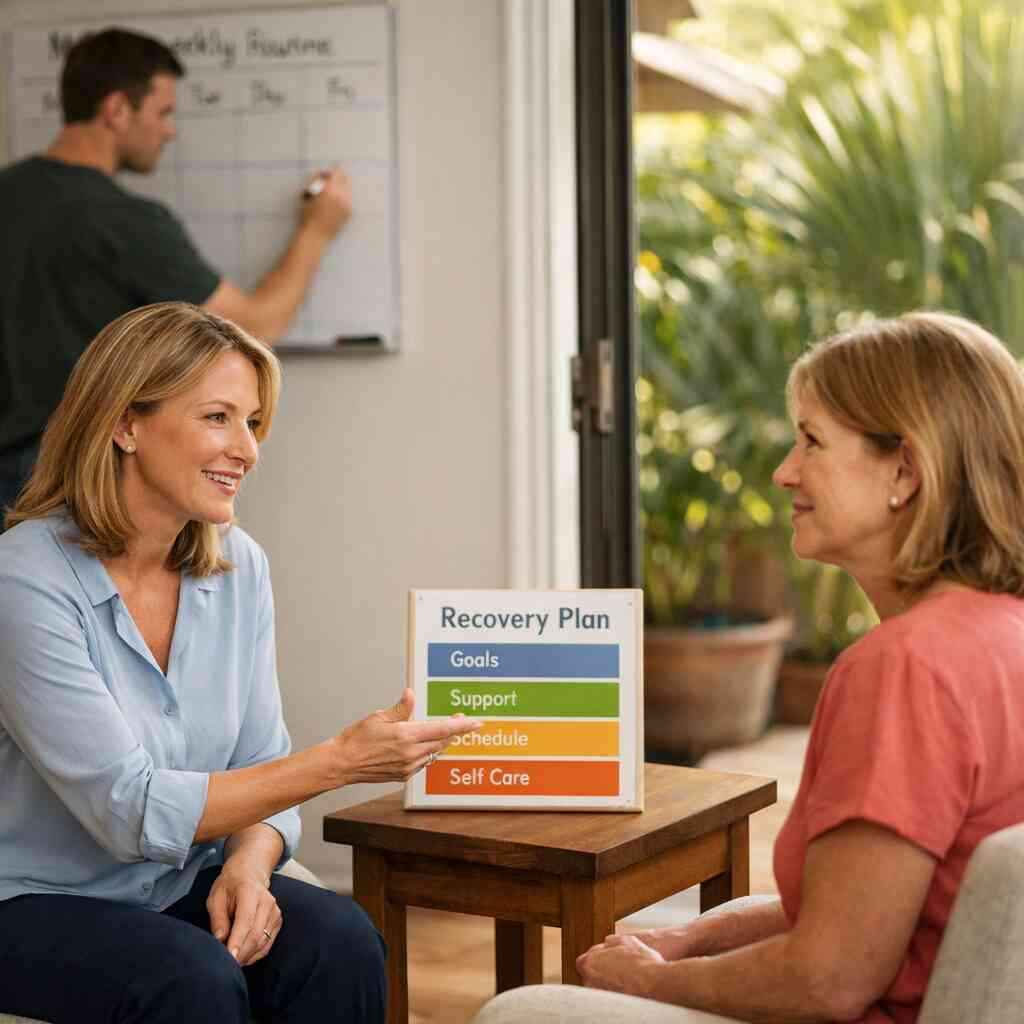
Families do not need to become therapists. They do need to stop treating trauma symptoms like bad attitude. That distinction changes everything.
When medication assisted treatment and family education need to work together
Medication-assisted treatment can support recovery from opioid use disorder and alcohol use disorder when clinically appropriate. Medications such as Suboxone maintenance and Vivitrol injections are FDA-approved options in certain cases. Families often have questions, and they should. Medication is not a moral issue. It is a treatment issue. Medication-assisted treatment works best when the household understands why the medication matters and how it fits into the larger plan. This is especially relevant for fentanyl treatment, heroin recovery, and benzodiazepine withdrawal support. Families need to know that medication choices, monitoring, and counseling are connected. When they are explained well, fear drops. Cooperation rises. What a real next step looks like for Delray Beach families
How to compare residential treatment, PHP, and intensive outpatient without guessing
Families often ask what level of care fits best. Residential treatment gives the most structure. PHP, or partial hospitalization program, offers strong daily support with more flexibility. Intensive outpatient, or IOP, allows treatment while living at home or in sober housing. If you are comparing residential treatment and PHP in South Florida, the right choice depends on safety, stability, and symptom severity. Residential treatment and PHP options in South Florida can help families compare without guesswork.
Level of careBest fitFamily roleResidentialHigh risk or low stabilityFrequent updates, visitation, repair workPHPStrong support with daytime treatmentEducation, planning, consistent boundariesIOPMore independence, ongoing careWeekly family work, relapse planningIf you need support for families in Delray Beach and nearby Palm Beach, do not choose by name alone. Choose by fit.
Where family weekend, group therapy, and sober living resources fit in the larger plan
Family weekend in rehab and group therapy for families can open conversations that daily life keeps shutting down. It gives everyone a shared language. It also helps with the awkward parts, like saying “I’m scared” without turning it into blame. Group therapy activities often show families they are not the only ones rebuilding trust. Family weekend in rehab and group therapy for families also help prepare people for the handoff into real life.
Sober living resources for families in Delray Beach can matter after higher levels of care end. They create a bridge between treatment and home. That bridge is often where long-term recovery gets protected.
What to ask during insurance verification and intake at a private rehab
Insurance questions should be asked early, not after stress peaks. During insurance verification, ask what is covered, what out-of-network benefits apply, and what self-pay options exist. If you have Aetna, Cigna, or Blue Cross Blue Shield, coverage still varies. Florida rehabs that take insurance may differ in network status and authorizations. Insurance verification and intake should feel clear, not confusing.
A few smart questions:
- Is the program DCF licensed?
- Is there Joint Commission accreditation?
- What does intake require?
- How are family sessions scheduled?
- What happens after discharge?
At a private rehab, those answers should be direct and specific.
Why long term recovery improves when families use the same tools outside treatment
Long-term recovery does not survive on insight alone. It grows through repetition. Families that keep using the same tools outside treatment often do better with coping, boundaries, and repair. That includes SMART Recovery ideas, 12-step alternatives, CBT skills, dialectical behavior therapy skills, and life skills training. It can also include vocational support, nutritional counseling, and alumni program contact. Aftercare planning for long-term recovery is where those pieces start to hold together.
What we’ve seen in 2026 specifically is that families want practical plans, not theory. They want to know what to say, what to do, and who to call. That is reasonable. It is also possible.
How to move from worry to a clear plan with RECO Intensive in Delray Beach
If your family is stuck between fear and action, start with one concrete conversation. RECO Intensive at 140 NE 4th Avenue Delray Beach FL 33483 works with families who need structure, not judgment. The setting is close to the coastal calm many people associate with beachside recovery, but the work is serious and grounded. Our team supports Delray Beach rehab family needs through evidence-based treatment, licensed clinicians, and practical planning. RECO Intensive location in Delray Beach, Florida can help you see what that looks like.
If you are sorting through mental health IOP, outpatient program Delray Beach options, or a residential treatment facility, you do not have to choose blindly. Start with one call. Bring your questions. Keep the conversation plain. And if the next right move feels small, that is fine.
Frequently Asked Questions
Question: How does family therapy for recovery help when a loved one is struggling with relapse warning signs at home?
Answer: Family therapy for recovery helps turn confusion into a clear plan. When a loved one seems stable in treatment but becomes tense, secretive, or defensive at home, the whole household may need support, not just the person in care. At RECO Intensive in Delray Beach, family work is designed to support a recovery-friendly home environment through healthy communication in families, boundaries in recovery, and relapse prevention for families. That can include learning how to respond to warning signs without panic, how to reduce blame, and how to create compassionate accountability that supports long-term sobriety. For families in South Florida, this kind of structure can be especially helpful during step-down care from a residential treatment facility, partial hospitalization program, or intensive outpatient setting.
Question: What does family involvement in outpatient treatment look like at RECO Intensive for outpatient program Delray Beach and mental health IOP support?
Answer: Family involvement in outpatient treatment may include education, communication planning, and scheduled family sessions that help loved ones stay aligned with the recovery process. When comparing what is PHP vs IOP, the main difference is the amount of structure, but both levels can benefit from family education for substance use disorders and support for loved ones in treatment. At RECO Intensive, outpatient program Delray Beach services can be paired with family therapy, aftercare planning, and case management so the household is not left guessing after discharge. This is especially useful when co-occurring disorders are part of the picture and the family needs practical guidance around dual diagnosis treatment for families, emotional regulation in recovery, and support that continues beyond the program day.
Question: How does the blog 5 Family Therapy Tips for Supporting Recovery in Fall 2026 connect to co-occurring disorders and family support at RECO Intensive?
Answer: The blog 5 Family Therapy Tips for Supporting Recovery in Fall 2026 connects closely to co-occurring disorders and family support because many families are managing more than substance use alone. Depression and addiction in the family, anxiety support for families in recovery, PTSD treatment, or bipolar disorder therapy can all affect how home life feels and how recovery progresses. RECO Intensive uses an evidence-based treatment approach that can include cognitive behavioral therapy, dialectical behavior therapy skills, mindfulness meditation, and trauma-informed family therapy when appropriate. For loved ones supporting recovery from alcohol use disorder, opioid rehab Delray concerns, cocaine detox Florida needs, or prescription pill addiction, it can be valuable to have family education that addresses both symptoms and patterns. That kind of support can make a big difference in how families respond to stress, trust repair, and aftercare support for loved ones.
Question: What should families know about intervention services, insurance verification, and choosing a private rehab in Delray Beach?
Answer: Families often need help deciding how to choose a rehab, especially when emotions are high and timing matters. RECO Intensive can help families understand intervention services, intake process steps, and insurance verification so the next move is clearer. If you are comparing Florida rehabs that take insurance, it is smart to ask about Aetna, Cigna, Blue Cross Blue Shield, out-of-network benefits, and self-pay options before making a final decision. Families should also ask whether the program is DCF licensed and whether Joint Commission accreditation applies, because those details can help you evaluate a private rehab more confidently. For people searching for drug rehab near me, inpatient rehab Palm Beach County, or South Florida detox support, having a grounded conversation with admissions can make the process less overwhelming and more action-oriented.
Question: How does RECO Intensive support long-term recovery after family sessions end, including aftercare planning, sober living resources, and alumni program support?
Answer: RECO Intensive understands that family therapy should connect to real life after treatment ends. That is why aftercare planning, sober living resources, and ongoing support matter so much for long-term recovery. Families may leave with practical tools for relapse prevention for families, communication skills for recovery, and a plan for rebuilding trust after addiction, but those tools work best when they are reinforced over time. Depending on clinical need, aftercare support may also connect families with 12-step alternatives, SMART Recovery ideas, vocational support, life skills training, nutritional counseling, and alumni program contact. For people in Delray Beach recovery community settings, this kind of step-down support can help maintain stability after residential treatment, PHP, or intensive outpatient care. If your family is looking for a coastal healing environment at 140 NE 4th Avenue Delray Beach FL 33483, RECO Intensive can be a place to start building that next phase with licensed clinicians and evidence-based treatment.


