Inside a 30 Day Residential Treatment Facility in Palm Beach
If you are searching at night, worried about detox, money, or being judged, that fear makes sense. Starting treatment can feel overwhelming, but understanding the structure helps. What actually happens inside a 30 day residential treatment facility in Palm Beach A 30 day residential treatment facility in Palm Beach County is not just a bed […]
If you are searching at night, worried about detox, money, or being judged, that fear makes sense. Starting treatment can feel overwhelming, but understanding the structure helps.
What actually happens inside a 30 day residential treatment facility in Palm Beach
A 30 day residential treatment facility in Palm Beach County is not just a bed and a calendar. It is a structured setting where clinical support, safety, and daily routine work together. For many people, that structure feels strange on the first day and deeply stabilizing by the end of the week. At RECO Intensive in Delray Beach, the focus stays on humane care, careful assessment, and practical planning. If you are comparing a residential treatment program with licensed clinicians in Palm Beach County, this is where the details start to matter.
The first 24 hours when fear, paperwork, and relief all show up at once
The first day usually carries mixed emotions. You may feel relief, shame, hope, anger, and plain exhaustion. That is normal. The intake process should not rush those feelings away; it should help organize them into a plan. In a strong Delray Beach rehab, staff begin with safety, medication review, and a clear explanation of what happens next.
One man arrived after months of hiding his drinking. He kept asking if he would be “in trouble” for telling the truth. The answer was simple: honesty helps treatment work better. By dinner, he had a room assignment, a schedule, and fewer racing thoughts. That kind of early calm matters.
Why a residential treatment facility feels different from outpatient care in Delray Beach
Residential care changes the environment. You sleep in the program, eat there, and step away from daily triggers. Outpatient care, including an outpatient program Delray Beach or mental health IOP, lets you keep more of your routine, but it does not remove you from it. That difference can matter a lot during early recovery. If your home setting is unstable, a residential treatment facility often offers the safer start.
Here is the part most people miss: structure is not punishment. It is relief. In a private rehab near South Florida, the absence of constant decisions can make room for clear thinking. That can be especially important if you have been cycling through signs of addiction and trying to manage work, family, and withdrawal at the same time.
How intake, assessment, and insurance verification shape the first week
The first week usually begins with a full assessment. Clinicians look at substance use history, mental health symptoms, past treatment, sleep, trauma, and medical needs. They also ask about co-occurring disorders, because depression, anxiety, PTSD, and bipolar disorder often change the treatment plan. For many families, the paperwork feels tedious. Yet the data helps build a safer, more accurate plan.
Insurance questions add another layer. People often want to know about Florida rehabs that take insurance, out-of-network benefits, and self-pay options. That is why insurance verification for Florida rehabs that take insurance matters early. At RECO Intensive, admissions support helps clarify coverage before treatment advances too far. That can reduce panic and prevent delays.
What the daily rhythm looks like in a private rehab near South Florida
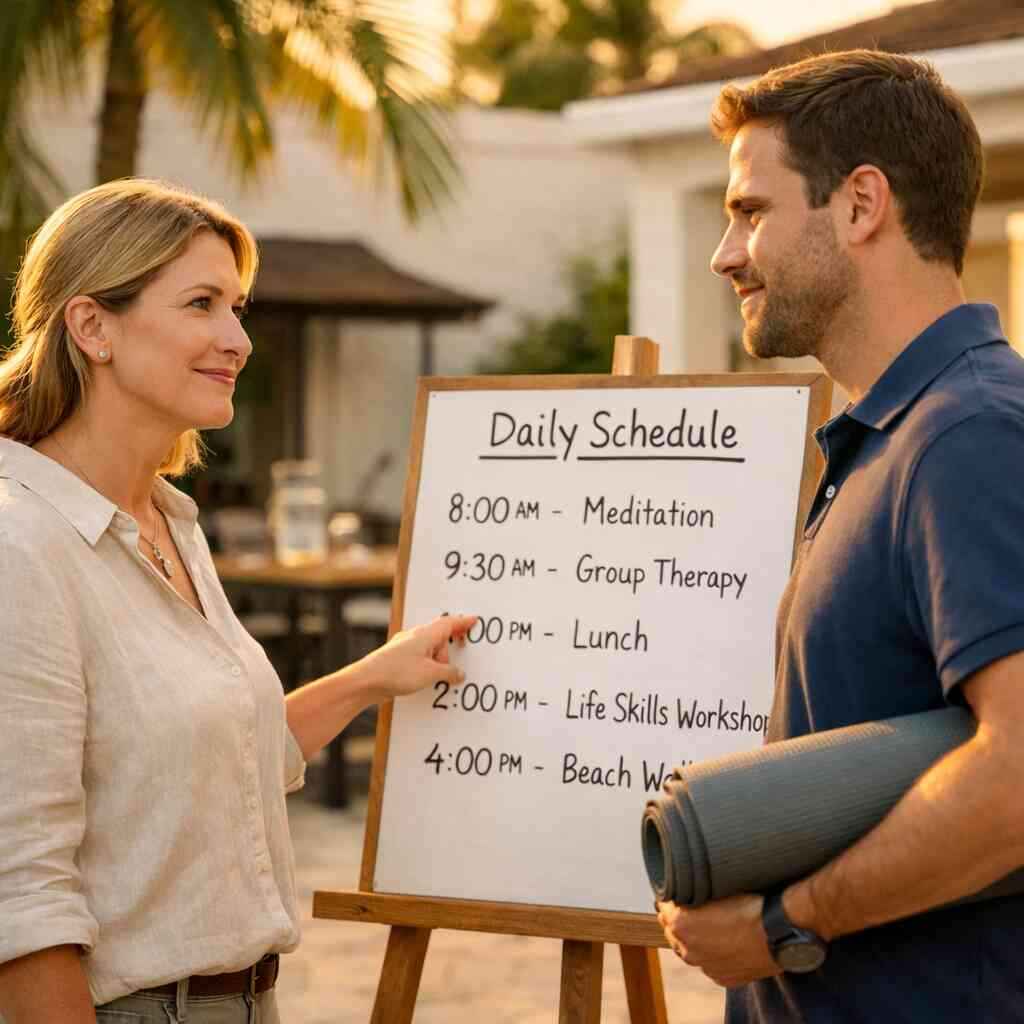
A good residential schedule creates rhythm without feeling rigid. You can expect group therapy, individual sessions, clinical check-ins, meals, and time for reflection. Many programs also include case management, recovery education, and health planning. On the practical side, that rhythm helps with cravings, emotional swings, and sleep disruption. On the deeper side, it teaches your body that life can be steadier.
A typical day in South Florida recovery often includes:
- Morning check-in and accountability
- Therapy groups
- Individual clinical work
- Recovery education
- Movement or mindfulness
- Evening reflection and support
The exact mix varies by person. A young adult with opioid use may need different support than someone with alcoholism treatment center needs or prescription pill addiction. The goal is not to fill time. The goal is to build coping skills that can survive outside the building.
The hidden structure behind a month of care and why it matters more than willpower
People often ask if thirty days is enough. The honest answer is that thirty days is a start, not a finish. A month gives you time to stop the spiral, stabilize, and practice new tools. It also lets the team see patterns that a quick visit cannot reveal. That is why a well-run program focuses on structure, not just motivation.
When detox belongs before residential treatment and when it does not
Not everyone needs detox before residential care, but many do. If alcohol, opioids, fentanyl, heroin, or benzodiazepines are involved, withdrawal can be medically serious. In those cases, medical detox in South Florida before residential care may come first. That question comes up often with cocaine detox Florida, opioid rehab Delray, and benzodiazepine withdrawal concerns. The right answer depends on use history, current symptoms, and medical risk.
SAMHSA guidelines support matching care to withdrawal severity. That is why a careful intake matters so much. If someone is shaky, vomiting, confused, or at seizure risk, treatment should not guess. If detox is not needed, residential care may begin directly. Either way, the decision should be clinical, not emotional.
How licensed clinicians use CBT, DBT, and EMDR trauma therapy in real treatment plans
Evidence-based treatment means the care has research support and clinical logic. In addiction programs, that often includes cognitive behavioral therapy, dialectical behavior therapy, and EMDR trauma therapy. CBT helps you spot thought traps. DBT helps with emotion regulation and distress tolerance. EMDR can help process trauma that keeps driving relapse.
A client with panic, shame, and binge drinking once described it this way: “I knew what I should do. I just could not do it in the moment.” That gap is exactly where therapy works. The work is not magic. It is repetition, language, and practice. If you want a deeper look, RECO’s CBT, DBT, and EMDR therapy for addiction recovery page explains how these methods fit into care.
Why dual diagnosis treatment changes the plan for anxiety, depression, PTSD, or bipolar disorder
Addiction and mental health often travel together. NIDA has long emphasized the co-occurring disorders model, which means both conditions need attention. If you have depression and addiction, anxiety treatment needs, PTSD treatment, or bipolar disorder therapy, the plan changes. You do not simply treat the substance use and hope the rest disappears. You treat the whole clinical picture.
That is where dual diagnosis treatment for co-occurring disorders in Palm Beach County becomes essential. Some people use alcohol to quiet panic. Others use pills to sleep. Others use cocaine to push through depression until the crash becomes worse. If that pattern sounds familiar, the program should reflect it. A strong team sees the connection instead of treating each symptom in isolation.
Where medication-assisted treatment fits for alcohol, opioid, fentanyl, or prescription pill addiction
Medication-assisted treatment can play a key role for some people. FDA-approved options may include Suboxone maintenance for opioid use disorder and Vivitrol injections for alcohol or opioid relapse prevention in the right cases. These medications are not shortcuts. They are tools that may reduce cravings and support stability when used appropriately. They should always be discussed with a licensed medical provider. 
For alcohol addiction treatment in Delray Beach, MAT may help some clients maintain progress after detox. For opioid and fentanyl treatment in Delray Beach, it can be especially important. For heroin recovery or prescription pill addiction, the goal is safer stabilization and better decision-making. RECO’s opioid and fentanyl treatment in Delray Beach approach fits that broader recovery plan.
Why Palm Beach County families ask more than where they will sleep
Families rarely ask only about the bed, the food, or the view. They want to know if care will actually change anything. That is a fair question. In Palm Beach County treatment centers, the difference often shows up in how the program handles connection, trauma, and next steps. The setting matters, but the clinical design matters more. ### What makes Delray Beach rehab different from a generic inpatient rehab Palm Beach County search
A generic search for inpatient rehab Palm Beach County may give you dozens of names. It will not tell you how each program handles trauma, mental health, or continuity of care. A focused Delray Beach rehab in the South Florida recovery community should feel organized, responsive, and grounded in real clinical work. RECO Intensive’s inpatient rehab in Delray Beach for South Florida recovery reflects that level of intention.
Delray also has a recovery culture that people notice quickly. Atlantic Avenue is busy. The beach is close. Nature preserves offer quiet that can help the nervous system settle. That coastal healing environment does not replace treatment, but it can reduce noise. For many people, that small change matters more than they expected.
How group therapy activities, family therapy, and case management support long term recovery
Recovery gets stronger when it spreads beyond private insight. That is why group therapy activities, family therapy, and case management matter so much. Group work helps people practice honesty and feedback. Family therapy helps repair communication and boundaries. Case management helps with appointments, housing, and practical planning.
A mother once said the family weekend helped her stop blaming herself and start asking better questions. That shift changed the conversation at home. It did not solve everything. It made the next month more workable. RECO’s family therapy and group support for long term recovery approach supports that kind of progress.
The role of holistic recovery, yoga therapy, art therapy, and mindfulness meditation alongside evidence-based treatment
Holistic care should never replace clinical treatment, but it can support it. Yoga therapy, art therapy, and mindfulness meditation help some people calm the body enough to stay engaged. These tools can reduce stress and improve awareness. They also give people nonverbal ways to process fear, grief, and shame. For many clients, that feels safer than talking only.
RECO’s mindfulness, yoga, and holistic recovery in Delray Beach resource fits with that idea. A person coming off benzodiazepine withdrawal or depression and addiction may need grounding before insight. Another may need movement after years of emotional numbness. The point is balance. Clinical care and sensory regulation can work side by side.
How aftercare planning connects residential treatment to PHP, intensive outpatient, sober living resources, and alumni support
Discharge should not feel like a cliff. Good aftercare planning links residential care to a partial hospitalization program, intensive outpatient, and, when needed, sober living resources. PHP offers more structure than IOP. IOP offers more flexibility than residential care. That progression helps people keep practicing while re-entering daily life.
If you are trying to understand what is PHP vs IOP, think of intensity and independence. PHP usually means more treatment hours and less home time. IOP usually means fewer hours and more outside responsibility. The goal is not just to leave treatment. The goal is to leave with support. RECO’s partial hospitalization program in South Florida after residential rehab and intensive outpatient program in Delray Beach for ongoing support help bridge that gap.
The decision that matters next after a 30 day stay ends
Ending a month of care can feel scary. You may worry that progress will vanish once life gets loud again. That fear is common. The right next step should lower that fear, not ignore it. The best programs build a plan that respects both your progress and your real-world pressures.
How to compare Florida rehabs that take insurance, self-pay options, and out-of-network benefits
Cost should never be guessed. You want clear information on benefits, deductibles, and network status. If a program says it accepts your plan, verify the details. Ask what level of care is covered and what may require separate authorization. That is especially important with Aetna, Cigna, and Blue Cross Blue Shield.
Use how to verify insurance for Florida rehabs that take insurance as a starting point. If insurance is limited, ask about self-pay options and out-of-network benefits. A reputable admissions team will explain the numbers without pressure. Transparency is part of good care.
OptionBest forKey question to askInsuranceCovered treatment needsWhat levels of care are approved?Self-payFaster decision-makingWhat is included, and what is separate?Out-of-networkBroader provider choiceWhat portion may be reimbursed?### What to look for in an alcohol rehab or drug rehab near me before you commit
A search for drug rehab near me can bring up polished websites that say very little. Look deeper. Ask about licensing, clinical oversight, group size, mental health care, and relapse prevention. Ask how the program handles young adult rehab, a professional’s program, LGBTQ+ affirmative treatment, veterans addiction help, and gender-specific treatment such as women’s rehab or men’s recovery. Different people need different forms of safety.
You should also ask about intervention services, life skills training, vocational support, and nutritional counseling. These supports may not sound dramatic, but they help recovery stick. If a program cannot explain its model clearly, keep looking. Clarity is a sign of competence.
Why a coastal healing environment can help with focus without replacing clinical care
People often respond to place. A beachside recovery setting can calm the senses, especially when life has been chaotic. The sound, light, and open space of South Florida may help you slow down. Still, the setting does not treat addiction by itself. It simply makes it easier to hear yourself think.
On the projects we’ve finished this year, the strongest results came when the environment and the clinical plan matched. The same idea applies here. The calm of Delray Beach, the rhythm of local recovery resources, and proximity to the coast can help with focus. But the real work still comes from therapy, accountability, and follow-through.
How to use RECO Intensive location details, admissions support, and family weekend to choose the right level of care
If you want a concrete place to start, use the facts. RECO Intensive is at 140 NE 4th Avenue Delray Beach FL 33483. That matters because location affects convenience, family access, and transitions to aftercare. It also helps you judge whether the program fits your life and support system. For many families, family weekend becomes the point where treatment feels real and coordinated.
You can review our medical detox process if detox may come first, or ask admissions to explain next-step options. You can also ask about the private rehab admissions and checklist in Delray Beach if packing and planning feel chaotic. A good admissions team makes the process lighter, not heavier. You do not have to solve every detail today. Start with one call, gather the facts, and let the next conversation be the one that moves things forward.
Frequently Asked Questions
Question: What happens during the intake process at a 30 day residential treatment facility in Palm Beach, and how does RECO Intensive support the first 24 hours?
Answer: The intake process is designed to bring order to a stressful moment, not add to it. At RECO Intensive, the first step is typically a clinical and safety-focused assessment that looks at substance use history, mental health needs, current withdrawal risk, medications, and any co-occurring disorders such as depression and addiction, anxiety treatment needs, PTSD treatment, or bipolar disorder therapy. That helps the team determine the safest level of care and whether South Florida detox should come first. If you are searching for a Delray Beach rehab or inpatient rehab Palm Beach County option, this early clarity can make a huge difference. RECO also helps with insurance verification for Florida rehabs that take insurance, including questions about Aetna, Cigna, Blue Cross Blue Shield, out-of-network benefits, and self-pay options. The goal is to make the start of treatment feel supportive, structured, and grounded in evidence-based treatment with licensed clinicians.
Question: Inside a 30 Day Residential Treatment Facility in Palm Beach, what does the daily schedule usually look like and how does it support long-term recovery?
Answer: A strong residential treatment facility uses structure to reduce chaos and help people rebuild coping skills. At RECO Intensive, the daily rhythm may include group therapy activities, individual sessions, clinical check-ins, recovery education, mindfulness meditation, and time for reflection. Depending on the treatment plan, clients may also participate in cognitive behavioral therapy, dialectical behavior therapy, EMDR trauma therapy, and family therapy. This kind of routine can be especially helpful for people dealing with alcoholism treatment center needs, drug rehab near me searches, opioid rehab Delray concerns, fentanyl treatment, heroin recovery, prescription pill addiction, or benzodiazepine withdrawal. The structure is not about punishment. It is about helping the nervous system settle, supporting relapse prevention, and giving people space to practice new coping skills in a safe setting. That is one reason many people choose a private rehab setting in South Florida recovery rather than trying to manage early recovery alone.
Question: When is medical detox needed before residential care, and how does RECO Intensive help people decide if South Florida detox is the right first step?
Answer: Detox is often the right first step when withdrawal could be medically serious, especially with alcohol, opioids, fentanyl, heroin, benzodiazepines, or heavy prescription pill addiction. The length of detox can vary, so asking how long is detox is an important part of planning. RECO Intensive can help evaluate whether medical detox in South Florida is needed before residential treatment begins. That decision should be based on clinical safety, not guesswork. If detox is appropriate, the team can help coordinate the next level of care so there is a smoother transition into residential treatment, partial hospitalization program, or intensive outpatient support. This is especially important for people seeking cocaine detox Florida support, opioid treatment, or broader dual diagnosis treatment. By aligning the plan with SAMHSA guidelines and the client’s current needs, RECO helps reduce risk and create a more stable path forward.
Question: How does RECO Intensive treat co-occurring disorders like anxiety, PTSD, depression and addiction, or bipolar disorder therapy needs?
Answer: RECO Intensive takes dual diagnosis treatment seriously because substance use and mental health often reinforce one another. If someone is using alcohol to quiet anxiety, stimulants to push through depression, or pills to manage trauma symptoms, treating only the substance use is usually not enough. RECO’s approach may include evidence-based treatment such as cognitive behavioral therapy, dialectical behavior therapy, EMDR trauma therapy, and individualized clinical planning with licensed clinicians. That can support people dealing with co-occurring disorders, PTSD treatment needs, depression and addiction, anxiety treatment, or bipolar disorder therapy. For many clients, a mental health IOP or partial hospitalization program becomes an important next step after residential care. This layered model helps people build awareness, emotional regulation, and relapse prevention skills while staying connected to structured addiction recovery support.
Question: What happens after the 30 days, and how do aftercare planning, sober living resources, and the RECO Intensive alumni program support recovery?
Answer: A month of treatment is a beginning, not the end, so aftercare planning is one of the most important parts of care. RECO Intensive helps clients think through the next phase of support, which may include partial hospitalization program, intensive outpatient, outpatient program Delray Beach services, sober living resources, family therapy, and ongoing case management. Depending on the person’s needs, the plan may also include 12-step alternatives, SMART Recovery, alumni program support, life skills training, vocational support, and nutritional counseling. This is especially valuable for people who are leaving a residential treatment facility and re-entering a stressful environment. RECO’s focus on long-term recovery means the transition is not treated like a cliff. Instead, clients leave with clearer structure, support, and a practical plan for continuing care in the Delray Beach recovery community and beyond. The team can also help people understand what is PHP vs IOP so they can choose the right level of support after residential treatment.


