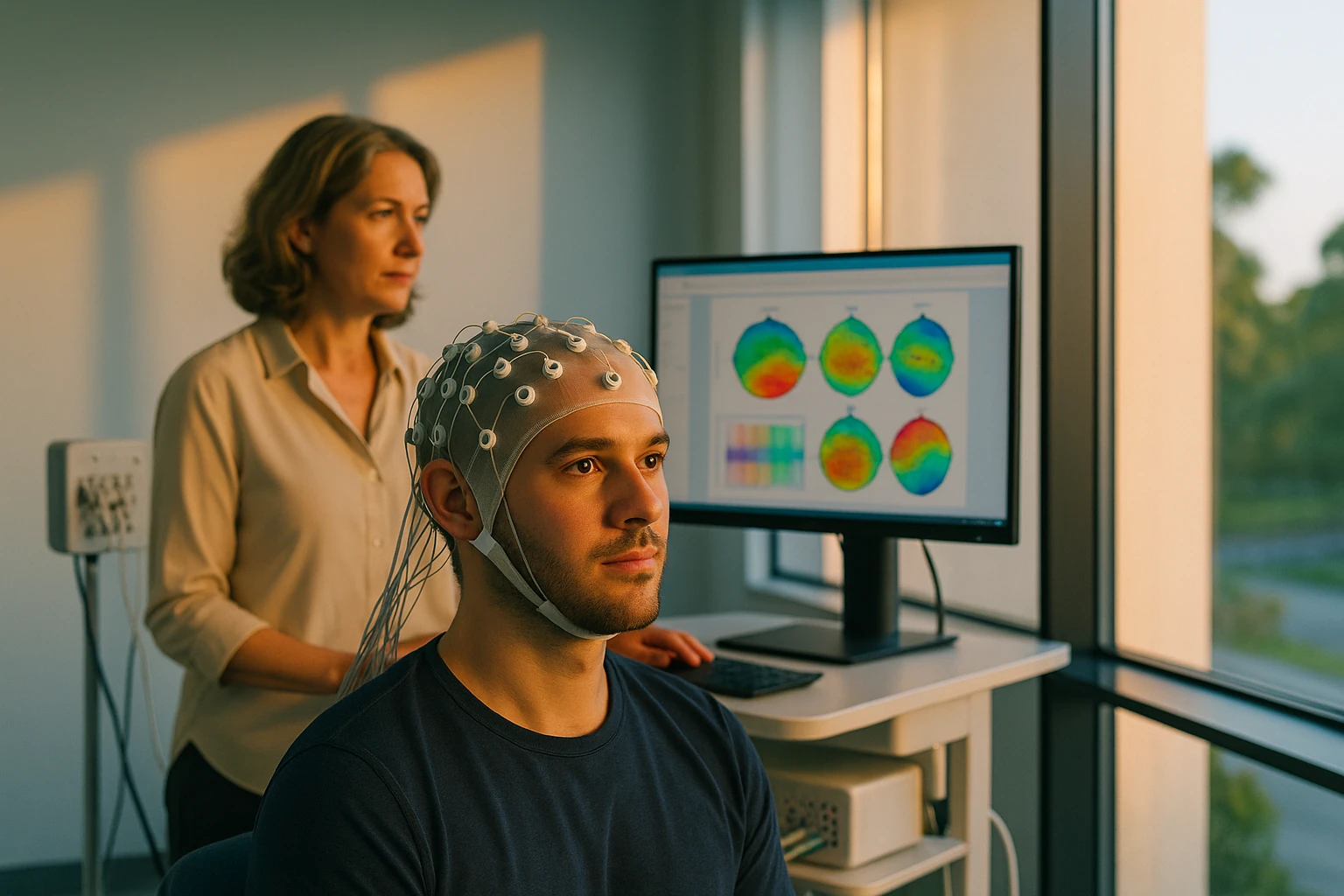
The brain in addiction is dysregulated — and that dysregulation can be measured, mapped, and trained back toward regulation. RECO Intensive's Neurointegration track combines qEEG brain mapping with neurofeedback training to teach the brain new patterns of self-regulation. It's neuroscience-based recovery work.
What neurointegration looks like at RECO Intensive
The process begins with a qEEG brain map (see our qEEG service) that identifies specific patterns of neural dysregulation. Targeted neurofeedback protocols then train the brain — through real-time feedback during structured sessions — to shift those specific patterns toward regulation.
What neurofeedback sessions involve
- EEG monitoring via comfortable sensors on the scalp
- Real-time feedback — visual or auditory cues that respond to the brain's activity
- Operant conditioning of brainwaves — over multiple sessions, the brain learns to produce the patterns the feedback rewards
- Targeted protocols for specific dysregulation patterns — anxiety, attention, sleep, craving
- Tracked progress — repeat qEEG measures change over time
What conditions neurointegration helps with
Anxiety and panic. Attention-deficit and executive-function patterns. Sleep dysregulation. Craving regulation. PTSD-related hyperarousal. Mood-stability issues. The evidence base for neurofeedback in addiction recovery is growing; the integration with the rest of the clinical plan is what makes it produce real change.
Who this track serves best
Clients with attention or executive-function issues — including ADHD alongside substance use. Clients with chronic anxiety or PTSD. Clients with persistent sleep dysregulation. Clients whose qEEG findings show specific patterns that neurofeedback addresses. Clients drawn to neuroscience-informed recovery approaches.
How neurointegration integrates with the rest of treatment
Neurofeedback runs alongside therapy, medication management, and the rest of the clinical plan — not as a replacement. qEEG findings inform broader treatment-plan decisions; neurofeedback progress feeds the weekly multi-disciplinary case review.
Why RECO's Neurointegration program is different
Few addiction-treatment programs offer real qEEG-guided neurofeedback. Ours is fully integrated with the clinical team, lab-informed, and structured for the specific neurological patterns of addiction recovery. Brain-informed treatment is the future; RECO is delivering it now.