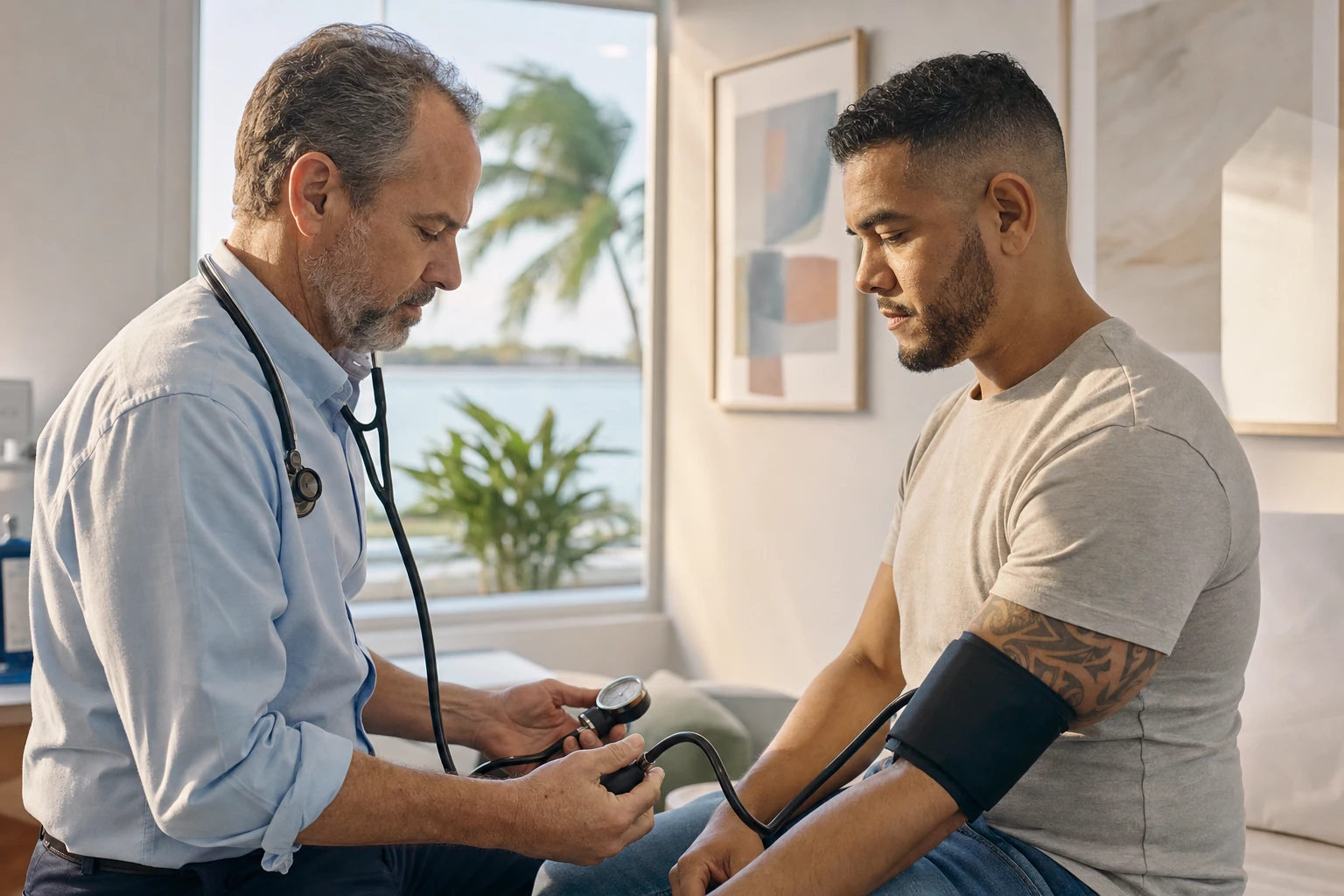
Addiction is a whole-body disease. Treating only the behavior — without addressing what happened to the body in the process — leaves recovery fragile. RECO Intensive's medical and wellness screening, conducted by board-certified physicians within the first week, builds the medical baseline every other clinical decision depends on.
What medical screening looks like at RECO Intensive
During your first week, our medical team conducts a comprehensive intake exam: full vital signs, physical exam, complete blood count, comprehensive metabolic panel, liver function tests, lipid panel, vitamin and mineral levels (B12, folate, vitamin D, magnesium), thyroid panel, hepatitis screen, and an EKG when indicated. For appropriate cases, we add inflammatory biomarkers and a qEEG brain map (see Inflammatory Biomarkers and qEEG Brain Map).
We also evaluate sleep, exercise tolerance, pain, and any chronic conditions that need ongoing management — diabetes, hypertension, autoimmune disease, eating-disorder history. Findings feed your treatment plan within 72 hours.
What the screening covers
- Comprehensive physical exam and full vital signs
- Complete labs: CBC, CMP, LFTs, lipid panel, thyroid, hepatitis
- Nutritional markers: B12, folate, vitamin D, magnesium, iron studies
- EKG and cardiovascular screen when indicated
- Sleep assessment, exercise tolerance, chronic-condition review
- Medication reconciliation across all prescribers
Who benefits most
Every client. The findings matter especially for long-term alcohol-use clients (liver, blood sugar, cardiovascular), opioid-use clients (hormonal, pain), stimulant-use clients (cardiovascular, sleep), and anyone with co-occurring chronic medical conditions whose care has lapsed during active substance use.
How medical screening integrates with the rest of your plan
Medical findings drive treatment-plan decisions throughout the program. Identified deficiencies become part of nutrition planning. Identified inflammation may indicate IV therapy. Identified medical comorbidities require coordinated care between our psychiatrist and your outside primary care provider. The medical baseline is the foundation everything else builds on.
Why the RECO approach is different
Most addiction programs offer minimal medical care — a basic exam at admission and not much else. We treat the body the same way we treat the mind: with full clinical seriousness. The level of medical attention here is what some clients have not received from any provider in years.